Climate change is making mountain valleys increasingly vulnerable to melting glaciers, unstable slopes, flash floods and landslides. Here’s why warming temperatures are raising risks for communities.
The world's most beautiful snow-capped mountains are turning into death traps. A recent flood that caused massive damage on the Nepal-China border is a clear warning sign. For millions living in the Himalayan valleys, life is becoming more unpredictable and dangerous. A CNN report highlights how this disaster shows just how much global warming and climate change are messing with the Himalayan ecosystem.
A Mega-Flood That Felt Like an Earthquake
Satellite images show what happened. A massive chunk of a glacier, about 2,000 feet wide, broke off from the Langtang Lirung mountain in northern Nepal. This triggered a huge landslide. A mix of ice, rocks, water, and giant boulders came crashing down 7,000 feet. The impact was so powerful that people first thought it was an earthquake.
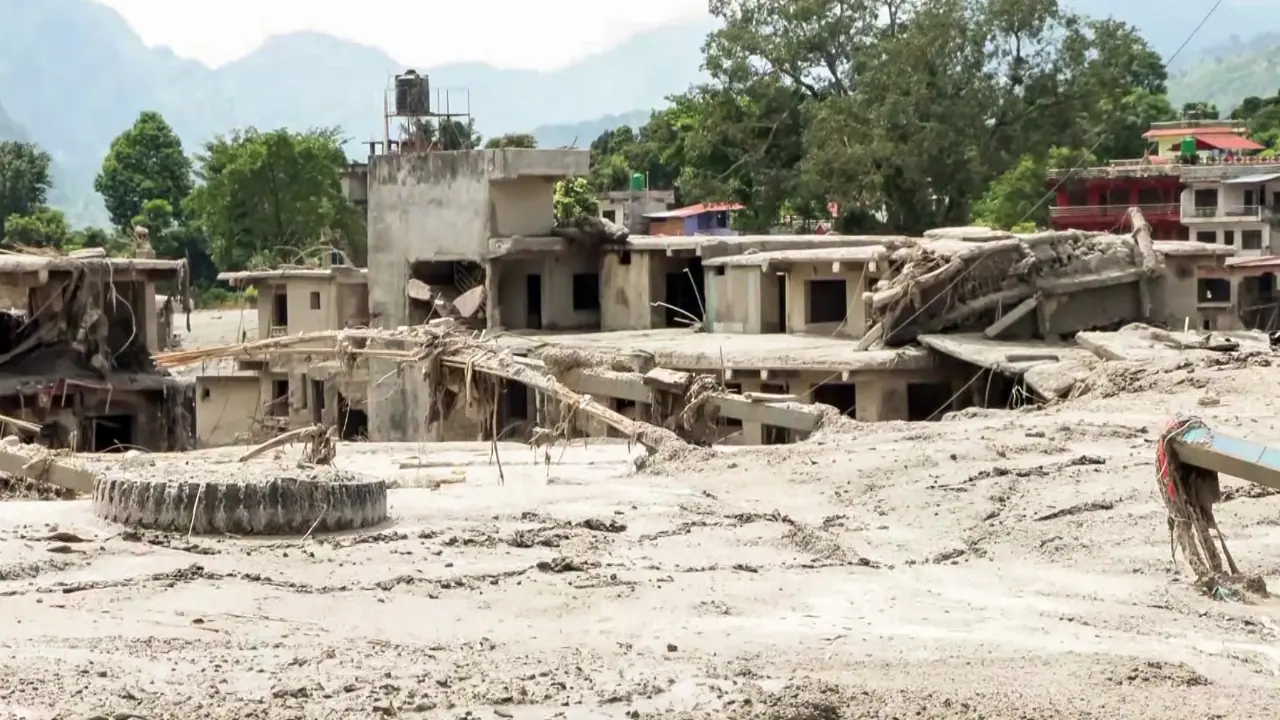
This flow, which was like liquid concrete, rushed through narrow gorges. It washed away everything in its path—houses, bridges, hydropower plants, and roads. Hundreds of people were killed, and many are still missing. In the first 14 miles, this flood wave is estimated to have travelled at a terrifying speed of up to 120 miles per hour.
Related Articles

Also read: Gardening Tips: Tulsi to Methi, 5 Indian Herbs You Can Grow at Home With Minimal Effort
Mountains on the Verge of Collapse
The Himalayan region, with its steep slopes, has always been prone to floods and landslides. But ICIMOD, an environmental organisation in Nepal, says this disaster is on a much larger scale than what they've seen in recent times.
As we burn fossil fuels and heat up the planet, the snow cover on mountains is shrinking and glaciers are disappearing fast. In the Hindu Kush Himalayan region, which includes Nepal, the rate of ice melt has doubled since the year 2000.
The main problem is the melting of 'permafrost'. Think of permafrost as the natural glue that holds rocks and soil together. When this ice melts, the slopes become unstable and can suddenly collapse. The situation gets worse when glacial lakes, formed by melting glaciers, burst their banks (a GLOF event). Also, extreme rainfall instead of snowfall at high altitudes adds to the danger. Geoscientists have a chilling name for these hanging glaciers: "tsunamis from the sky."
Also read: Water Without River Or Well: This Technological Mountain Innovation Harvest Moisture From Air
Mountain Disasters Are Now a Global Threat
This crisis isn't limited to Nepal. High mountain regions all over the world, from the European Alps to the Andes, are facing similar threats. In Alaska, USA, the Mendenhall Glacier is repeatedly collapsing into its lake, causing floods. In the village of Blatten in Switzerland, a glacier collapse buried the area under millions of tons of ice and rock.
Warning Systems Need to Get Better
The time between a disaster starting high up in the mountains and it hitting a valley is very short. This makes effective early warning systems extremely difficult to set up. Properly monitoring all of Nepal's 3,000-odd glaciers is a massive challenge. However, scientists are hopeful that advanced satellite monitoring systems will provide more accurate information in the future.
Also read: Akita Inu to Samoyed- 5 Most Expensive Dog Breeds in India- That Cost Lakhs To Bring Home