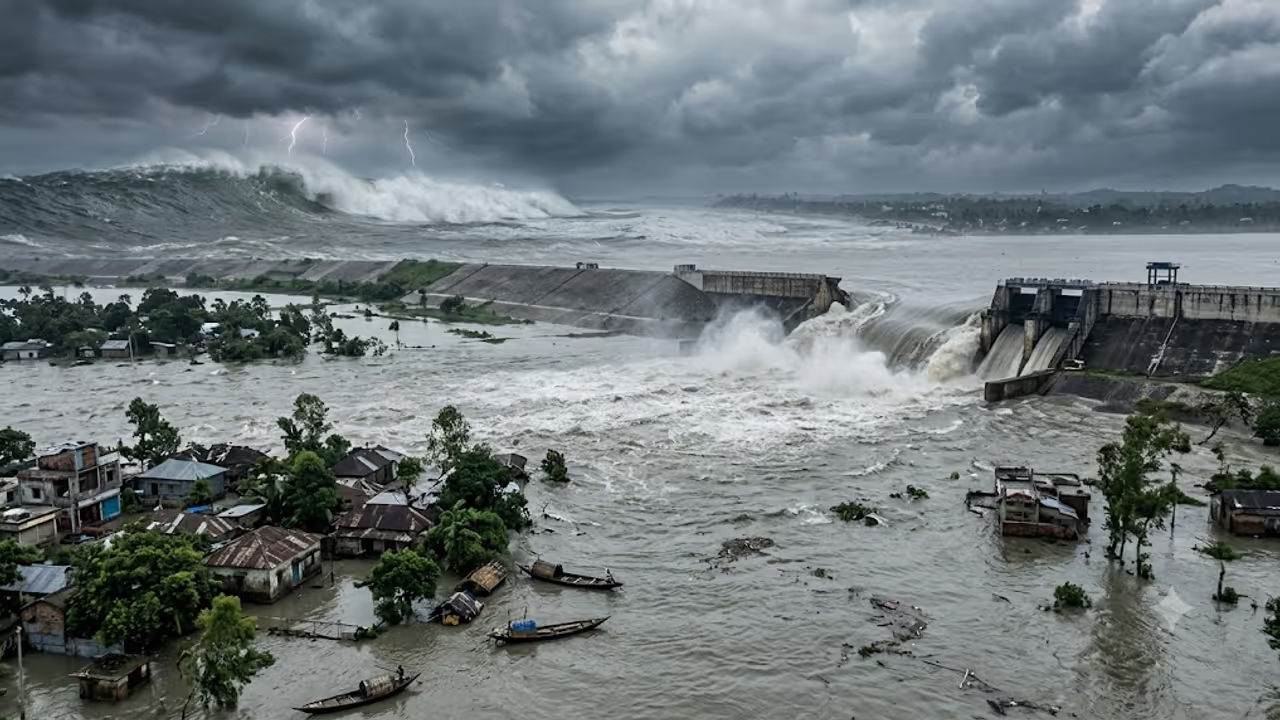
The world's deadliest floods have claimed millions of lives, with China's 1931 floods remaining the worst recorded disaster. Other major tragedies include the 1887 and 1938 Yellow River floods, the 1970 Bhola cyclone, the Kaifeng flood and the Banqiao Dam failure. Death tolls vary because many estimates include later deaths from famine and disease.
Floods have caused some of the worst disasters in human history, destroying towns, farmland and infrastructure while killing huge numbers of people. The deadliest events were not always caused by rainfall alone. Cyclones, dam failures and even deliberate destruction of river defences also turned rising water into catastrophic humanitarian disasters.
Historical death tolls should be treated with caution. Records from earlier centuries were often incomplete, and many estimates include people who later died from famine, disease and displacement rather than drowning alone.
1. 1931 ,China, floods: Up to 4 million deaths
The 1931 China floods are widely regarded as the deadliest flood disaster in recorded history.
Related Articles

Heavy rainfall followed a period of severe snowmelt, causing the Yangtze, Yellow and Huai rivers to overflow. Vast areas of central China were submerged.
Death estimates vary widely, from around 422,000 to as many as 4 million. Many victims died in the months following the floods due to famine, disease and the destruction of homes and farmland.
2. 1887 Yellow River flood: Up to 2 million deaths
The Yellow River flood of 1887 devastated China's Henan province after heavy rainfall caused river defences to fail.
Floodwaters spread rapidly across densely populated and low-lying areas, destroying villages and agricultural land. Estimates of the death toll range from about 900,000 to 2 million.
The disaster remains one of the deadliest river floods ever recorded.
3. 1938 Yellow River flood: Up to 900,000 deaths
Unlike most floods on this list, the 1938 Yellow River disaster was deliberately caused during the Second Sino-Japanese War.
Chinese Nationalist forces breached the river's dikes near Huayuankou in an attempt to slow advancing Japanese troops.
The flooding devastated large parts of Henan, Anhui and Jiangsu. Estimates commonly range from around 500,000 to 900,000 deaths, including people who died from drowning, disease and starvation.
4. 1970 Bhola cyclone: Up to 500,000 deaths
The Bhola cyclone was one of the deadliest tropical cyclones in recorded history.
It struck the Ganges Delta in November 1970, when the region was part of East Pakistan and is now largely Bangladesh.
A massive storm surge swept across low-lying islands and coastal communities. Estimates suggest between 300,000 and 500,000 people were killed.
The disaster exposed the extreme vulnerability of densely populated coastal areas to cyclones and storm surges.
5. 1642 Kaifeng flood: About 300,000 deaths
The Kaifeng flood was another disaster linked to human action during a military conflict.
During a siege of the Chinese city of Kaifeng, Yellow River dikes were deliberately breached. The resulting flood destroyed much of the city and surrounding areas.
Historical accounts estimate that around 300,000 people died, although exact figures remain uncertain because of the age of the event and incomplete records.
6. 1975 Banqiao Dam failure: Up to 240,000 deaths
In August 1975, Typhoon Nina brought exceptionally heavy rainfall to China's Henan province.
The Banqiao Dam and dozens of other dams failed, unleashing enormous volumes of water downstream. Entire settlements were devastated and millions of people were affected.
Direct deaths were far lower than the highest overall estimates, but later deaths from disease and famine increased the total. Estimates for the wider disaster range from tens of thousands to about 240,000.
7. 1971 Red River Delta flood: Around 100,000 deaths
The Red River Delta flood in North Vietnam is often included among the deadliest historical floods.
Heavy monsoon rainfall caused widespread flooding, while failures in parts of the flood-control system worsened the disaster.
Historical estimates suggest that around 100,000 people may have died, although the figure remains difficult to independently verify.
What led to world's worst water disasters?
The history of deadly floods shows that water disasters become far more dangerous when extreme weather meets vulnerable populations and weak infrastructure.
Poor warning systems, failed dams, damaged river defences and densely populated floodplains can dramatically increase casualties. Floods also continue causing deaths long after the water recedes, through hunger, contaminated water and disease.
Modern forecasting and early-warning systems have improved disaster preparedness. But as extreme rainfall, coastal flooding and climate-related weather risks continue to threaten communities, the lessons from history remain relevant.
These disasters show that effective infrastructure, evacuation planning and early warnings can make the difference between a major flood and a large-scale humanitarian tragedy.