
CXMT stock surged over 5x on its debut in Shanghai.
- CXMT’s blockbuster market debut is another sign of growing optimism around China’s tech sector and could mark a pivotal moment that reshapes the dynamics of the global memory industry.
- Nomura expects CXMT’s stock to rise 1,239% from its IPO price.
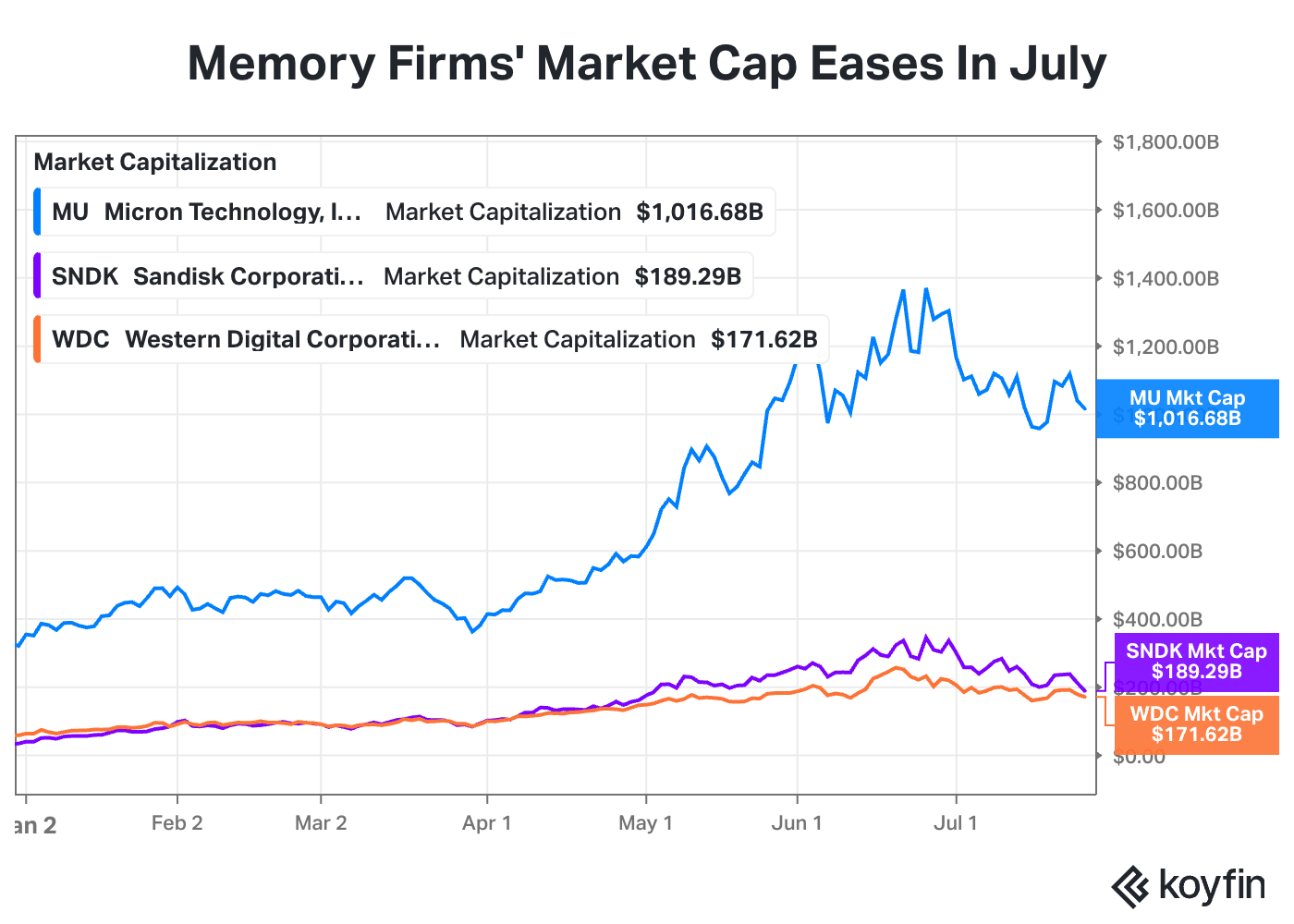
- U.S. memory and chip firms face a major selloff; MU is down 22% in July, with The Roundhill Memory ETF (DRAM) and The iShares Semiconductor ETF (SOXX) falling 29% and 19.4% respectively.
China’s memory chip giant CXMT has become the talk of the town from the U.S. to Asia. And American chipmakers are taking notice.
CXMT Corp raised 57.92 billion yuan ($8.6 billion) in its Shanghai IPO, making it Asia’s biggest listing this year. The stock then soared an eye-popping 466% on its trading debut, lifting the company’s market capitalization to about $487 billion, the highest among companies listed on mainland Chinese exchanges and above Intel’s recently diminished market value of $462.38 billion.
While not unprecedented – U.S. and South Korean memory stocks have both rocketed over the past year – CXMT’s strong debut serves as another sign of the increasing optimism around China’s tech industry and a potentially important event that could reshape the dynamics in the memory sector.
Memory Boom Powers CXMT IPO
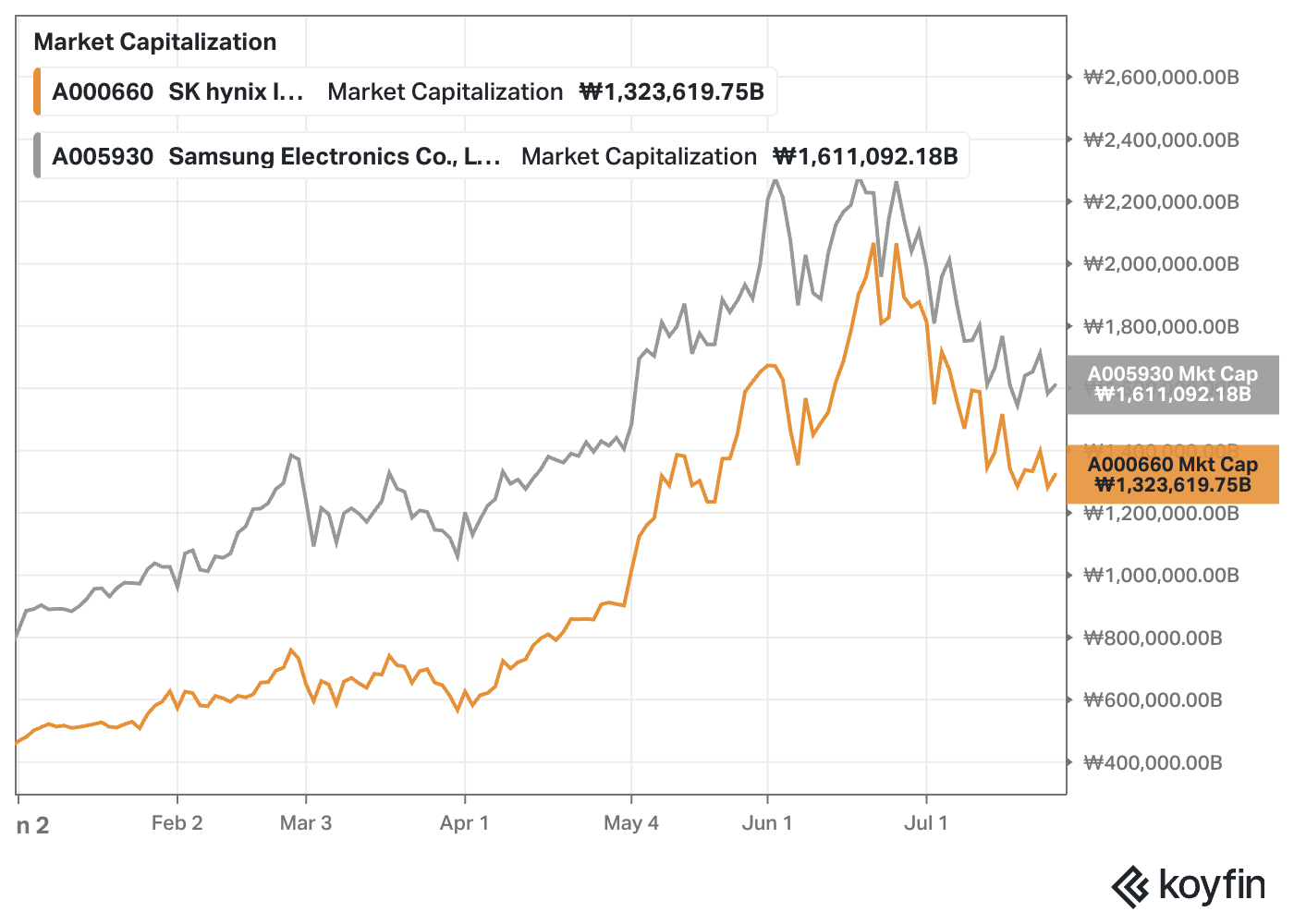
Memory prices have soared in recent years as booming demand from AI data centers outpaced supply. The resulting shortage allowed memory makers to raise prices and secure customers through long-term contracts, driving remarkable gains in both sales and stock prices for companies including Micron, SanDisk, Samsung, and SK Hynix.
CXMT’s listing is an important signal for global investors. While U.S. restrictions currently limit customers from buying the company’s chips, Apple is lobbying Washington to ease those curbs. If that happens, CXMT could win more customers and begin taking market share from today’s leading memory vendors.
The Financial Times reported that Apple has already begun testing CXMT’s memory chips for devices sold within China.
How CXMT Compares To Global Rivals
China’s government, hoping to free the country from dependence on technology from the U.S. and American allies in Asia, has backed CXMT with money from a national chip investment fund.
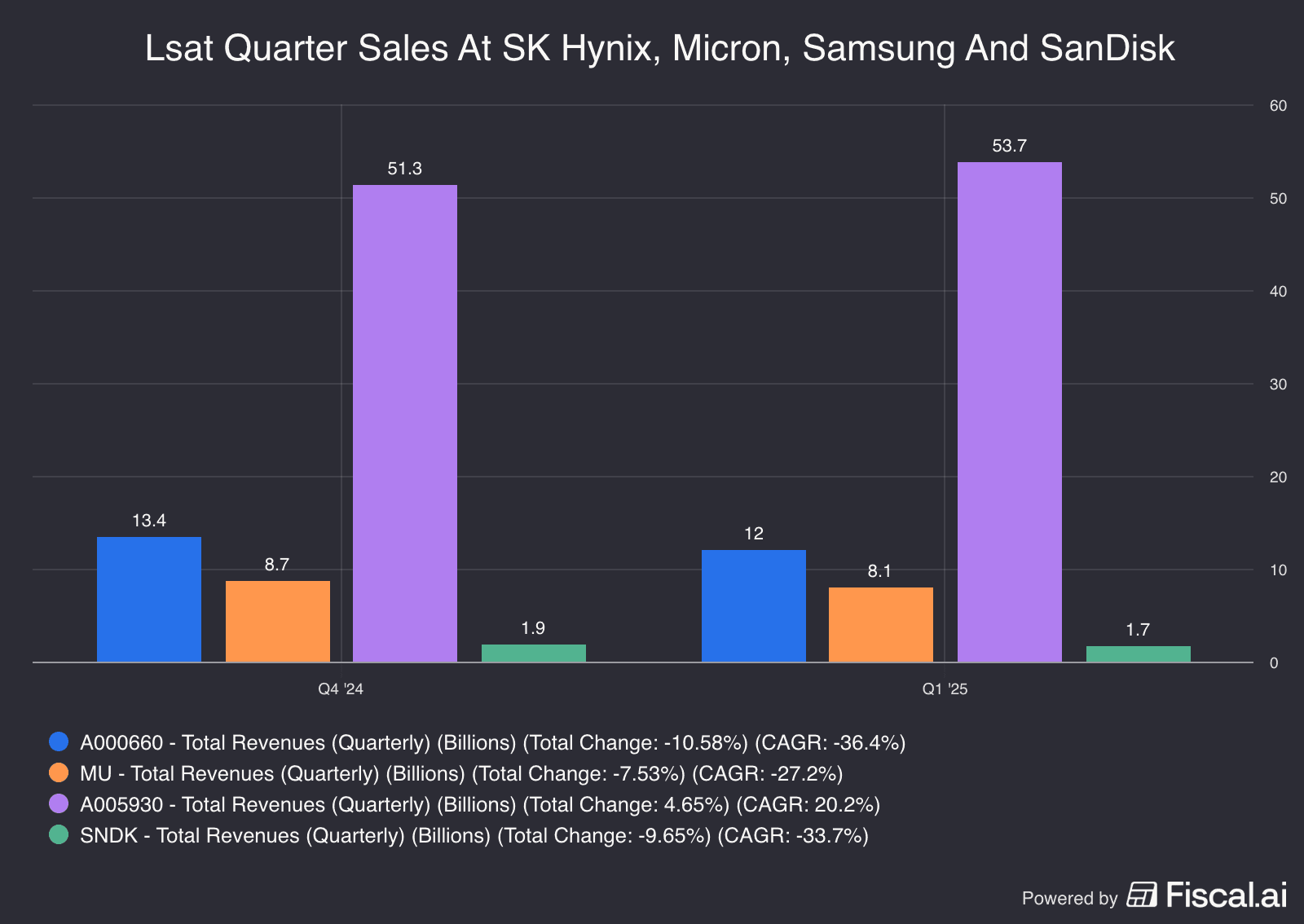
CXMT’s revenue rose to $7.5 billion in the March quarter, from less than $1 billion in the same quarter a year earlier, while profit came in at $3.66 billion.
In comparison, Micron reported $7.8 billion in sales and nearly $1 billion in net profit for its quarter that ended in May. SK Hynix is much larger, with $13.3 billion in sales and a $4.4 billion net profit in its March quarter.
Analysts Bullish On CXMT
Founded in 2016, CXMT makes DRAM chips used in electronic devices ranging from smartphones to servers and is leading a state project to develop high-bandwidth memory.
Analysts appear to be bullish. CXMT can extend its blockbuster stock market debut to rally 1,239% from its IPO price as it wins market share over time, according to Nomura’s recent note to investors. “We expect CXMT’s market share gain to accelerate considering that the global supply of memory is unlikely to ease in the coming years,” analyst Donnie Teng wrote in a note, assigning a buy rating and a 116 yuan target. “Strong demand for agentic AI will drive a more than sevenfold increase in global memory usage” by 2030, he wrote.
In a note on Friday, Morningstar said CXMT is well positioned to benefit as AI becomes an increasingly important national security priority for China. The firm noted that although the company’s technology remains behind that of the world’s leading memory chipmakers, strong demand from Chinese internet giants developing AI is likely to support adoption of its products as Beijing accelerates efforts to build a self-reliant semiconductor industry.
Meanwhile, U.S. memory and chip firms are weathering a major selloff. Micron stock has declined 22% so far this month, while SanDisk has shed about 43%, with the Roundhill Memory ETF (DRAM) and the iShares Semiconductor ETF (SOXX) falling 29% and 19.4%, respectively.
Still, SanDisk, Micron, Seagate and WDC remain among the top performing S&P 500 gainers this year, with advances between 189% and 438%, outpacing the benchmark indices handsomely.
For updates and corrections, email newsroom[at]stocktwits[dot]com.<
