
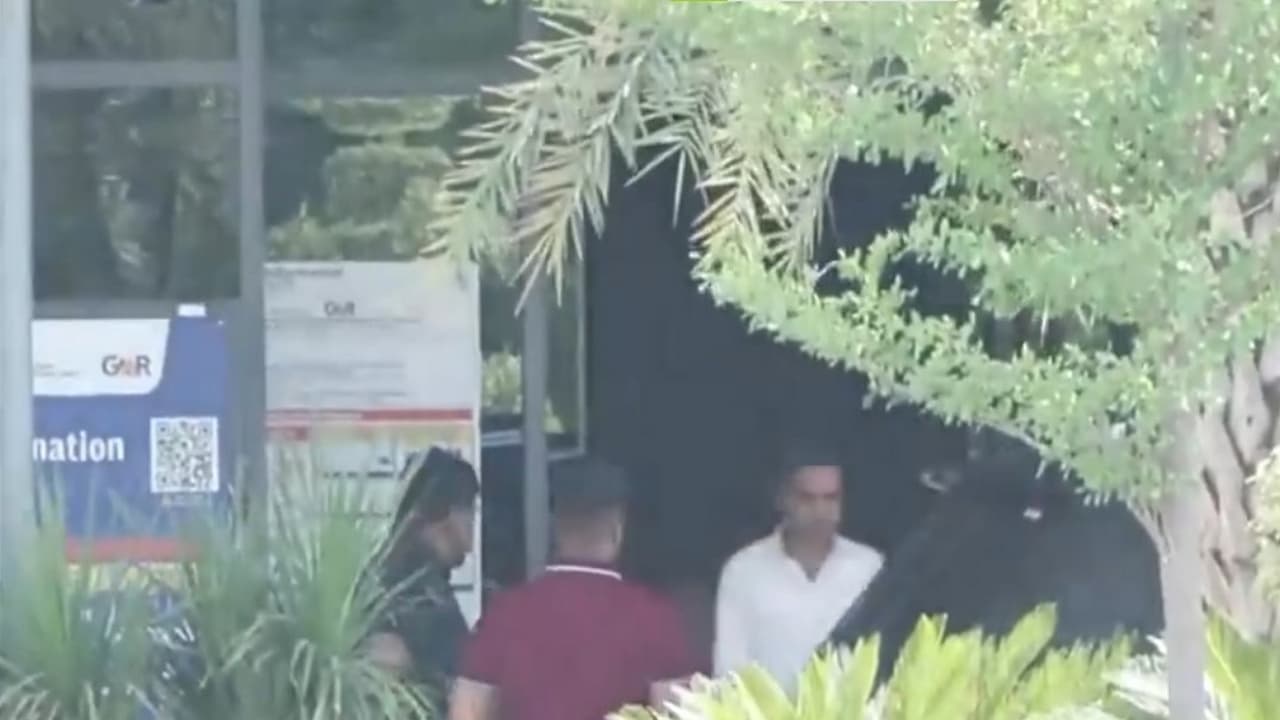
TMC's Abhishek Banerjee is in Delhi to challenge a faction of 20 rebel MPs who declared a merger with the NCPI. He will meet the Lok Sabha Speaker to contest the move, asserting that the TMC is a single, indivisible party under the Constitution.
Trinamool Congress (TMC) national general secretary Abhishek Banerjee arrived in the national capital on Friday, accompanied by party MP Derek O'Brien, to launch a high-stakes legal and political challenge against a faction of rebel MPs. The delegation is scheduled to meet Lok Sabha Speaker Om Birla to address the announcement by 20 TMC MPs who have declared a merger with the Nationalist Citizens Party of India (NCPI).
This move follows a widening internal crisis for the TMC, which is currently grappling with a dual rebellion: 58 MLAs in West Bengal, led by expelled leader Ritabrata Banerjee, and the 20 Lok Sabha MPs led by Kakoli Ghosh Dastidar.
TMC Reasserts Unity Amid Rebellion
Meanwhile, senior party MP Saugata Roy has reiterated the party's firm stance against the ongoing rebellion by a faction of its members. Roy emphasised that the party remains united and dismissed the legitimacy of the splinter group's claims, which include a purported merger with the Nationalist Citizens Party of India (NCPI).
"Abhishek Banerjee had given a letter to the Speaker. We are saying that TMC is one, and if anyone leaves TMC, they will not be considered part of TMC. This division of the party is not in accordance with the Constitution," Saugata Roy stated.
Banerjee's Formal Challenge to Speaker
On June 10, Banerjee wrote to Lok Sabha Speaker Om Birla regarding reports that certain party MPs may seek recognition as a "separate group or faction". In his communication, Banerjee categorically stated that the All India Trinamool Congress (AITC) is a "single, indivisible political party" and that the legislative party in the Lok Sabha exists only as an "emanation of" the parent political party.
Addressing Speaker Om Birla, Banerjee made three specific requests that the submission be formally "placed on record" to contests the legitimacy of any competing "group" or "faction", to recognise the AITC as a single entity represented solely through its authorised Leader and Whip, and to decline any status to "purported separate groups" and to grant the AITC an opportunity to be heard before any decision is made regarding such communications.
"I respectfully request that you may be pleased to: (i) place this submission on record; (ii) treat the AITC as a single political party represented in the House solely through its duly authorised Leader and Whip, and decline to accord any recognition, status, or facility to any purported separate group or faction of the AITC; and afford the AITC an opportunity of being heard before any decision is taken on any communication of the nature referred to above, should the same be received. It is also respectfully submitted that the AITC reserves its rights, including its right to initiate appropriate proceedings under the Tenth Schedule to the Constitution, in respect of any conduct falling foul of the provisions referred to herein," Banerjee wrote in his letter.
Legal Framework Against Defection
Banerjee's letter outlines the constitutional and legal framework governing such requests, citing the Supreme Court's judgment in Subhash Desai vs. Principal Secretary, Governor of Maharashtra & Ors. (2023). He emphasised that the legal defence of a "split" is no longer available under the Tenth Schedule following the Ninety-first Amendment.
The law treats the splintering of a political party not as a "permissible event," but through the lens of potential disqualification. The political party, rather than the legislative party, holds supreme authority in appointing the Leader and Whip in the House.
"The combined effect of the above is that the relief reportedly sought -- recognition as a separate group or faction of the AITC -- is unknown to law and impermissible," the letter stated. Banerjee further argued that even if a merger were attempted, it would require two conditions to be satisfied: a merger of the political party itself and the switching of two-thirds of the legislative party members. (ANI)
(Except for the headline, this story has not been edited by Asianet Newsable English staff and is published from a syndicated feed.)