
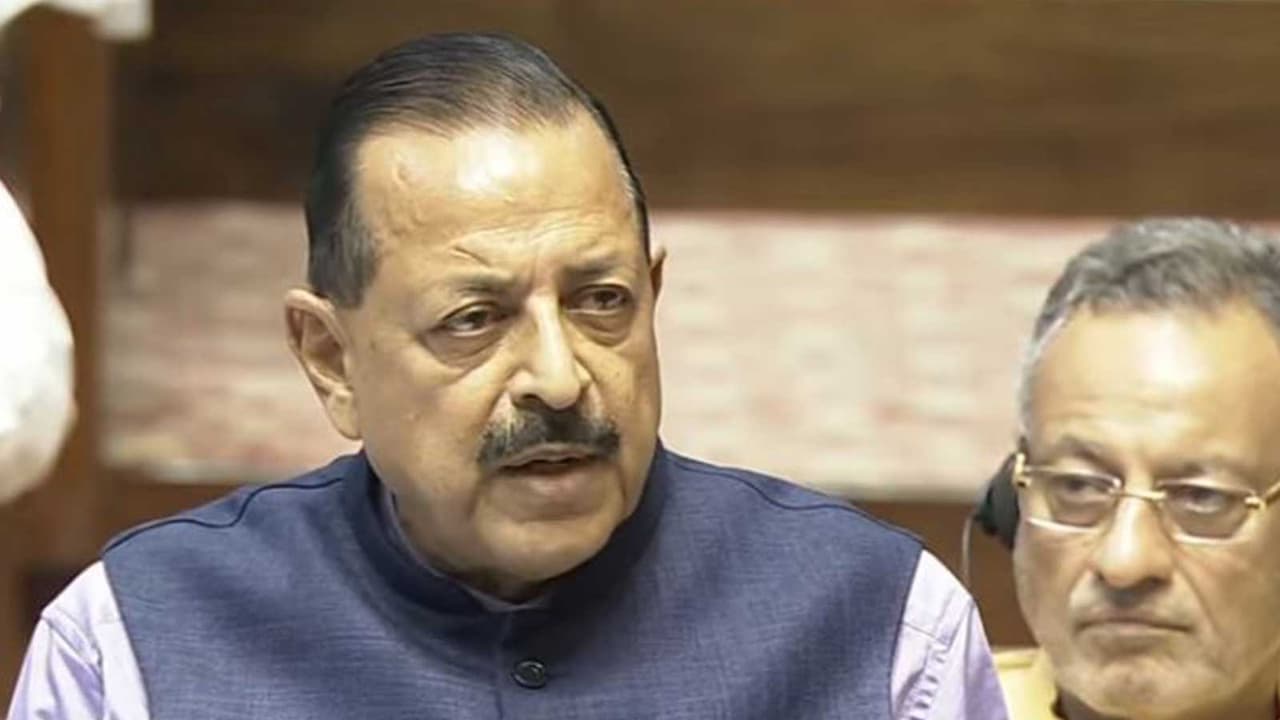
Union Minister Jitendra Singh moved the Public Examinations (Prevention of Unfair Means) Amendment Bill, 2026, in the Rajya Sabha. The bill proposes harsher punishments, including increased jail time and fines, for those involved in paper leaks.
Union Minister Jitendra Singh on Thursday moved the Public Examinations (Prevention of Unfair Means) Amendment Bill, 2026, in the Rajya Sabha after it was passed in the Lok Sabha by a voice vote following an extensive discussion yesterday. The Bill has been taken up for discussion in the Upper House.
During his address, Singh said that the Bill is an extension of the earlier bill. He said that there is a deep sense of sensitivity and concern that Prime Minister Narendra Modi has time and again expressed for the youth of this country. The amendments in the bill reflect the government's willingness to "learn from experience" after the implementation of the 2024 anti-paper leak law, Singh said. "In the wake of the recent sequence of events, PM Modi lost no time to declare that nobody will be allowed to jeopardise the students' future. There is a zero tolerance policy. This legislation seeks to make the law more stringent. It is my humble request to all leaders in the house to help pass the bill. I know by now most of the content of the bill is known to you," the minister said.
Enhanced Penalties and Fines
Highlighting the key provisions of the Amendment Bill, Jitendra Singh said the punishment for persons resorting to unfair means has been enhanced from imprisonment of three to five years to five to ten years, while the maximum fine has been increased from Rs 10 lakh to Rs 50 lakh. For service providers involved in such offences, the maximum fine has been enhanced from Rs 1 crore to Rs 5 crore and the period of debarment from conducting public examinations has been increased from four years to eight years. Punishment for directors and senior management of service providers has also been enhanced from three to ten years' imprisonment to five to ten years, with the maximum fine increased from Rs 1 crore to Rs 5 crore. The Bill further enhances punishment for organised crime from five to ten years' imprisonment to seven to ten years and increases the maximum fine from Rs 1 crore to Rs 10 crore.
Fast-Track Justice and Investigation
The Minister said the Amendment Bill provides for the establishment of Special Fast Track Courts for offences relating to public examinations and envisages completion of investigation within two months and completion of trial within three months from the date of filing of the charge sheet. The Bill also provides for appointment of Special Public Prosecutors and empowers the Government to constitute a Special Task Force for investigation of offences under the Act, thereby ensuring swift and effective action against organised examination-related crimes.
Broader Anti-Leak Measures
He also referred to the Prime Minister's announcement of a high-level task force comprising eminent experts to make the public examination system "leak-proof" and said substantial progress has been made in implementing the recommendations aimed at strengthening the examination ecosystem. So far, 52 FIRs had been registered since the original law came into force and suicides linked to paper leaks had declined, the Union Minister informed the Rajya Sabha. (ANI)
(Except for the headline, this story has not been edited by Asianetnews Editorial staff and is published from a syndicated feed.)