
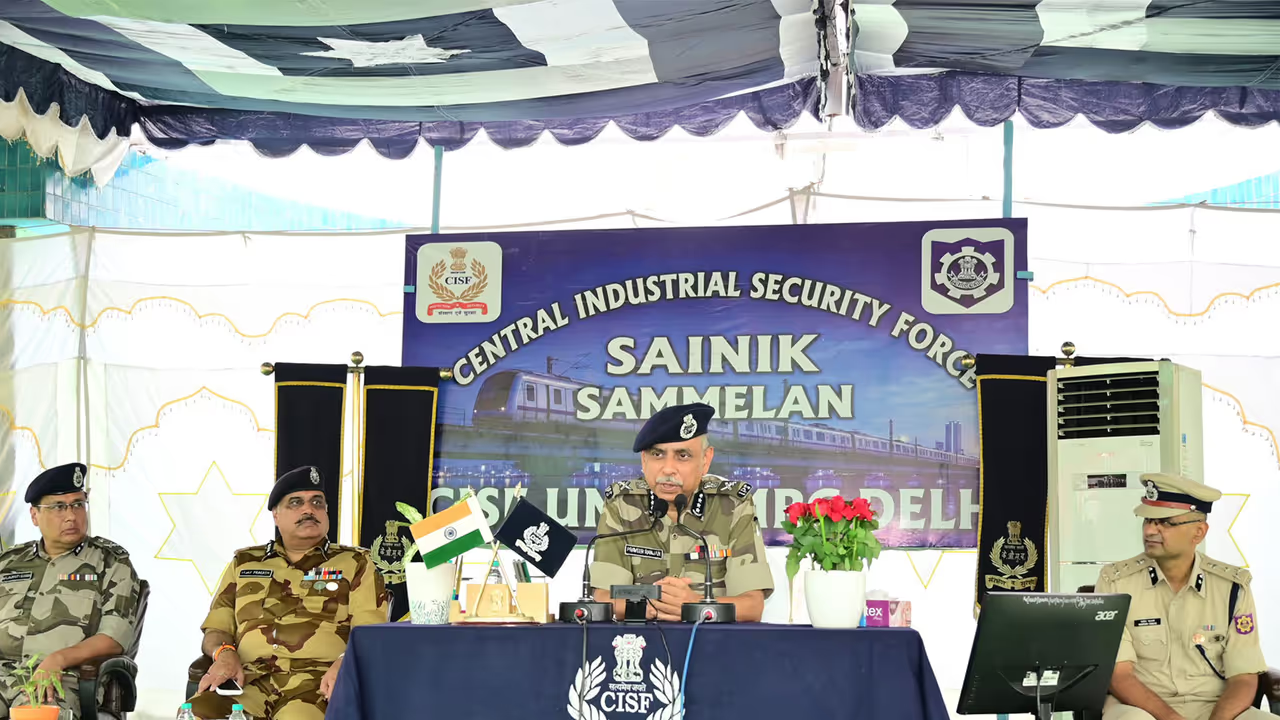
CISF Director General Praveer Ranjan visited the force's DMRC unit to review security preparedness for the Delhi Metro network. He interacted with personnel, inaugurated new infrastructure, and coordinated with DMRC officials on passenger safety.
Central Industrial Security Force (CISF) Director General Praveer Ranjan on Thursday visited the force's DMRC unit in the national capital and reviewed the security preparedness, operational arrangements, training infrastructure, and welfare measures of personnel deployed for the security of the Delhi Metro network. The CISF Delhi Metro Rail Corporation (DMRC) unit is the largest wing of the force, with more than 12,000 personnel deployed across the Delhi Metro network. The CISF personnel provide security to the extensive metro system, comprising 10 operational lines and 303 stations. Additionally, the CISF facilitates the secure movement of more than 70 lakh passengers every day, managing a large and continuous flow of commuters while maintaining high standards of security, efficiency, and passenger convenience.
Review of Preparedness and Personnel Welfare
During the visit, the CISF chief addressed a 'Sainik Sammelan,' where he interacted with force personnel and reviewed issues concerning operational duties, professional preparedness, and welfare. Appreciating the personnel for maintaining high standards of alertness and professionalism while performing security duties in one of the world's busiest urban mass transit systems, the DG emphasised that the security of the Delhi Metro requires constant vigilance, quick response, technology-enabled surveillance, and close coordination with the DMRC, all while ensuring that security procedures remain passenger-friendly.
Infrastructure Development
The DG inaugurated the newly constructed Yamuna Bank male barrack, strengthening accommodation facilities for CISF personnel deployed in the DMRC unit. He also visited the under-construction Pushta Shakurpur Barrack and reviewed the progress of ongoing infrastructure development. These infrastructure initiatives are aimed at providing better living and working conditions to personnel who remain deployed round-the-clock to meet the security requirements of the Delhi Metro network.
Operational Readiness and Coordination
At the Kavach Training Cell at Shastri Park, the DG was briefed on training activities and operational preparedness. He also interacted with senior DMRC management, including Suvashis Choudhary, Chief Security Commissioner, and the Director (Operations), on matters relating to security, passenger movement, and coordination between the CISF and DMRC. The DG thereafter visited the Operational Control Centre (OCC) in Shastri Park, where he reviewed operational arrangements, surveillance, and response mechanisms. The discussions focused on maintaining an effective security architecture capable of responding to emerging threats while ensuring the smooth movement of passengers.
Official Remarks on Metro Security
Speaking on the occasion, the CISF DG said, "The Delhi Metro presents a unique security challenge because of its scale, speed, and the continuous movement of millions of passengers. Our responsibility is to ensure that this vast network remains secure without causing avoidable inconvenience to passengers. This requires alert personnel, effective training, technology, and close coordination with the DMRC. The welfare and professional preparedness of our personnel will remain central to maintaining this level of security."
Suvashis Choudhary, Chief Security Commissioner of DMRC, said, "The security of the Delhi Metro is a shared responsibility, and the close coordination between DMRC and CISF has been fundamental to ensuring safe and efficient passenger movement. We value the continued guidance and operational support of the CISF and remain committed to further strengthening our joint security."
(Except for the headline, this story has not been edited by Asianetnews Editorial staff and is published from a syndicated feed.)