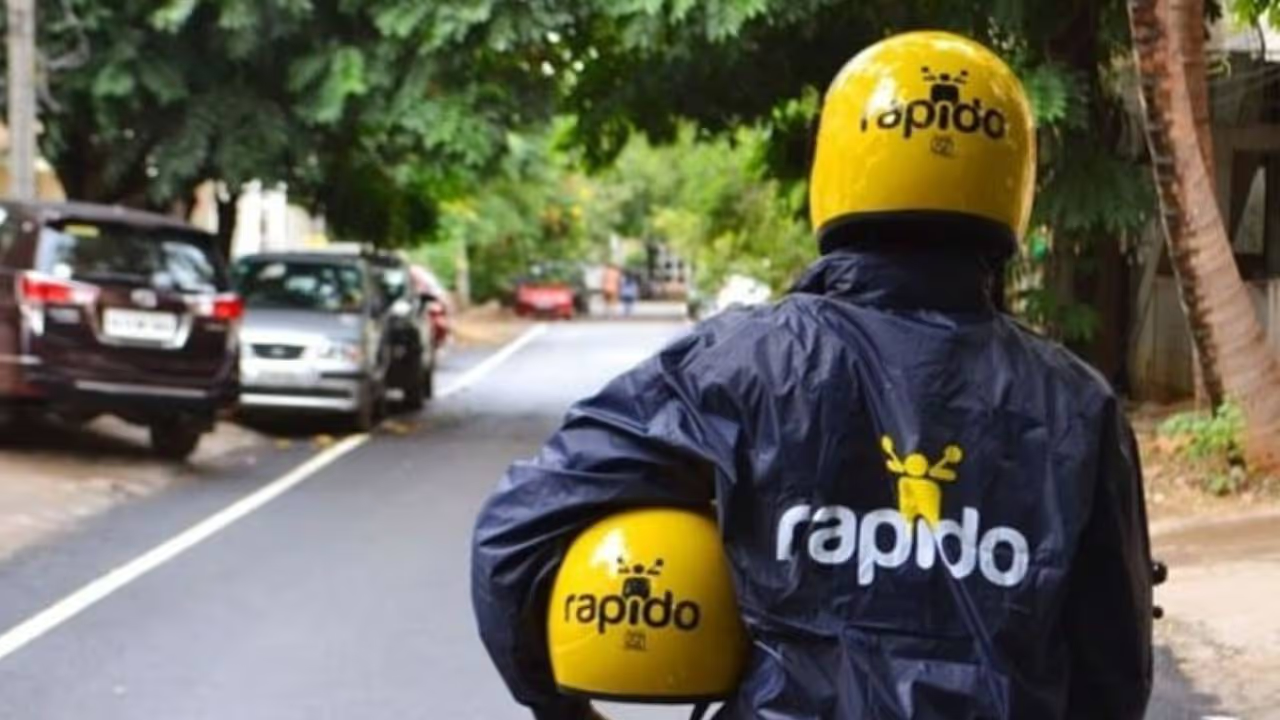
A Bengaluru BBA student shared his three-month Rapido side hustle experience during his college vacation, saying he earned around ₹1,200 a day. He also detailed the platform's algorithm, customer cancellations, restaurant delays and challenges with support.
A Bengaluru BBA student has shared his three-month experience working as a Rapido captain during his college vacation, offering a candid look at the realities of gig work in the city. From earning around ₹1,200 a day and learning how demand patterns and the platform's algorithm work to dealing with cancellations, restaurant delays and customer support issues, his experience offers a glimpse into the opportunities and challenges faced by gig workers.
The student, who had completed his first-year examinations, decided to spend his three-month vacation trying something completely different. He typically logged in at around 8 am and worked until 4.30 pm, spending roughly 8.5 hours a day on the platform. On a decent day, he said he could earn around ₹1,200.
Learning How The Rapido Platform Works
When he started, the student said he had little understanding of how the platform operated. Over time, however, he began identifying areas and time slots where demand was higher.
Related Articles

He said understanding demand patterns and how the platform's algorithm worked helped him improve his earnings and made Rapido a relatively straightforward side hustle during his vacation.
However, the experience also made him reflect on people who rely on gig work as their primary source of income.
For the student, the work was temporary, and he always had the option of going home when his shift ended. He said this was very different from the situation faced by workers who depend on gig platforms for their family's livelihood.
Concerns Over Ratings And Customer Support
One of the biggest frustrations during his time as a Rapido captain was the perceived lack of control over certain situations.
He cited customer cancellations as an example, saying a captain's rating could apparently be affected even when the cancellation was not their fault. He also described getting proper support from the platform when problems arose as a difficult process.
According to him, such situations highlighted the uncertainty that can come with working through a gig economy platform.
Food Orders During Slow Hours
The student also accepted food delivery orders during the afternoon period between 12 pm and 3 pm, when he found that ride demand was comparatively lower.
This exposed him to another side of the gig economy, particularly the experience of waiting at restaurants.
He said some restaurants had orders ready immediately, while at others, riders could spend 20 to 25 minutes waiting for food to be prepared.
Swiggy-Rapido Support Loop
One incident involving a food delivery order particularly stood out.
The student accepted a Swiggy food order through Rapido because the destination was close to his home. However, when he reached the ice cream shop, he discovered that there was no electricity. The machines and computer systems were not working, meaning the restaurant could not prepare the order.
The restaurant staff asked him to contact Swiggy and cancel the order. However, when he contacted Swiggy, he was directed to Rapido. Rapido, in turn, directed him back to Swiggy because it was a Swiggy order.
The student described the experience as a "Swiggy ↔ Rapido infinite loop".
He said he spent around 45 minutes trying to resolve the issue before noticing that the drop location was a tuition centre. He searched for the centre on Google Maps, found its phone number and contacted them directly.
After explaining the situation, someone from the tuition centre spoke to the restaurant staff and helped get the order cancelled.
Limited Customer Contact During Food Orders
The student also highlighted another issue he encountered during the incident. According to him, Rapido did not display the customer's contact details until the rider had picked up the food, which itself required an OTP from the restaurant.
He said this could create a major problem if the destination was a location that could not be easily identified or contacted through publicly available information.
The restaurant staff also reportedly told him that a similar situation had occurred previously and that another rider had allegedly been forced to wait for around two hours.
Experience With Bengaluru Auto Drivers
The student's experience also included regularly working around busy locations such as Majestic and railway stations, where he encountered auto drivers while operating as a Rapido captain.
Although he said some auto drivers would stare at him, he did not experience any direct confrontation or threats during his three months on the platform.
He also said he had several conversations with passengers and did not have a negative interaction with any customer. Some of the conversations, he added, were interesting and memorable.
Student Reflects On Gig Work
The student completed his Rapido stint before the recent ban and RTO seizure developments and therefore said he did not personally experience those issues.
Looking back, he said he was glad he had taken up the side hustle. For him, the experience was about more than earning ₹1,200 a day.
It gave him an opportunity to understand gig work from the worker's perspective, including waiting time, fuel expenses, uncertain earnings, platform rules, customer-related issues, restaurant delays and the pressure to remain active.
Why Gig Work Is Different For Everyone
The student's biggest takeaway was the difference between taking up gig work temporarily and depending on it as a full-time livelihood.
For a college student, three months of Rapido work could provide additional vacation income and a learning experience. For a full-time gig worker, however, the same daily earnings could be crucial for meeting household expenses.
His experience has sparked discussion around the realities of Rapido, Swiggy, Zomato and India's gig economy, particularly issues involving earnings, platform support, ratings, cancellations and working conditions.
Social Media Reacts
The student's account received positive reactions on social media, with users appreciating the detailed account of his experience.
One user commented: "Really well articulated, you have some very good story telling style. And very informative as well."
Another user commented: "The way you have portrayed, shows you gave taken whole experience as positive and learning. Keep same attitude and you will rise upwards while being remain rooted to ground. Good work."