
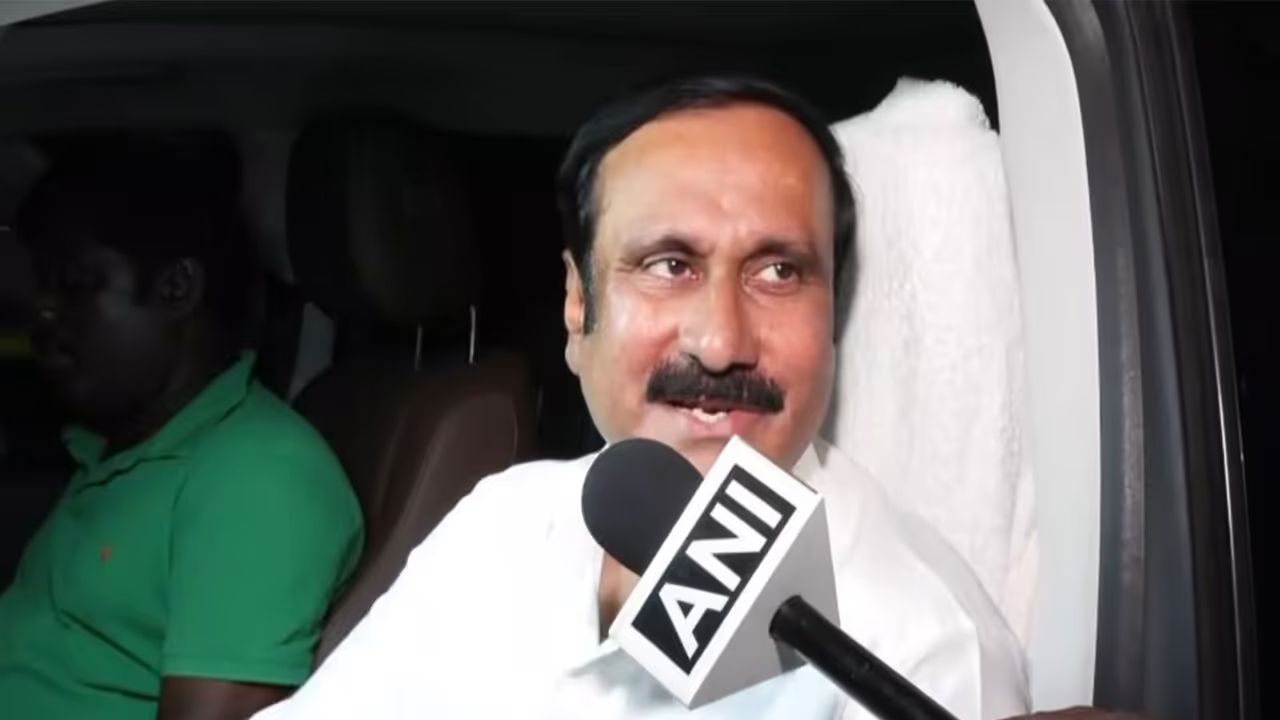
PMK president Anbumani Ramadoss has urged the Centre to scrap the new Merchant Discount Rate on UPI transactions over Rs 2,000. He warned that merchants would likely pass the fee on to consumers, leading to higher prices and a burden on the public.
In a post on X, Ramadoss urged the Central Government to immediately withdraw its decision to levy a transaction fee on commercial Unified Payments Interface (UPI) payments exceeding Rs 2,000. "Govt Must Scrap UPI Transaction Fee That Will Affect Traders & Indirectly Burden the Public! The Central Government has announced that, from October 15, a transaction fee of 0.40 per cent of the total value, subject to a maximum of Rs.300, will be levied on commercial transactions exceeding Rs.2,000 made through UPI apps, including Google Pay," he said.
Details of the New UPI Fee
Under the new Merchant Discount Rate (MDR) framework, UPI merchant transactions above Rs 2,000 will attract an MDR of 0.4 per cent, while consumers will continue to transact free of cost using UPI.
Ramadoss contended that while small traders conducting business transactions of up to Rs 1 lakh per month through UPI would remain exempt, larger businesses could face additional costs under the revised framework. "The Central Government has clarified that there will be no charges for UPI money transfers between individuals or for commercial transactions below Rs. 2,000. Small traders receiving less than Rs. 1 lakh per month through UPI have also been exempted from the transaction fee. Consumers purchasing goods through commercial transactions exceeding Rs. 2,000 will not have to pay this fee; instead, the fee will be collected from traders. Therefore, there is no direct impact on individuals," he said.
He added, "Small traders conducting business transactions of up to Rs.1 lakh per month through UPI will also remain unaffected."
Indirect Burden on Consumers
He further noted that large businesses may have to pay up to Rs 300 per transaction and argued that they may pass on the additional cost by increasing prices of goods and services, indirectly affecting consumers. "The general public will be indirectly affected by this system. Large businesses will have to pay a transaction fee of up to Rs. 300 per transaction and are unlikely to absorb the cost by accepting a reduction in their profits. Instead, they are likely to increase the prices of goods and services and indirectly pass the burden of this fee on to consumers. This will further aggravate the hardships faced by people who are already struggling with rising prices," he said.
UPI's Role in Digital Economy
The PMK leader also pointed out that UPI adoption was actively promoted following the 2016 demonetisation and during the COVID-19 pandemic to reduce dependence on cash and minimise physical contact.
Further, he asserted that the digital payment ecosystem has played a major role in curbing black money generation and promoting transparency in financial transactions. "Following demonetisation, and later during the COVID-19 pandemic to avoid direct physical contact, UPI transactions were actively promoted. Even now, incentives are being offered in several Stores to encourage such transactions. This system has helped prevent the generation of a significant amount of black money and has promoted transparent financial transactions. Compared to the benefits accruing to the Government and financial institutions from this system, the loss incurred by continuing to provide UPI transactions free of charge would not be significant," he said. (ANI)
(Except for the headline, this story has not been edited by Asianetnews Editorial staff and is published from a syndicated feed.)