
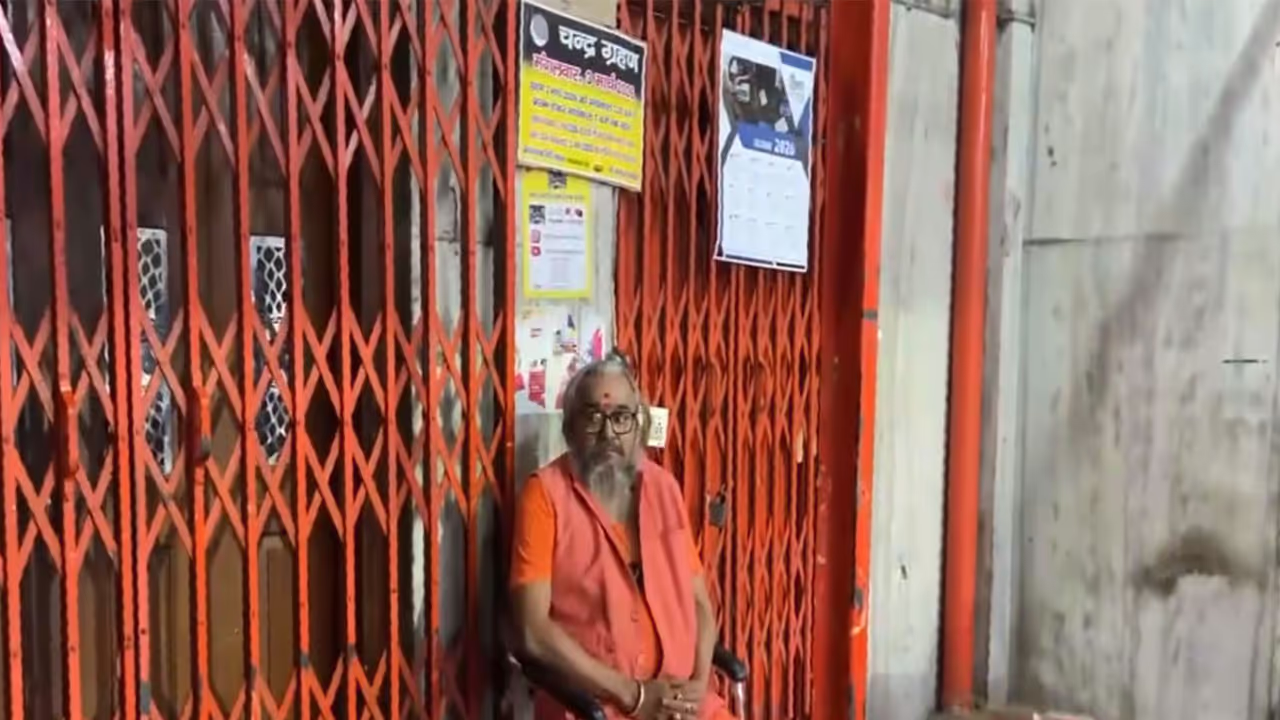
Temples across India closed their doors on Tuesday for the 'Sutak Kaal', an inauspicious period preceding the year's first lunar eclipse. Doors are expected to reopen in the evening following purification rituals after the celestial event.
Temples across India closed their gates on Tuesday as the 'Sutak Kaal' (inauspicious period) began ahead of the first lunar eclipse of the year, with priests saying the doors will reopen after the eclipse ends in the evening.
Temples Across Cities Close Doors
In Bengaluru, the gates of Shri Kadu Malleshwara Swamy Temple were closed as the Sutak Kaal commenced.
Similarly, in Sambalpur, Odisha, the gates of Maa Samaleswari Temple were closed as the inauspicious period began ahead of the lunar eclipse.
In Kanpur, the Nageshwar Shiva Temple remained closed during the Sutak Kaal of the lunar eclipse. Similarly, in Ranchi, the gates of the Pahari Temple remained closed as the Sutak Kaal begins today in the early morning.
Rituals and Timings Explained
A temple priest in Kanpur explained the rituals and timings for reopening the temples. He said that the doors are scheduled to reopen at 7:00 pm, followed by ritual bathing and adornment of the deity. "This is the first lunar eclipse of the year. All doors (of the temples) have been closed after Mangala Aarti. At 7:00 pm, all doors will be opened, baths will be given, and adornments will be performed. After Bhog Aarti, the doors will remain open until 11:00 pm," the priest said.
Understanding Sutak Kaal
According to Hindu tradition, Sutak Kaal is considered an inauspicious period that begins several hours before a lunar or solar eclipse. During this time, temple doors are closed, religious activities are suspended, and devotees are advised to avoid eating or undertaking any auspicious activities. After the eclipse ends, temples undergo purification rituals, including bathing of deities and performing special prayers before reopening for devotees.
About the Lunar Eclipse
According to the India Meteorological Department (IMD), a total lunar eclipse will take place on Tuesday, March 3, 2026, across several time zones. The phenomenon occurs when the entire Moon passes through the Earth's umbral shadow.
A partial lunar eclipse, in contrast, takes place when only a part of the Moon moves into the Earth's shadow.
The lunar eclipse is a celestial event that holds significant religious and astrological importance in Hindu culture, with specific rituals and observances followed during and after the phenomenon.
Meanwhile, the world-famous Shri Mahakaleshwar Temple in Ujjain celebrated the Holi festival on Tuesday during the early morning Bhasma Aarti. (ANI)
(Except for the headline, this story has not been edited by Asianet Newsable English staff and is published from a syndicated feed.)