
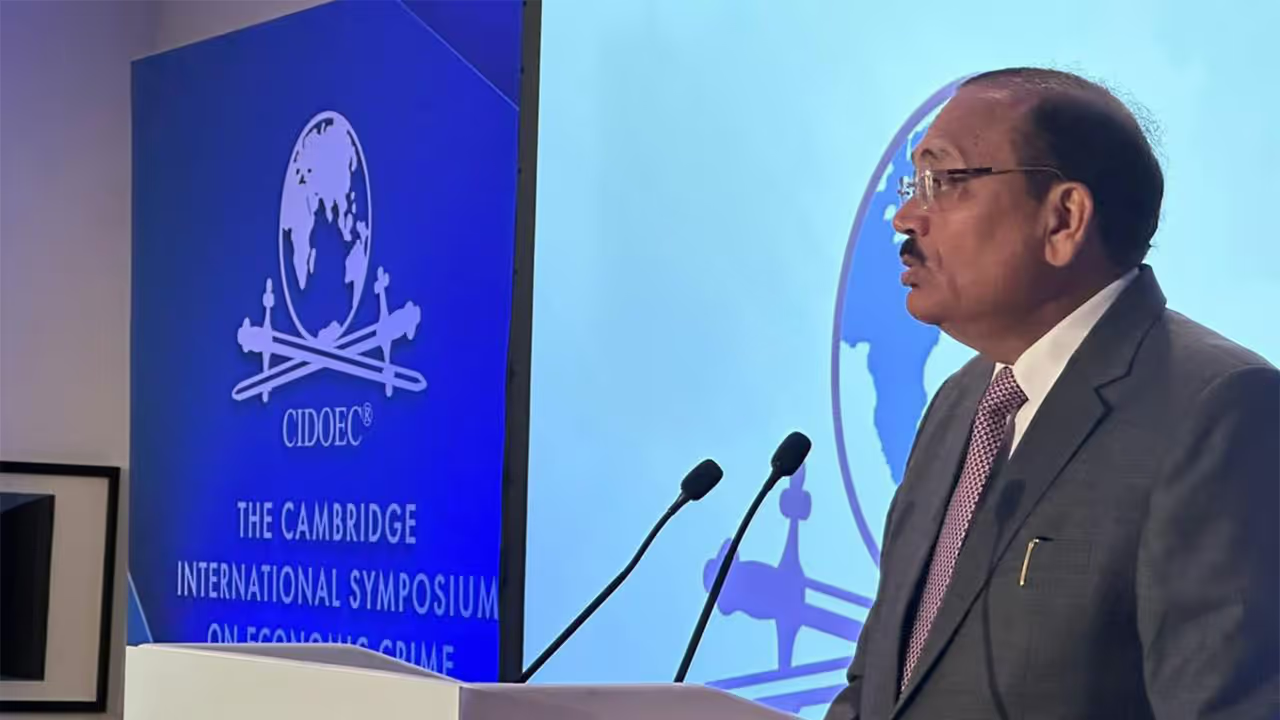
CJI Surya Kant warned that the global fight against economic crime needs action, not just speeches. He noted less than 1% of illicit wealth is recovered and stressed that economic crime is an age-old vice that has merely acquired new forms.
Chief Justice of India Justice Surya Kant has warned that the global fight against economic crime cannot remain confined to speeches and reports, pointing out that less than one per cent of illicit wealth is recovered despite the enormous scale of money laundering worldwide.
Addressing the closing session of the 43rd International Symposium on Economic Crime in Cambridge on Saturday, CJI Surya Kant said economic crime was not a modern phenomenon but an age-old vice that had merely acquired new forms, from ancient insurance fraud to sophisticated money laundering and digital arrest scams.
"Economic crime is not a modern invention but a longstanding vice that has merely assumed new disguises," the CJI said, tracing its history from an ancient Greek fraudster to modern-day money laundering and "digital arrest" scams.
Addressing the gathering, the CJI highlighted how economic offences have evolved while stressing that the "fight against illicit wealth must move beyond rhetoric to actual recovery of criminal proceeds."
An Age-Old Vice in a Modern World
Recalling the case of Greek grain merchant Hegestratos from the fourth century BC, who allegedly planned to sink his ship after selling its cargo to claim insurance, the address noted that economic crime is "not a modern invention" but an age-old vice that has merely taken new forms.
The address pointed to the enormous scale of money laundering globally, noting that less than one per cent of illicit wealth is recovered. Against this backdrop, CJI said the focus must be on "institutionalised interdiction" and systems capable of recovering assets and providing redress to victims.
India's Institutional Framework
The CJI presented India's legal framework as an example of such an institutional architecture. The Prevention of Money Laundering Act, 2002, the Fugitive Economic Offenders Act, 2018, specialised agencies and special courts together form a layered mechanism aimed at tracing, attaching and ultimately confiscating proceeds of crime, he said.
The CJI also drew a connection with ancient Indian wisdom. Kautilya's Arthashastra, written in the second century BC, had identified 40 ways in which officials could siphon off state revenue and prescribed measures including audits, informants, cross-verification, confiscation and personal liability, said the CJI.
"Let the forty ways of stealing enshrined in the Arthashastra now be enriched by forty better ways of tracing, freezing and returning," said the CJI in his address while calling for the global ledger of recovered criminal wealth to finally begin moving towards balance.
Upholding Rule of Law and Tackling New Threats
At the same time, the CJI stressed that strong economic crime laws must operate within the rule of law. He also highlighted the court's response to emerging "digital arrest" scams, in which fraudsters impersonate officials to extort money from unsuspecting victims.
Call for International Cooperation
The address said the increasingly cross-border nature of illicit wealth makes international cooperation indispensable. Mutual Legal Assistance Treaties, financial intelligence sharing, beneficial ownership registries and other tools must work together rather than in isolation, he said.
In his closing message, the CJI stressed action over rhetoric. The success of the global fight against economic crime would not be measured by how eloquently the problem is described, but by how diligently jurisdictions work to trace, freeze and return illicit assets, he said. (ANI)
(Except for the headline, this story has not been edited by Asianetnews Editorial staff and is published from a syndicated feed.)