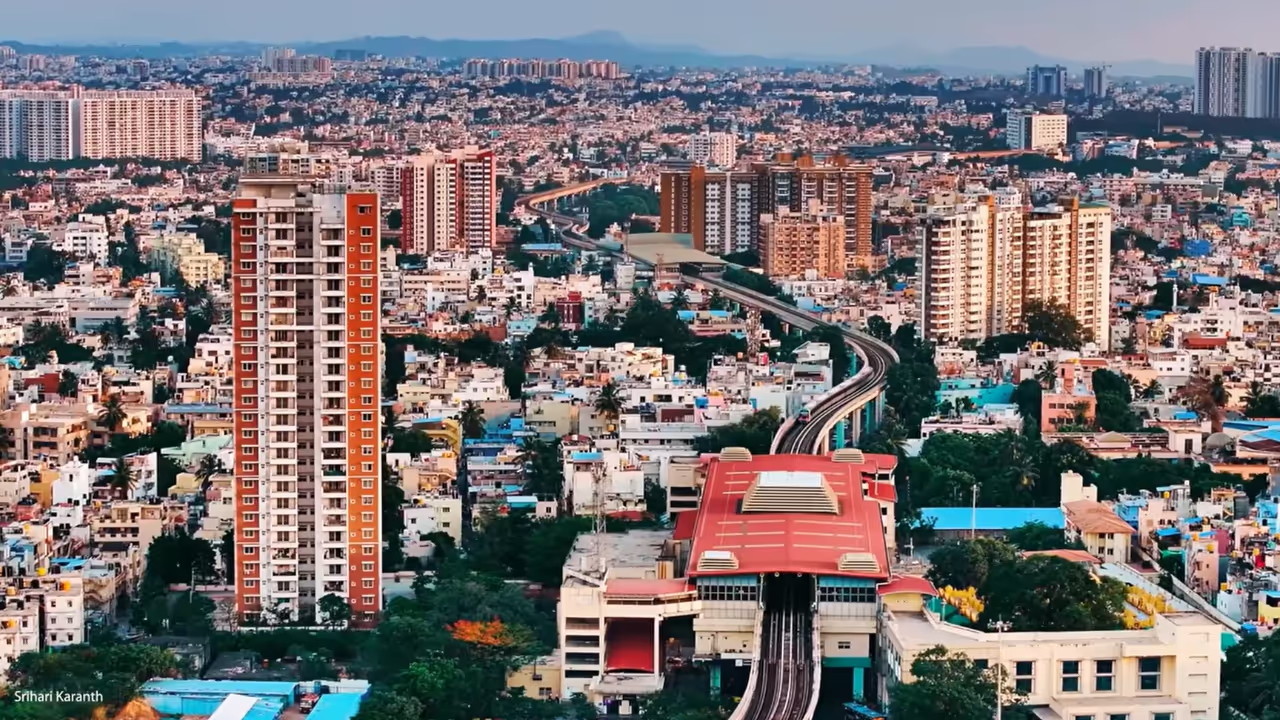
NITI Aayog Vice-Chairman Ashok Kumar Lahiri suggested developing a ‘second Bengaluru’ to ease pressure on Karnataka’s capital. The proposal could see a Tier-2 city developed as a major economic and employment hub.
NITI Aayog has proposed developing a ‘second Bengaluru’ to ease the growing pressure on Karnataka’s capital and promote more balanced economic development across the state. The proposal was discussed during a high-level NITI Aayog meeting held in Bengaluru, where officials discussed ways to reduce the city’s growing burden while creating new centres of economic activity and employment opportunities in other parts of Karnataka.
Speaking at the meeting, NITI Aayog Vice-Chairman Ashok Kumar Lahiri said, “Karnataka has all the potential for rapid growth, and we are proud of the state’s development. But to reduce the intense pressure on Bengaluru, a ‘second Bengaluru’ is needed. The country can develop only if states grow.”
Lahiri also suggested that Karnataka should prepare a comprehensive plan to increase agricultural production in its dryland areas. Chief Minister DK Shivakumar, who was leading the discussion, responded positively to the proposal. Following the meeting, discussions have begun within the government on developing Tier-2 cities as alternative centres of growth.
Related Articles

Why Is A ‘Second Bengaluru’ Needed?
Population And Urbanisation: Bengaluru’s population has grown rapidly, putting increasing pressure on housing, transport and other urban infrastructure. Traffic congestion has also emerged as one of the city’s major challenges.
Pressure On Infrastructure: Essential services such as drinking water supply, electricity, waste management and public transport are facing growing demand as the city expands.
Too Much Centralisation: A large share of Karnataka’s industries, technology companies and employment opportunities are concentrated in Bengaluru. This concentration has contributed to migration from different parts of the state to the capital.
Regional Balance: Developing other urban centres could help address regional disparities, create employment opportunities and encourage economic growth beyond Bengaluru, particularly in Tier-2 cities.
What Is The Proposed Game Plan?
Several successful urban development models are being considered as possible approaches for Karnataka.
The New Delhi And Navi Mumbai Model: This approach involves developing new urban centres in proximity to established metropolitan areas. Navi Mumbai was developed as a planned satellite city to ease pressure on Mumbai.
The Mumbai-Pune Model: Pune developed into a major centre for education, technology and industry, complementing Mumbai’s role as Maharashtra’s financial hub. The model demonstrates how another city can emerge as a significant economic centre within the same state.
The Ahmedabad-Gandhinagar Model: Ahmedabad and Gandhinagar have developed as important economic and administrative centres in Gujarat. Ahmedabad, in particular, has emerged as a major commercial and industrial hub.
Identifying Karnataka’s Next Growth Centre
Building a completely new city near Bengaluru would be a major undertaking. Therefore, developing an existing Tier-2 city into a major economic and employment hub could be a more practical approach.
The proposed strategy would involve identifying a suitable Tier-2 city in Karnataka and investing in infrastructure, industries, technology, education and employment opportunities. Such development could help distribute economic activity more evenly across the state while reducing the pressure on Bengaluru.