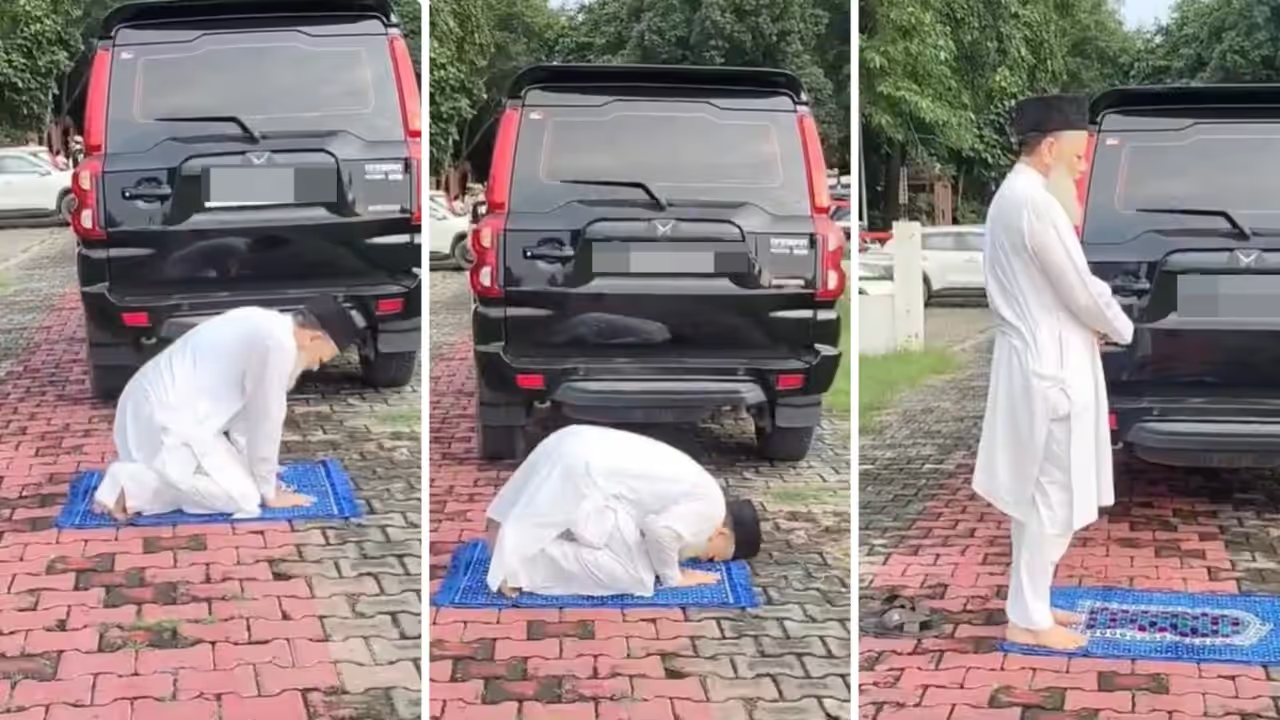
A video showing Samajwadi Party district vice president Haji Mohammad Usman offering namaz near Moradabad’s Circuit House has triggered a political and administrative row. Hindu groups questioned the use of government premises for prayer, while officials said an inquiry was underway. An FIR was later registered against Usman.
A video of Samajwadi Party (SP) district vice president Haji Mohammad Usman offering namaz near the Circuit House in Moradabad, Uttar Pradesh has triggered a debate over the use of government premises for religious activities. The video, recorded on Thursday, September 3, surfaced on social media on Friday. It shows Usman offering prayers beside a car near the lawn of the Circuit House.
Usman is the uncle of Bilari MLA Mohammad Faheem Irfan. He had reportedly gone to the Circuit House to meet Leader of the Opposition in the Uttar Pradesh Legislative Council, Lal Bihari Yadav, who was staying there.
What happened at the Circuit House?
According to officials, the district administration had received the protocol for Yadav's stay and made arrangements at the Circuit House accordingly.
Related Articles

After a review meeting with SP leaders ended, Usman went outside and offered namaz near the lawn. An SP worker recorded the incident, and the video later circulated widely online, according to a report by Bhaskar English.
The administration has not said that Usman was formally granted permission to use the Circuit House for prayers. Moradabad City Additional District Magistrate Ankit Srivastava said an investigation was underway and that action would follow.
An FIR has since been registered against Usman under Sections 285 and 292 of the Bharatiya Nyaya Sanhita. The provisions relate to causing danger or obstruction in a public way and public nuisance.
Hindu group questions prayer at government premises
Rohan Saxena, state president of the Rashtriya Bajrang Dal, questioned how the prayer was allowed at the government facility.
He asked the administration to clarify whether any rule permitted a legislator's relative or a political leader to offer prayers at the Circuit House. He also demanded action if no such permission existed.
The controversy has since widened on social media, with some users describing the incident as an individual's exercise of faith, while others have questioned religious activities at government property.
What did Haji Mohammad Usman say?
Usman defended his action, saying offering namaz was a matter of worship. He said people sometimes pray wherever they happen to be when prayer time arrives and maintained that his prayers neither blocked a road nor caused inconvenience to anyone.
Usman also referred to religious practices associated with public events and government programmes, arguing that there should not be different standards for different faiths.
Allahabad High Court ruling on public land
The controversy comes months after an important observation by the Allahabad High Court. In May 2026, a Division Bench of Justices Saral Srivastava and Garima Prasad held that public land cannot be claimed for exclusive religious use. The court said the right to practise religion is subject to public order and the rights of others.
The ruling came in a case from Sambhal, where a petitioner had sought protection to offer namaz on land he claimed was private. The court found the land was recorded as public land and said authorities could regulate religious activity where it affected public life or involved organised gatherings.
However, the court's ruling concerned the use of public land and organised or recurring religious activity. It does not mean that every individual act of private prayer is automatically illegal. The circumstances and nature of the activity remain important.
Usman has faced controversies before
This is not the first controversy involving Usman. During the 2024 Lok Sabha election campaign, a case was reportedly registered against him over allegations of violating the Model Code of Conduct and making an inflammatory speech at an SP rally addressed by party chief Akhilesh Yadav.
His name also surfaced in a dispute over caste certificates. In 2026, a district-level verification committee found that OBC certificates issued to Mohammad Faheem Irfan, Usman and members of Usman's family on the basis of the Jhojha caste claim did not comply with the applicable rules. The certificates were subsequently cancelled.
Usman has previously served as a district panchayat member and headed his ancestral village, Ibrahimpur.
The latest controversy now centres on whether the prayer near the Circuit House amounted to unauthorised use of a government facility. The district administration's inquiry is expected to establish the exact circumstances under which Usman offered namaz and whether any rules were violated.