
Assam Minister Pijush Hazarika set a Rs 7,000 crore expenditure target for the Irrigation Dept over the next five years. He called for prioritising large-scale projects, optimising costs, and warned against negligence in fund utilisation.
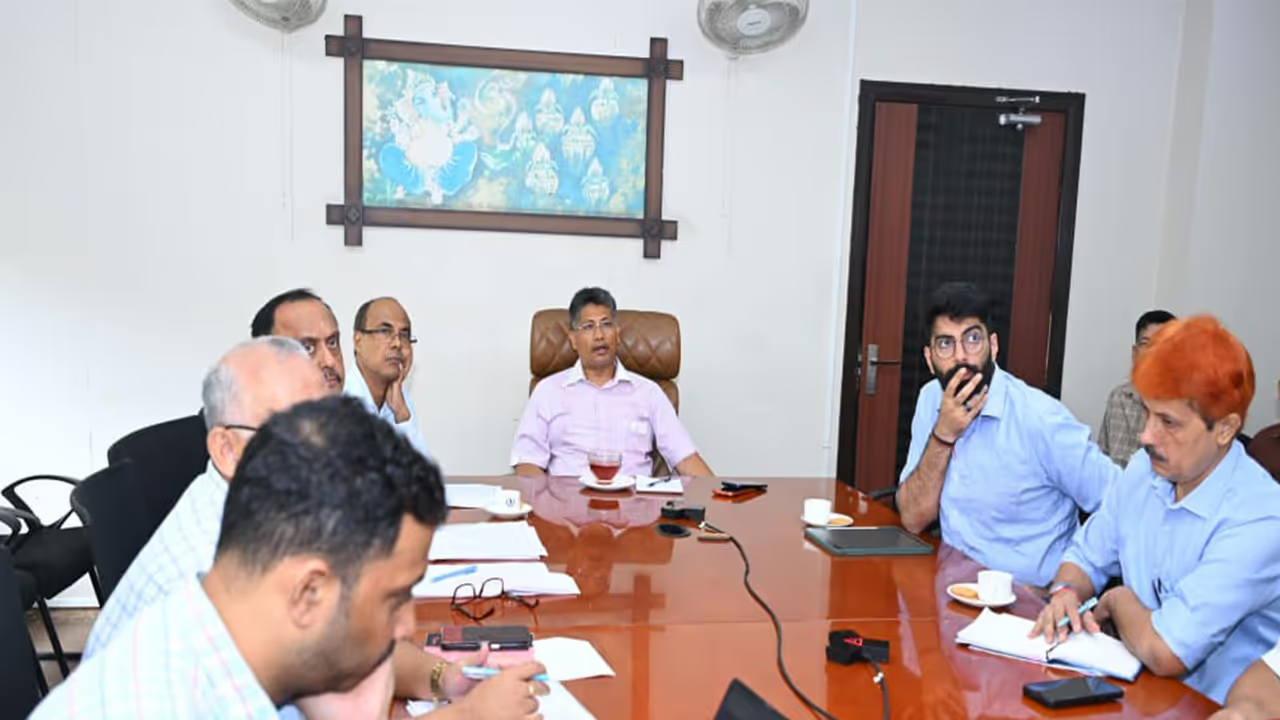
To accelerate the growth of the state's irrigation sector and significantly expand agricultural land coverage, Assam Minister for Agriculture and Irrigation Pijush Hazarika on Thursday chaired a high-level review meeting of the Irrigation Department at his office in Janata Bhawan in Guwahati. The meeting finalised key strategic decisions aimed at optimising infrastructure costs and maximising departmental efficiency.
Rs 7,000 Crore Boost for Irrigation
Emphasising that agriculture cannot thrive without robust irrigation, Minister Hazarika set an ambitious target of a minimum Rs 7,000 crore expenditure over the next five years, a substantial increase from the Rs 2,500 crore spent over the previous five-year period. He issued a stern warning against slow implementation, stating that non-utilisation of funds or official negligence will strictly not be tolerated.
Strategic Directives to Maximise Impact
To maximise impact, the Minister directed the department to prioritise large-scale projects, specifically calling for the preparation of 40 major schemes for a total of Rs 200 crore, rather than focusing on smaller, isolated initiatives.
To optimize project costs and widen reach, the Minister instructed that a Rs 50 crore lift irrigation system should feature a maximum of 3 intake points, thereby reducing structural expenses and allowing for a higher number of distribution points. He further directed engineers not to restrict irrigation projects within strict district boundaries, but to cross-district lines whenever necessary to cover all eligible agricultural land.
Funding and Timely Execution
The department will explore funding through Externally Aided Project (EAP), Rural Infrastructure Development Fund (RIDF), and State Own Priority Development (SOPD), with instructions to invite tenders early next year so construction can take full advantage of the upcoming working season.
(Except for the headline, this story has not been edited by Asianetnews Editorial staff and is published from a syndicated feed.)