
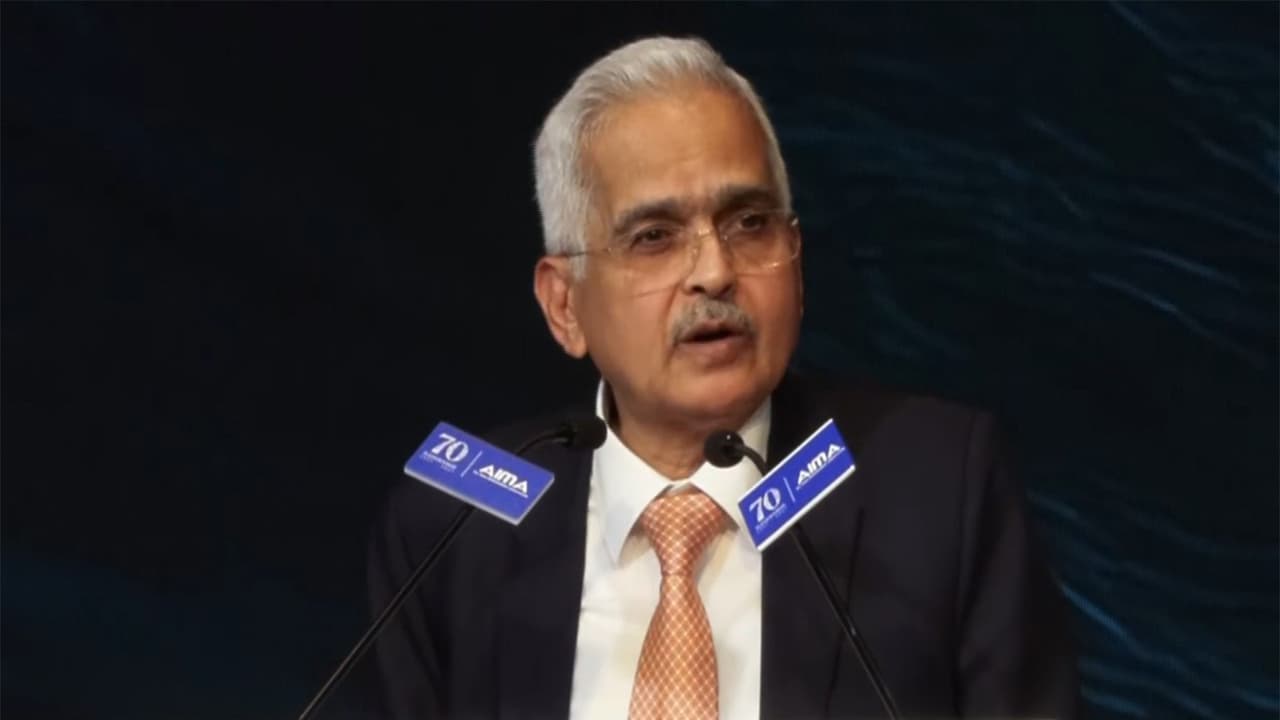
Former RBI Governor Shaktikanta Das advised Indian businesses to build resilience amid global volatility. He urged them to strengthen balance sheets, re-skill manpower, and invest strategically to ensure long-term growth and sustainability.
Former RBI Governor and Principal Secretary to the Prime Minister of India, Shaktikanta Das, on Thursday urged Indian industry and businesses to focus on building resilience and preparing for future uncertainties amid ongoing global volatility triggered by the West Asia conflict. During his address at the annual conference of the All India Management Association (AIMA) on Thursday, the former RBI Governor said that in a time when the world is facing "unprecedented volatility", Indian businesses must take proactive steps to safeguard growth and sustainability.
Building Resilience for Future Readiness
"At moments like this, it would be prudent for Indian industry to build organisational resilience, strengthen balance sheets, build new supply chains, protect jobs, re-skill manpower, diversify into new markets, especially for exporters, and invest strategically for future readiness," he said. He noted that these measures would go a long way in ensuring the long-term sustainability and growth of Indian businesses.
India: A 'Safe Anchor' in a Volatile World
Das also highlighted that India is increasingly being seen as a "safe anchor" in a volatile global environment, offering stability, predictability and long-term growth prospects. He pointed out that India has recorded an average annual real GDP growth of 7.8 per cent from 2021-22 to 2025-26, reflecting strong economic resilience and recovery.
Key Strengths Fueling India's Growth
Explaining the factors behind India's growth story, Das listed several key strengths of the economy.
Macroeconomic and Policy Stability
He said macroeconomic stability has played a crucial role, with India maintaining strong growth, effective inflation management and large foreign exchange reserves, enabling it to absorb global shocks. He also highlighted policy stability, stating that consistent governance and reform-oriented policies have boosted investor confidence.
Infrastructure and Domestic Demand
Infrastructure-led development has been another major factor, with sustained public investment in roads, ports, railways, energy and digital systems helping strengthen supply chains and reduce bottlenecks. Das said strong domestic demand also provides a natural buffer to the economy. With a median age of 29 years and a rapidly urbanising population, India's consumption base accounts for over 55 per cent of GDP.
Monetary Policy and Inflation Control
On monetary policy, he emphasised the importance of maintaining credibility through flexible inflation targeting. He said the Reserve Bank has balanced growth and inflation effectively, adjusting interest rates as needed without compromising long-term confidence. "Inflation control is important as it boosts investor confidence and protects the poor, who are the most affected by rising prices. Low inflation increases the real spending power of consumers," he said.
Digitalisation and Fiscal Discipline
He also highlighted the role of digital public infrastructure such as UPI, Aadhaar, ONDC and GST in improving financial inclusion, fiscal revenue and policy transmission. Das further highlighted fiscal discipline as a key strength, noting that despite spending pressures during the COVID-19 pandemic, India has maintained a credible path of fiscal consolidation with increased focus on capital expenditure.
Robust Financials and Strategic Positioning
He said the financial system, including banks and non-banking financial companies, has emerged stronger after the pandemic, supported by regulatory efforts. Additionally, India's young and skilled population, along with its strategic geopolitical positioning and diversified partnerships, has enhanced its resilience to global shocks.
Das said these structural strengths have helped India navigate multiple crises in recent years and emerge stronger each time. (ANI)
(Except for the headline, this story has not been edited by Asianet Newsable English staff and is published from a syndicated feed.)