
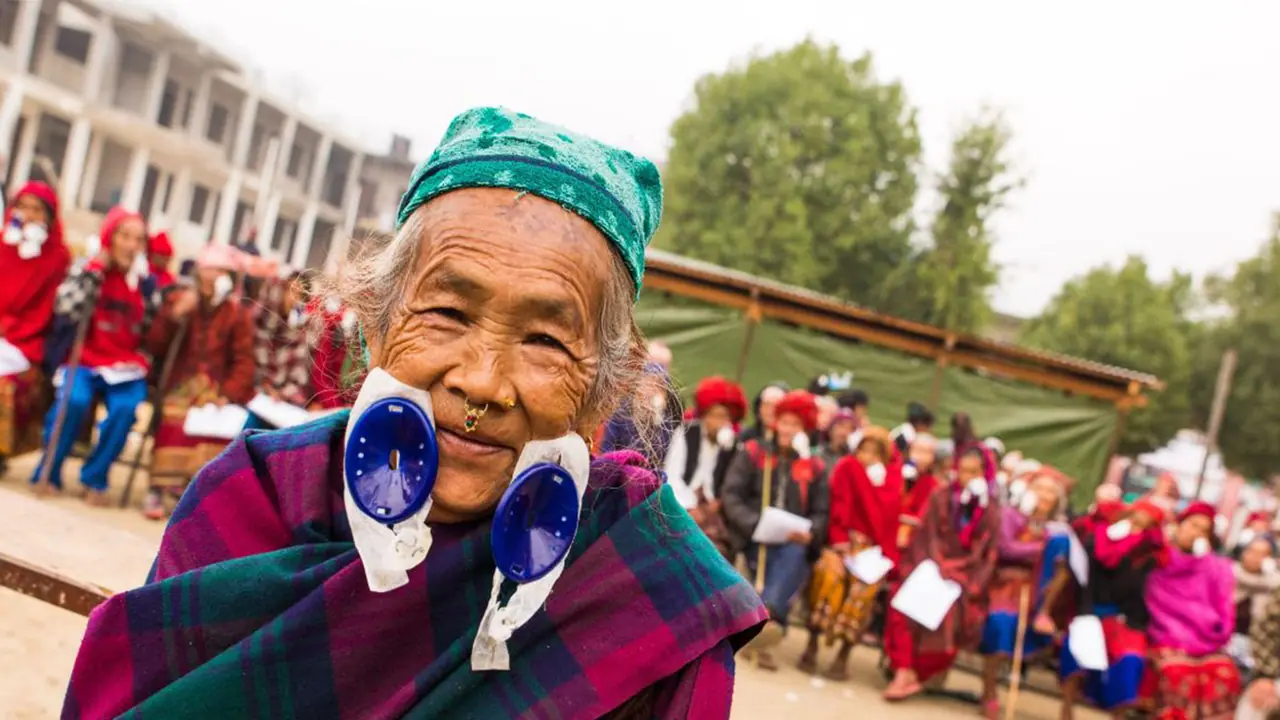
An elderly couple in Nepal's Bara district, who lost their sight to cataracts, regained their vision and independence after a new community eye hospital opened near their home, eliminating the need for expensive and arduous travel for treatment.
For years, Mitthu Devi Thapa Magar and her husband Krishna faced daily hardships of failing eyesight in a region with limited medical access. For this elderly couple there were no services close to their home in Nijgadh a town in Bara district along the Southern plains of Nepal. But a community eye hospital that came into operation just minutes from their home brought back their sight and their independence.
After losing vision in both eyes for five to six months, he could no longer perform simple tasks. "After I lost my sight (to Cataract), I used to trip over the stones and tree branches lying on the road. Now (after surgery) I will work on the field taking care of the crops and plant seasonal flowers," 82 years old Krishna, a former army officer said.
It was first Mithu who was diagnosed with cataract and she had to travel for two hours accompanied by a companion for the treatment adding on her expenses and burden. "I bought the medicines from Hetauda, only had to bear the expenses of the travel and accommodation but there was no charge to operate both of my eyes. Now my husband didn't need to travel and got all the medicines and other necessities as well as the operation at no cost," Mithu Devi said.
Community Hospital Brings Hope to Rural Nepal
The couple's challenges reflect broader issues in rural Nepal, where access to eye care is often limited, particularly for older residents in remote areas. But the things changed with the opening of the Tilganga Nijgadh Community Eye Hospital less than five minutes' drive from their home.
Fifteen months after Mitthu's surgery in Hetauda, Krishna underwent his procedure locally. On the morning after surgery, as Reeta Gurung, CEO of the Tilganga Institute of Ophthalmology, removed the eye patches, Krishna was overcome with emotion. He embraced the doctor, his wife Mitthu, and his three-year-old great-granddaughter, Renish Shrestha.
A Partnership to Combat Blindness
The Tilganga Nijgadh Community Eye Hospital is part of efforts by the Tilganga Institute of Ophthalmology and the Fred Hollows Foundation to bring eye care closer to rural communities.
"Some 82 per cent of people aged over 50 years who are needlessly blind would not have lost their sight if they had better access to affordable eye care. A shortage of eye health workers and equipment, especially in rural areas, and that seven children lose their vision every day in Nepal, often from preventable causes," Anjila Dahal, Nepal Country Manager of Fred Hollows Foundation told ANI.
In order to reach patients with cataracts, the foundation has been playing a pivotal role in supporting the pioneering ophthalmology hospital in Nepal which has screened over 199,572 people last year. As per the figures, a total of 38,524 eye operations and treatments has been performed while 14,251 pairs of glasses also have been distributed.
Restoring Dignity and Productivity
The story of Mitthu and Krishna illustrates the profound human impact of the efforts made by the community hospital especially in the South Asian nation like which lacks proper health facilities. Often considered as a burdensome journey filled with expense and frustration the community hospital like that established in Nijgadh bordering India has made trips for the patients more accessible as well as allow an elderly couple to reclaim their dignity, productivity, and joy in everyday life.
Economic Benefits of Eye Care
Apart from the benefits to those in need, a research conducted by the Fred Hollows Foundation jointly with the International Agency for the Prevention of Blindness (IAPV) and Seva Foundation shows economic benefits as well. The research estimates that a USD 25.9 million investment in eye health initiatives in Nepal could generate USD 451 million in economic benefits annually. (ANI)
(Except for the headline, this story has not been edited by Asianet Newsable English staff and is published from a syndicated feed.)