Degrees obtained here are fully recognised across Europe and internationally, which is a key consideration for families planning long-term careers that are not affected by borders.
As more Indian students look for internationally recognised engineering degrees outside the traditional English-speaking destinations, Hungary is emerging as a more visible and cost-conscious European option. In this interview, András Nemeslaki, Vice-Rector for International Affairs at the Budapest University of Technology and Economics, explains how BME combines academic reputation, practical engineering education and international student support for applicants from India.
Why should Indian students consider Hungary - and BME in particular - as a study destination?
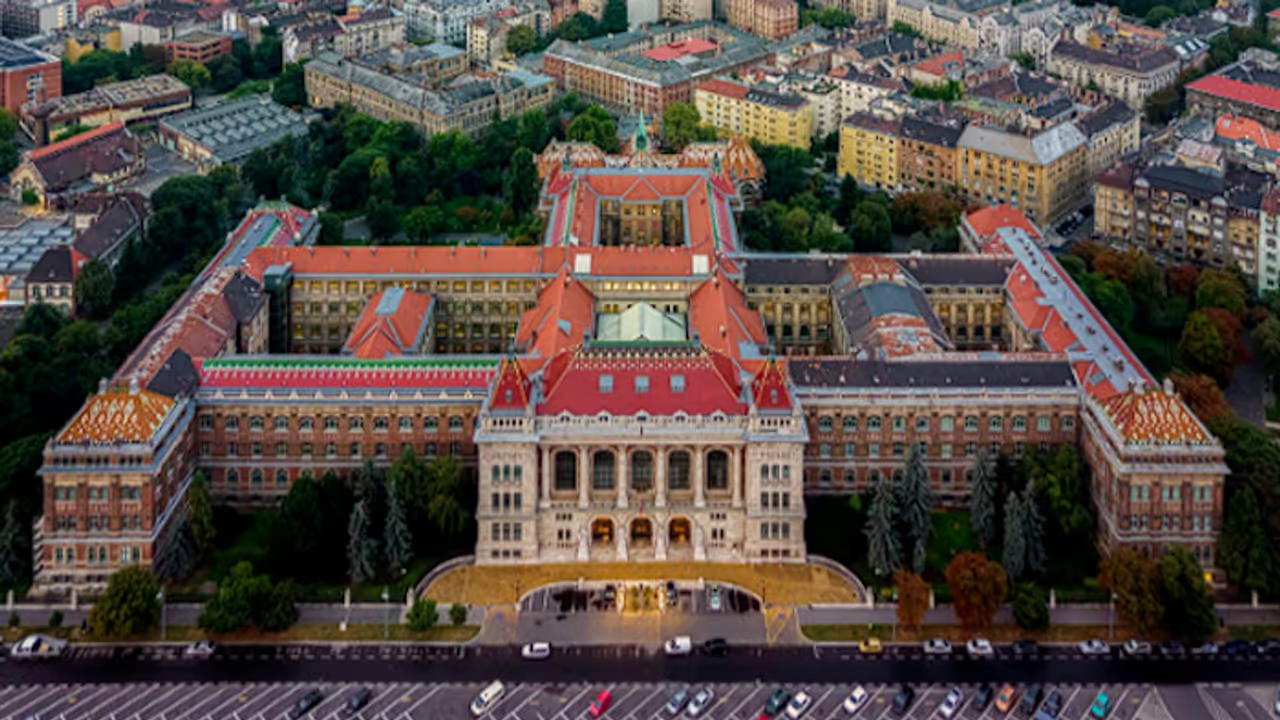
Hungary offers a strong combination of academic quality, safety, and affordability within the European Union. Degrees obtained here are fully recognised across Europe and internationally, which is a key consideration for families planning long-term careers that are not affected by borders. At the Budapest University of Technology and Economics (BME), we build on more than 240 years of engineering education, combined with modern research infrastructure and close industry cooperation. This allows our students to receive both a solid theoretical foundation and practical, career-relevant experience. At the same time, Hungary is becoming increasingly visible among Indian students. The growing number of applicants reflects a broader shift: students are looking beyond traditional destinations toward universities that offer high-quality education with better value and more individual academic attention.
Related Articles

BME is often described as Hungary’s leading technical university. What defines its academic strength?
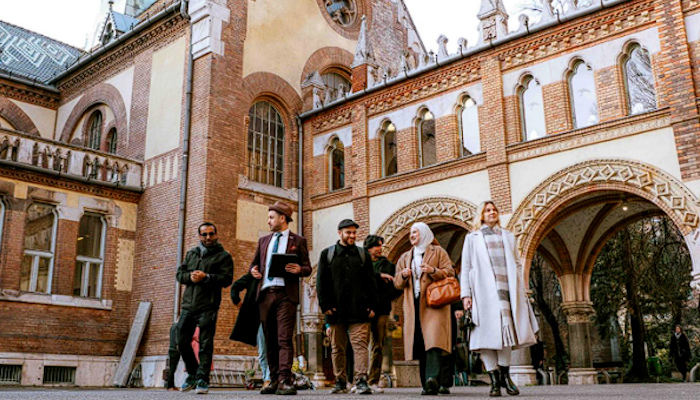
BME is a comprehensive technical university with eight faculties covering engineering, natural sciences, and economics. This interdisciplinary structure is one of our key strengths. Today’s global challenges require engineers who understand multiple domains parallel. We offer more than 50 English-language programmes, including bachelor’s, master’s, and doctoral levels. Our teaching is closely connected to research and industry. Students are not only learning theories but also working on real-world problems, often in collaboration with companies or independent research groups. In international rankings, BME is consistently positioned among the top universities globally in engineering and technology, and it is recognised as the leading technical university in Hungary.
What makes BME particularly relevant for Indian students pursuing engineering or technology careers?
There is a strong connection between BME’s academic focus and the global demand for engineers, particularly in areas such as digital technologies, infrastructure development, energy systems, and sustainability. Programmes like Computer Science Engineering, Civil Engineering, and Electrical Engineering are especially relevant. These fields are not only academically rigorous but also closely connected to industry needs. Students gain experience in areas such as artificial intelligence, smart infrastructure, and data-driven systems. These are skills that are highly transferable internationally. Additionally, Hungary’s growing economic cooperation with India creates further opportunities. Many Indian companies are already present in Hungary, and this contributes to a professional environment where international graduates can find meaningful career paths.
How does BME support international students, especially those coming from India?
We understand that studying abroad is a major decision, both academically and personally. That is why we provide structured support systems from the application stage all the way through to graduation. International students are assisted by dedicated programme coordinators and the Academic Services Centre in all administrative matters. In addition, the International Mentor Team plays a crucial role: experienced students help newcomers with accommodation, residence procedures, and everyday life in Budapest. Beyond administration, we also focus on integration. BME has a diverse international community, with students from over 120 countries. This creates an inclusive environment where students can build networks, support each other, and be part of a global academic community.
How does BME connect education with research and innovation?
At BME, education, research, and innovation are closely interconnected. Our research activities cover key global areas such as artificial intelligence, sustainable energy, water sciences, and advanced materials. Students - especially at master’s and doctoral levels - are actively involved in research projects. These projects often take place in collaboration with international partners or industry stakeholders. We also have strong partnerships with more than 300 companies, and a dedicated technology transfer ecosystem that helps translate research results into real-world applications. This environment prepares students for both academic and industrial careers.
What role does BME’s international network play in student opportunities?
Internationalisation is a strategic priority for BME. We have over 400 Erasmus+ partner institutions in 42 countries and cooperate with more than 1,200 universities worldwide. We are also a founding member of the EELISA European University alliance, which connects leading engineering institutions across Europe. Through this network, students can participate in joint courses, mobility programmes, and collaborative research projects. For Indian students, this means that studying at BME is not limited to one location. It provides access to a broader European academic ecosystem, significantly expanding both educational and career opportunities.
What are the career prospects after graduating from BME?
A BME degree is widely recognised and valued by employers. Our graduates work in multinational companies, research institutions, and innovative startups across Europe and beyond. The strength of the degree lies in its combination of theoretical depth and practical application. Students graduate with problem-solving skills, engineering thinking, and international experience, all of which are highly valued in global labour markets. We also see many students continuing to doctoral studies or engaging in research careers. Others enter industry directly, often in high-demand sectors such as IT, automotive engineering, energy, and infrastructure.
What message would you give to Indian students and their families considering BME?
Choosing a university is a long-term investment in knowledge, skills, and future opportunities. At BME, we offer a stable, academically rigorous, and internationally connected environment where students can develop both professionally and personally. For Indian students, this means access to European education, global career pathways, and a supportive academic community. Our goal is to prepare individuals who can contribute to solving complex global challenges in their respective professional fields, with the possibility of overlapping disciplines. We welcome motivated students who are ready to engage with demanding studies and take advantage of the opportunities that an international university environment can provide.