
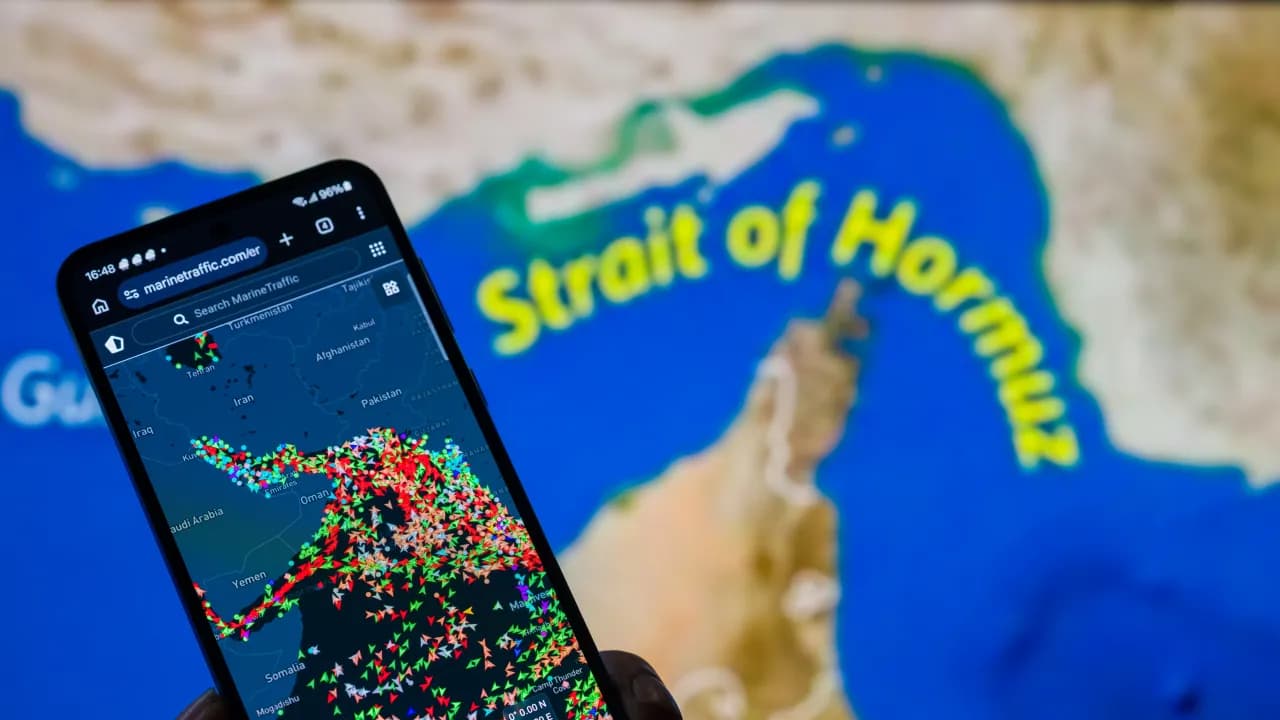
The U.S. military launched a major airstrike on military targets in southern Iran and revoked key oil sanctions waivers after a series of Iranian attacks on international commercial vessels.
- U.S. Central Command launched airstrikes on several military installations in southern Iran, targeting surveillance networks, air defence systems and drone assets.
- The Trump administration officially rescinded a performance-based economic waiver that had briefly allowed Iran to sell oil under a recent interim peace memorandum.
- The sudden geopolitical shift follows projectile attacks within a 24-hour period on three civilian commercial ships, including Saudi and Qatari energy tankers.
The United States launched a series of powerful retaliatory airstrikes against military infrastructure in southern Iran on Tuesday, hours after the Trump administration rescinded economic waivers allowing Iranian oil exports.
The twin military and economic actions follow a succession of projectile attacks against commercial vessels in the strategic Strait of Hormuz.
According to the Joint Maritime Information Center, a U.S.-led naval organization that provides security updates to commercial vessels in the Middle East, three ships—including a liquefied natural gas tanker, an oil supertanker, and a third unidentified vessel—were targeted in attacks in or near Hormuz on Tuesday.
US Conducts Airstrikes In Southern Iran
U.S. Central Command (CENTCOM) confirmed that American forces began hitting specific installations inside Iran to impose heavy penalties for what it called unwarranted and dangerous aggression against civilian international shipping.
"U.S. Central Command forces have begun launching a series of powerful strikes against Iran to impose heavy costs for targeting and attacking commercial shipping crewed by innocent civilians in an international waterway," CENTCOM stated in a public announcement.
US Revokes Waiver That Allowed Iran To Sell Oil Worldwide
Prior to the military intervention, the U.S. Department of the Treasury's Office of Foreign Assets Control effectively dismantled the primary financial incentive upholding the current U.S.-Iran interim peace negotiations.
Federal authorities revoked "General License X," a temporary sanctions waiver enacted just over two weeks ago under a performance-based 60-day memorandum of understanding. The original agreement required Iran to maintain a regional ceasefire and secure vital global shipping lanes in exchange for limited crude oil exports through August 21.
“Iran will only reap benefits if they exhibit good behavior,” a U.S. official told CNBC in a statement. “Iran’s actions in the Strait were wholly unacceptable to the United States and will be met with consequences.”
SPY, QQQ Retail View
The iShares S&P 500 ETF and the Invesco QQQ extended decline after-hours, both falling about 0.1%. Retail sentiment on the ETFs were ‘extremely bullish’ with ‘normal’ to ‘high’ message volumes.
For updates and corrections, email newsroom[at]stocktwits[dot]com.
