
CoinShares said on Tuesday that at least 35 EH/s of computing power will leave the listed miners in the third quarter.
- CoinShares noted that Core Scientific paid $41.9 million to cancel a chip order, and Keel stopped mining entirely in June.
- According to the firm, enough machines were leaving the group to cut the Bitcoin network's total computing power by roughly 4%.
- Economist and BTC advocate Saifedean Ammous stated Bitcoin's electricity consumption may already have peaked.
AI data centers make around $1.5 million a year in profit per megawatt compared to around $0.5 million for Bitcoin mining, increasing the incentive for miners to move power and infrastructure to AI.
According to CoinShares’ second-quarter Bitcoin mining report, Core Scientific (CORZ) spent almost $42 million to cancel a chip order, Keel Infrastructure (KEEL) has already stopped mining entirely, while IREN (IREN) and Cipher Digital (CIFR) are winding down. Between them, CoinShares reported that enough machines were leaving the group to cut the Bitcoin network's total computing power by roughly 4%.
The firm said at least 35 EH/s was scheduled to leave the listed miner group in the third quarter as IREN and Cipher completed their exits. Hashrate, measured in exahashes per second (EH/s), is the industry's yardstick for computing power. The whole Bitcoin network runs at roughly 920 EH/s, so the exits amount to roughly 4% of it.
Core Scientific Canceled Its Own Chips
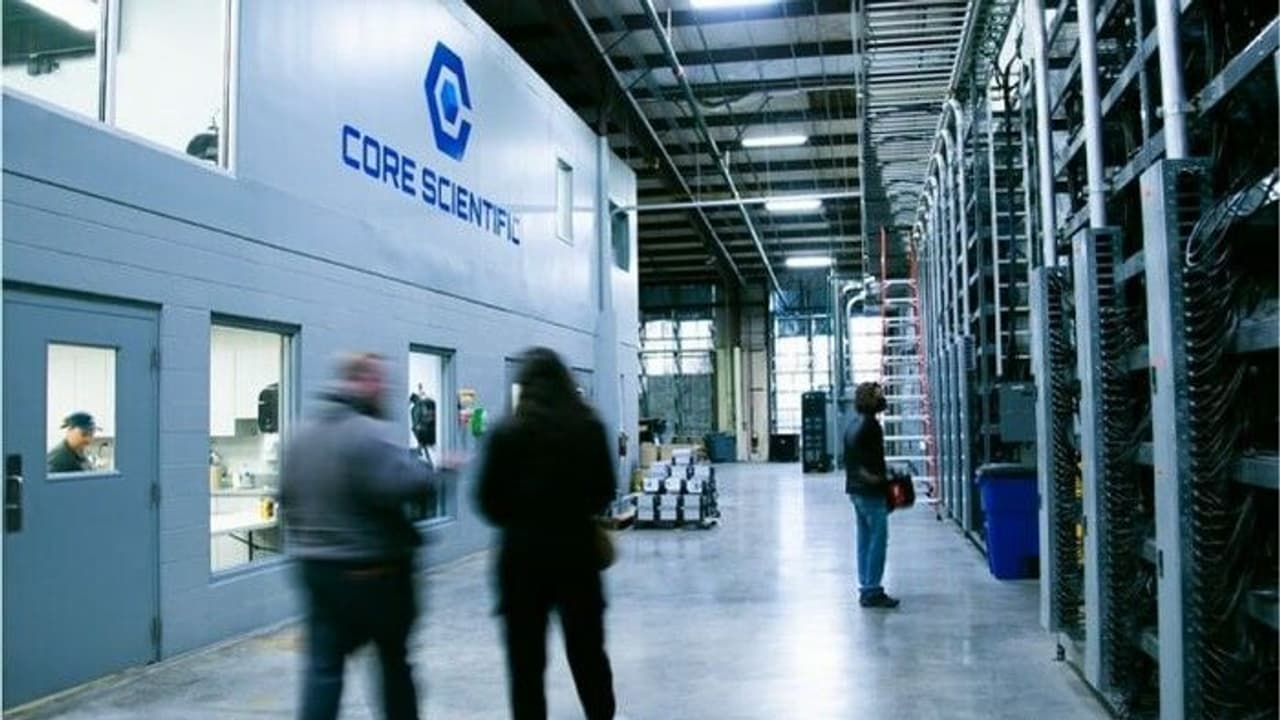
The CoinShares report said Core Scientific paid $41.9 million in the second quarter to terminate its agreement with Block's Proto division, canceling roughly 15 EH/s of next-generation 3nm chip deliveries. The report described the hardware as the “most efficient mining hardware ever produced.”
Core Scientific's mining operation was loss-making, with self-mining gross margin at -56%, according to the report. Management said it operated its remaining rigs solely to offset contractual power obligations while sites converted.
The report also found Core Scientific was the only company in its table whose cash cost, at $105,821 per Bitcoin, exceeded its all-in cost of $101,597, because mining now accounts for just 13.12% of its revenue.
Keel also ceased Bitcoin mining in June and will record zero mining revenue in the third quarter, the first listed miner to reach that number, CoinShares said. The report put its second-quarter gross margin at -285% as it accelerated depreciation on retired equipment. Keel sold 1,085 BTC at an average of $69,100 and said it intends to liquidate the remaining 1,861 coins before year-end.
The report also cited IREN's 10-K, explaining that its transition out of mining will be substantially complete by the end of this year. Finally, CoinShares added that Cipher expected mining to be immaterial by 2030 and was likely out by the end of 2027.
The Economics Behind The Exits
CoinShares saw a reason behind the transition. The firm estimated that AI work generated annualized profits of around $1.5 million per megawatt, against roughly $0.5 million for mining.
The report said the second quarter pushed the listed mining sector below cash breakeven in aggregate, with a weighted average cash cost, excluding taxes, of about $75,500 per Bitcoin against a quarter-end price of $58,400. It put the monthly average hash price, the revenue a miner earns per unit of computing power, at a record low of $27.7 per PH/s per day in June.
Network hashrate sat roughly 50% below its long-term trend following the first six-month decline since China's 2021 mining ban, according to CoinShares.
CoinShares cautioned that Bitcoin mining was not dying, and that the shift was a large cohort of public miners changing business models. It framed the hashrate decline as consistent with prior post-halving troughs rather than a structural break.
Bitcoin Mining’s Economic Tailwind Is Fading
Economist and Bitcoin advocate Saifedean Ammous took a different view, stating that Bitcoin's electricity consumption may already have peaked. He said the network's annualized electricity demand has fallen from roughly 190 TWh (terawatt-hours, a measure of total electricity consumed over a year) in December 2025 to the high-130 TWh range by mid-2026.

His case rests on what miners earn. Every four years, the network halves the number of new Bitcoin paid out to miners, so the price has to roughly double just to keep their revenue flat. For most of Bitcoin's history, it more than doubled. In the epoch before this one, miner revenue came in nearly three times higher than the epoch before that. This time it is up just 28%.
Ammous said that was not enough to cover the falling value of the dollar. The subsidy, he wrote, "is not beating dollar devaluation" for anyone who puts devaluation above 7% a year.
He said AI has changed what miners can do with their power. Bitcoin mining is "a zero-sum game" because difficulty rises to absorb any new capacity, Ammous wrote, while AI data centers are not. "If you have cheap electricity and the capacity for building mining facilities, pivot to AI data centers,” he noted.
Bitcoin Miner Stocks Tank Further
The comments came as BTC–related mining companies saw a downside in mid-morning trading.
IREN stock and KEEL stock were down over 4%, while CORZ stock and CIFR stock were trading down by over 3% during midday trading hours.
Bitcoin’s price was trading down by 2.9% in the last 24 hours, at around $76,300. On Stocktwits, retail sentiment around BTC remained in the ‘extremely bearish’ zone, while chatter around it stayed at ‘low’ levels over the past day.
Read also: XRP Gets Second-Largest Weight In Grayscale's Bitcoin-Free Advisor Portfolio
For updates and corrections, email newsroom[at]stocktwits[dot]com.<
