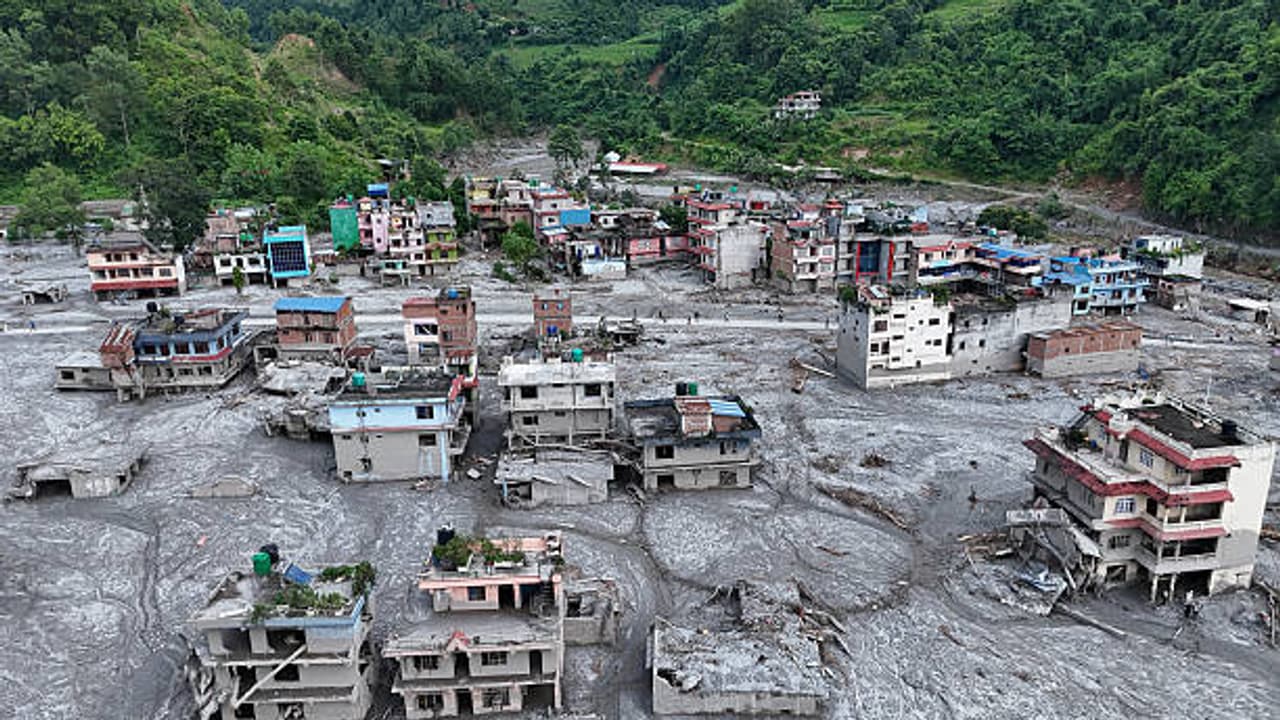
The glacier collapse that triggered devastating landslide and flash floods along the Nepal-China border, leaving 1,127 people dead, showed visible signs of instability days before the disaster, according to a new report by the HiRISK scientific consortium.
The glacier collapse that triggered devastating landslide and flash floods along the Nepal-China border, leaving 1,127 people dead, showed visible signs of instability days before the disaster, according to a new report by the HiRISK scientific consortium. Scientists identified what they described as “pre-event indications”, including meltwater that had turned visibly brown and a crack that was steadily propagating into the surrounding bedrock slope. The revelations have intensified concerns over the absence of operational early warning systems specifically designed to detect glacier-related hazards in the remote Himalayan region.
Researchers said that while the rapidly unfolding landslide may have left little time for evacuation near the initial impact zone, more comprehensive warning systems farther downstream could potentially have saved a “significant number of lives”.
Warning signs emerged before collapse
The HiRISK report, published last week and cited by CNN, examined the physical changes that preceded the glacier collapse and assessed whether the disaster could have been detected earlier.
Related Articles

“In hindsight, there were some pre-event indications,” the scientists said, highlighting the unusually brown meltwater and a crack propagating into the surrounding bedrock slope days before the collapse.
However, scientists acknowledged that detecting such changes in an isolated, high-altitude Himalayan environment remains an enormous challenge.
The report noted that early warning systems had recently been established in parts of the region to monitor several glacial lakes in China. However, there was no operational system specifically designed to detect glacier-related hazards at the location where the collapse occurred.
Once the collapse began, the sheer speed of the initial landslide meant conventional warning mechanisms would likely have provided insufficient time to evacuate a border checkpoint that was among the first areas struck.
Further downstream, however, the window for intervention could have been considerably longer.
Scientists said comprehensive early warning systems capable of providing 10 minutes or more of advance notice could have saved a “significant number of lives”.
The findings underline the urgent need for monitoring systems that go beyond glacial lakes and track unstable glaciers, cracks and vulnerable mountain slopes as well. Equally critical is ensuring that alerts can reach communities and infrastructure located downstream before disaster strikes.
Death toll climbs to 1,127
As investigations into the disaster and rescue operations continue, the death toll has climbed to 1,127, according to Nepal Police.
Authorities have recovered 45 bodies from Rasuwa, 155 from Nuwakot, 59 from Dhading, 348 from Chitwan, 66 from Gorkha, 38 from Tanahun, 217 from Nawalparasi East and 190 from Nawalparasi West.
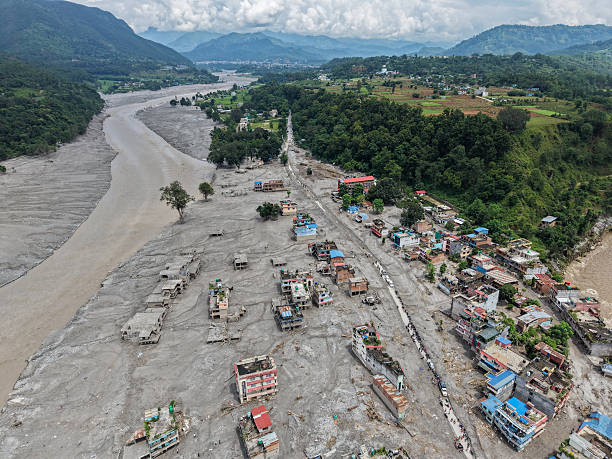
Nine additional bodies have been recovered in India.
Of the bodies recovered so far, only 95 have been identified and handed over to their families, highlighting the scale and complexity of the disaster.
Calls grow for Nepal-China cooperation
The catastrophe has also intensified demands for closer cooperation between Nepal and China to monitor rapidly evolving hazards across the Himalayas.
Chinese and Nepali authorities had met as recently as May to discuss strengthening cooperation on monitoring natural hazards in the region, according to a government official who attended the meeting.
Experts have stressed that stronger cross-border information sharing is vital because landslides, floods and other mountain hazards can sweep across borders with little warning, threatening communities and critical infrastructure on both sides.
“There is almost no way that anyone could have detected this event prior – it happened in a blind spot … (making it) extremely difficult to detect,” Austin Lord, a senior fellow in the Energy, Water and Sustainability programme at the Stimson Center, wrote in a recent commentary.
He also highlighted “how greater communication, information sharing, and collaborative analysis of transboundary risks between Nepal and China are sorely needed.”
India joins rescue efforts
India has also stepped up its support for Nepal's rescue operations, deploying specialised Army teams to assist Nepali forces at the Chilime and Langtang tunnel sites.
The teams have been operating in treacherous terrain and unstable conditions while searching for people still reported missing.
Glacier loss is making Himalayan hazards worse
The HiRISK findings come against the backdrop of mounting scientific warnings about accelerating glacier loss across the Hindu Kush Himalaya.
The report is separate from two major assessments released by the International Centre for Integrated Mountain Development (ICIMOD) in March 2026. Those reports examined long-term changes across the Hindu Kush Himalaya and warned that rapidly accelerating glacier loss was increasing the threat of cryosphere-related disasters, including glacial lake outburst floods.
According to the ICIMOD assessments, glaciers across the Hindu Kush Himalaya lost around 12% of their total area and 9% of their estimated ice reserves between 1990 and 2020. Glacier ice loss also doubled after 2000.
The region's smallest glaciers were found to be shrinking particularly rapidly, with three-fourths of HKH glaciers falling into the vulnerable category of less than 0.5 square kilometres.
ICIMOD also flagged significant shortcomings in glacier monitoring. Its 2026 Glacier Outlook found that just seven of 38 monitored glaciers met the global benchmark standards established by the World Glacier Monitoring Service, while several major glacierised areas remained largely unmonitored.
“This isn’t a distant problem; it’s a crisis unfolding in real-time, with new disasters every summer and monsoon,” ICIMOD Director General Pema Gyamtsho said.