
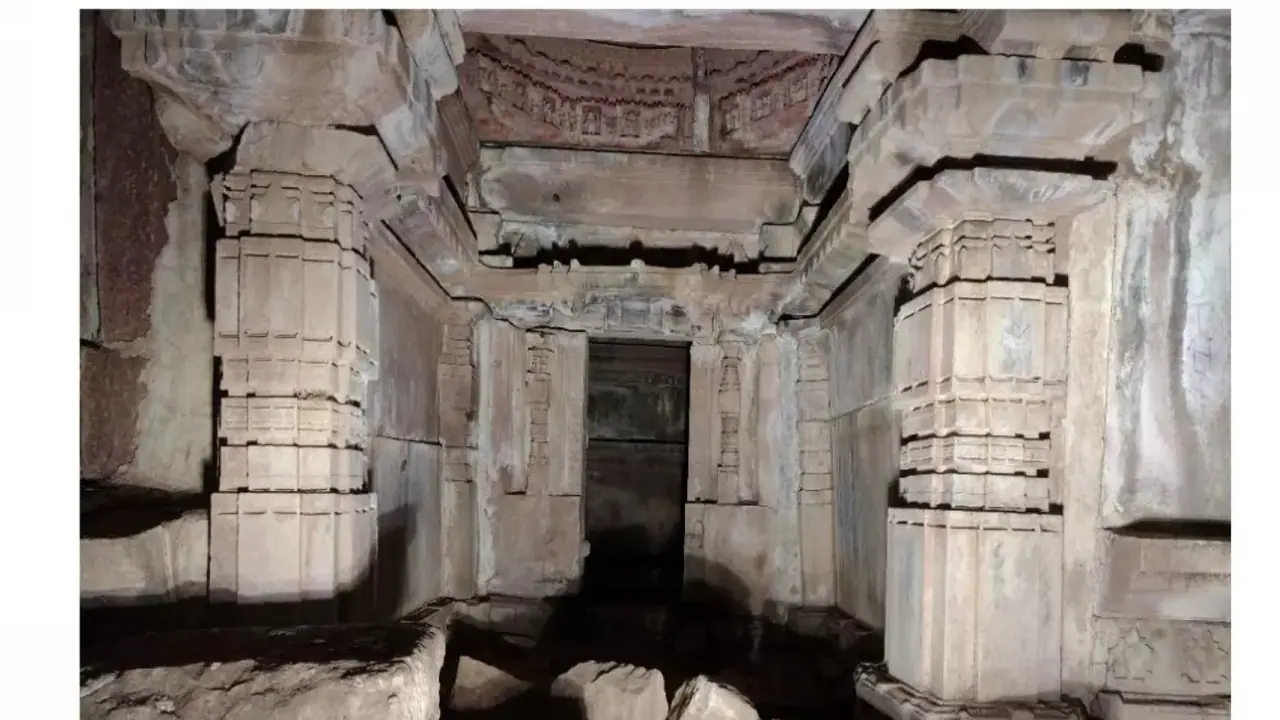
The historic, Kakatiya-era Gollala Gudi Temple at Palampet in Telangana's Mulugu district has been declared a Monument of National Importance by the Archaeological Survey of India (ASI), the Ministry of Culture announced.
The historic Gollala Gudi Temple at Palampet in Mulugu district of Telangana has been declared a Monument of National Importance by the Archaeological Survey of India (ASI), the Ministry of Culture said in a post on X. https://x.com/PIBCulture/status/2095083938184409089
The Kakatiya-era Trikutalaya is located near the UNESCO-listed Ramappa Temple and is renowned for its exquisite carvings and architectural heritage.
Architectural Significance of Gollala Gudi Temple
Gollala Gudi temple is a Trikutalaya structure, comprising an east-facing mandapa surrounded by three garbhagrihas. Its parapet is adorned with intricate sculptures, while the entablature and doorways feature rows of exquisitely carved hamsas along with jali work, which are among the temple’s distinctive architectural features.
The temple has two detached shrines in front, which are intricately carved and adorned with figures of dvarapalas. The shrines have antechambers decorated with finely carved cornices and screens.
The main temple comprises a front portico leading to a central hall, with three shrines and antechambers located on the northern, southern and western sides.
The Official Declaration
According to a notification issued by the Ministry of Culture on August 31, 2026, the Central Government declared the ancient monument to be of national importance under sub-section (3) of Section 4 of the Ancient Monuments and Archaeological Sites and Remains Act, 1958.
The notification, bearing number S.O. 4802(E), said the government had earlier published a notification on March 6, 2026, expressing its intention to declare the monument specified in the Site Plan and Schedule annexed to that notification as a monument of national importance.
The earlier notification was published in the Gazette of India, and a notice of the government’s intention was affixed at a conspicuous place near the ancient monument, as required under sub-section (1) of Section 4 of the Act. The Ministry said copies of the Gazette notification were made available to the public on March 6, 2026, and no objection had been received from the public to the proposed declaration.
The Central Government subsequently exercised the powers conferred under the Act to formally declare the ancient monument as being of national importance. (ANI)
(Except for the headline, this story has not been edited by Asianetnews Editorial staff and is published from a syndicated feed.)