
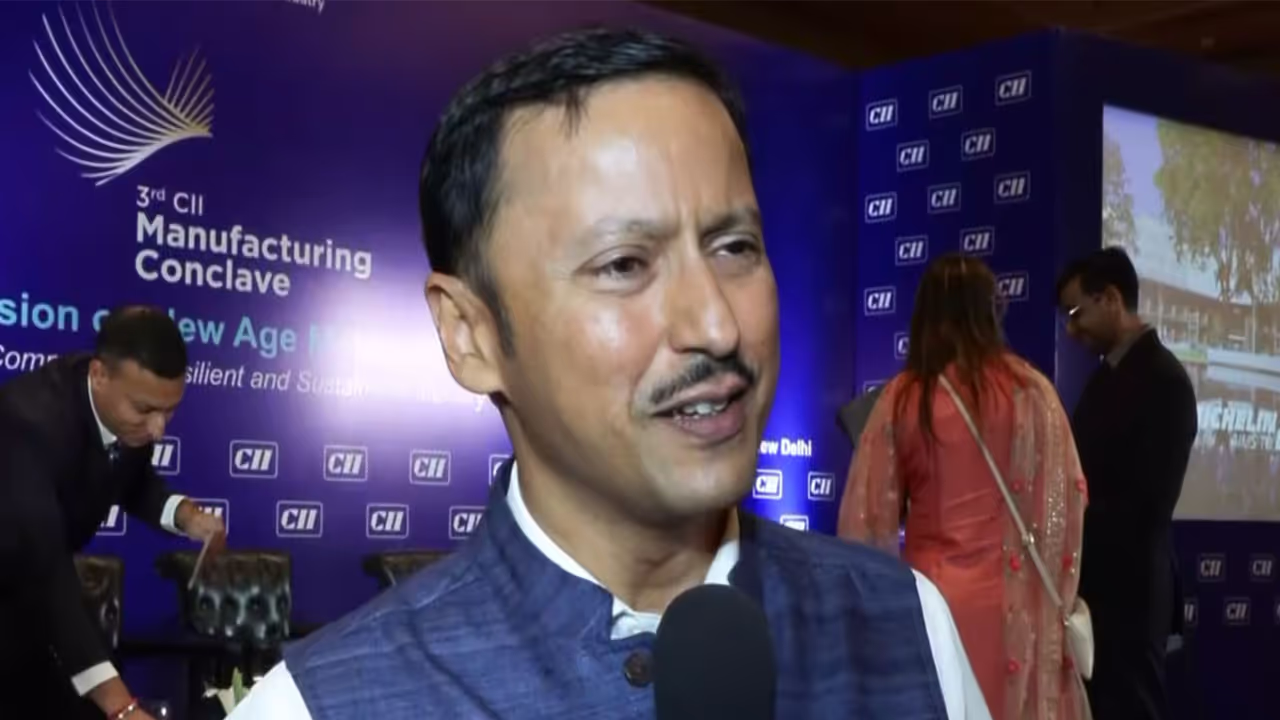
India must accelerate commercialisation of research in new-age materials to boost high-tech sectors like semiconductors and EVs and cut import dependence, said Deepankar Aron, Joint Secretary, Ministry of Chemicals and Petrochemicals.
India needs to accelerate the commercialisation of research in new-age materials to strengthen its manufacturing capabilities in high-technology sectors and reduce dependence on imported inputs, Deepankar Aron, Joint Secretary, Ministry of Chemicals and Petrochemicals, said on Thursday.
Speaking to ANI on the sidelines of the 3rd edition of the CII Manufacturing Conclave, Aron said advanced materials would have a growing role in sectors such as semiconductors, electric vehicles, lithium-ion batteries and aerospace and defence, where materials need to withstand high temperatures, pressure and mechanical stress. "New-age materials are there in all the applications we have today, whether semiconductors, electric vehicles, lithium-ion batteries or aerospace applications in defence," Aron said.
Focus on Commercialisation
He said India already has research taking place at various research centres and IITs, but the focus now needs to be on taking these technologies beyond laboratories and developing them for commercial use. "We have to take it further, commercialise it and develop it. This is absolutely possible for India," he said.
Leveraging National Strengths
Aron said India has the skilled manpower and engineering capabilities needed to develop advanced materials, while government initiatives in areas such as critical minerals and rare earth magnets are supporting the broader effort towards self-reliance.
Emerging Materials and Self-Reliance
He also pointed to emerging materials such as carbon nanotubes, graphite and biopolymers, including polylactic acid, which can be produced using biological processes involving sugar and corn instead of relying solely on conventional petroleum-based inputs. "All this is being made in the country; it has started, and this will also reduce our dependence on oil from West Asia," Aron said.
He said the government's research support is also intended to bridge the gap between laboratory research and commercial applications, particularly by supporting work needed to make technologies practical and market-ready.
Building a Resilient Manufacturing Ecosystem
The comments come as India seeks to strengthen its manufacturing base and increase its participation in global value chains. At the CII conclave, industry leaders highlighted technology adoption, supply-chain diversification and greater participation of MSMEs as important to building a resilient manufacturing ecosystem.
The event also saw the release of a report, Champions & Challengers: A Trade Competitiveness Assessment of India's Strategic Manufacturing Sectors, which examines bearings, hearables and wearables, tyres, titanium and footwear, identifying areas of existing strength and gaps that need to be addressed to support the next phase of manufacturing growth. (ANI)
(Except for the headline, this story has not been edited by Asianet Newsable English staff and is published from a syndicated feed.)