China’s “office ageing” trend is gaining traction online as workers increasingly complain that long hours in poorly ventilated, artificially lit workplaces are taking a toll not only on their health but also on their appearance.
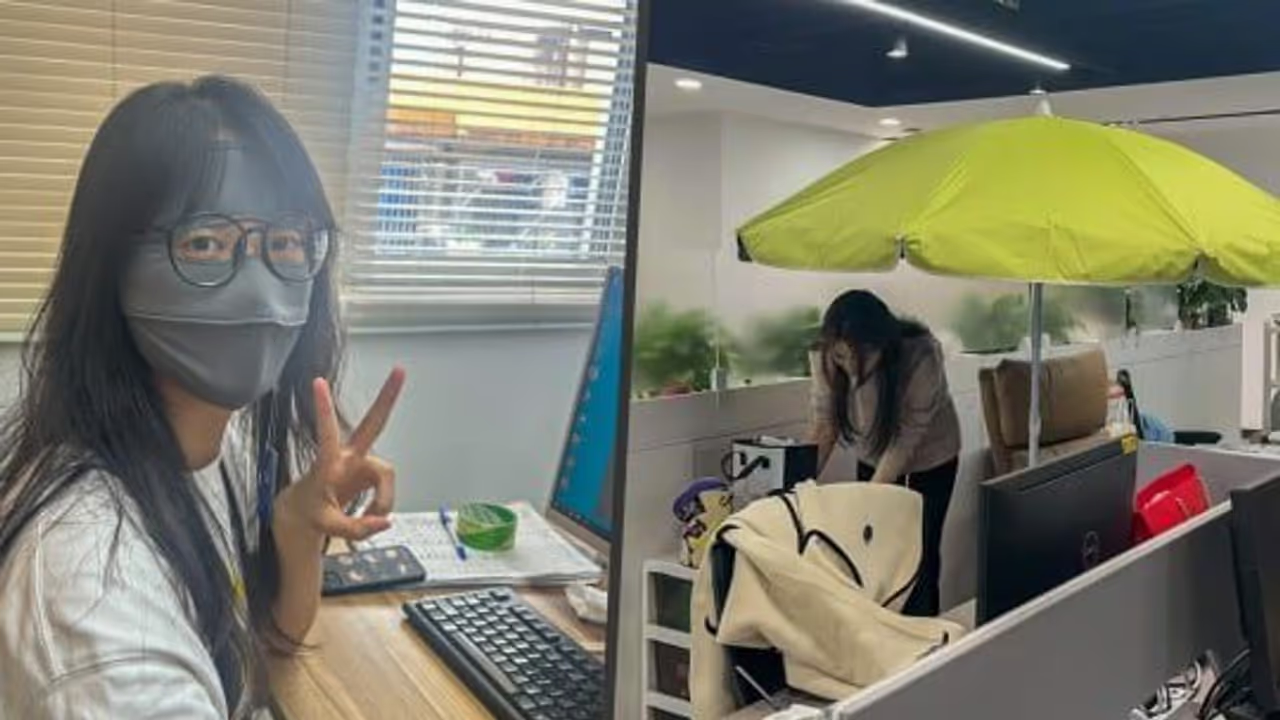
China’s “office ageing” trend is gaining traction online as workers increasingly complain that long hours in poorly ventilated, artificially lit workplaces are taking a toll not only on their health but also on their appearance. From sunscreen and wearing full-face coverings to placing parasols beside their desks, Chinese employees are devising unconventional ways to protect themselves from what they describe as the ageing effects of office life.
The conversation gained momentum after a RedNote user, @lelehangmu from Jiangsu province in eastern China, revealed that barely a month into his job, his complexion had visibly darkened while his eyes had begun feeling persistently strained.
Some employees have taken workplace self-care seriously - by erecting parasols at their desks, wearing sun hats and face coverings, and applying sunscreen to their faces and arms.
Related Articles

Lighting has also emerged as a major concern. Lighting designer Yoki told a mainland media outlet that offices frequently rely on cool-toned lighting because it is believed to help workers stay alert and potentially boost productivity.
Dry indoor air, dust-clogged ventilation systems and elevated carbon dioxide levels can intensify physical discomfort, fatigue and the mental exhaustion associated with spending long hours inside offices.
The concerns echo the World Health Organization’s concept of “sick building syndrome”, a term introduced in the 1980s to describe a collection of symptoms experienced by people spending time in certain buildings, even when no specific medical condition can be identified.
Headaches, nasal congestion, dry skin, throat irritation, fatigue and difficulty concentrating are among the symptoms associated with the syndrome. They can intensify with prolonged exposure and often ease after a person leaves the affected environment.
The phenomenon emerged alongside changes in modern architecture and energy-saving measures. As buildings became increasingly airtight to reduce heating and cooling costs, the unintended consequence was often restricted circulation of fresh outdoor air.
A 2008 study by Indian social medicine scholar Sumedha Joshi linked sick building syndrome with reduced productivity and increased absenteeism. The study recommended better ventilation, regular breaks and measures aimed at reducing workplace stress.
Chinese internet users have also blamed prolonged desk work for forward-leaning necks and rounded shoulders. Others have jokingly suggested that hours of intense concentration and habitual frowning leave behind so-called “thinking lines”.
One netizen posed the question: “I age in the office every day. The company pays for my labour, but who will cover my beauty and health?”
Workers are increasingly inventing their own low-cost stress-relief rituals, too. Some have reportedly repurposed empty milk-tea cups as makeshift humidifiers, while others keep unconventional desk “pets”—including rocks and mango pits—which they touch or gently pat to ease anxiety.
As of May, the average working week in China was reportedly around 48.2 hours, significantly above the statutory 44-hour limit.
The growing “office ageing” conversation therefore appears to be about more than skin, posture or tired eyes. It reflects mounting concerns over how much time workers spend indoors, the environments they work in and the physical and psychological costs of prolonged workplace stress.