

Webull posted stronger-than-expected earnings per share of $0.05 on record revenues of $198.8 million for the quarter, with trading-related revenue jumping 66% year-on-year to $147.7 million.
- Equity notional volumes grew 73% to $279 billion and options contracts volume climbed 68% to 213 million contracts year-over-year.
- Webull CEO Denier said that executing on the PDT rule change was a defining event for the quarter and contributed to a significant increase in trading volumes and record quarterly results.
- The PDT removal has reshaped trading behavior, with the CEO saying that traders are now making significantly more frequent, smaller day trades under the new framework.
Shares of Webull Corp. (BULL) surged 14% in overnight trading on Wednesday after the financial platform posted blockbuster second-quarter (Q2) results.
CEO Anthony Denier said in a call with investors that removing the Pattern Day Trade (PDT) rule delivered sizable returns for the company, with sustained trading activity since its elimination.
“Executing on this rule change was our defining event for the quarter and contributed to a significant increase in trading volumes and record quarterly results,” he said.
PDT Rule Change Impact On BULL’s Q2
Webull posted stronger-than-expected earnings per share of $0.05 on record revenues of $198.8 million for the quarter. Trading-related revenue jumped 66% year-on-year to $147.7 million. Meanwhile, equity notional volumes grew 73% from the same period last year to $279 billion. Options contracts volume climbed about 68% to 213 million contracts.
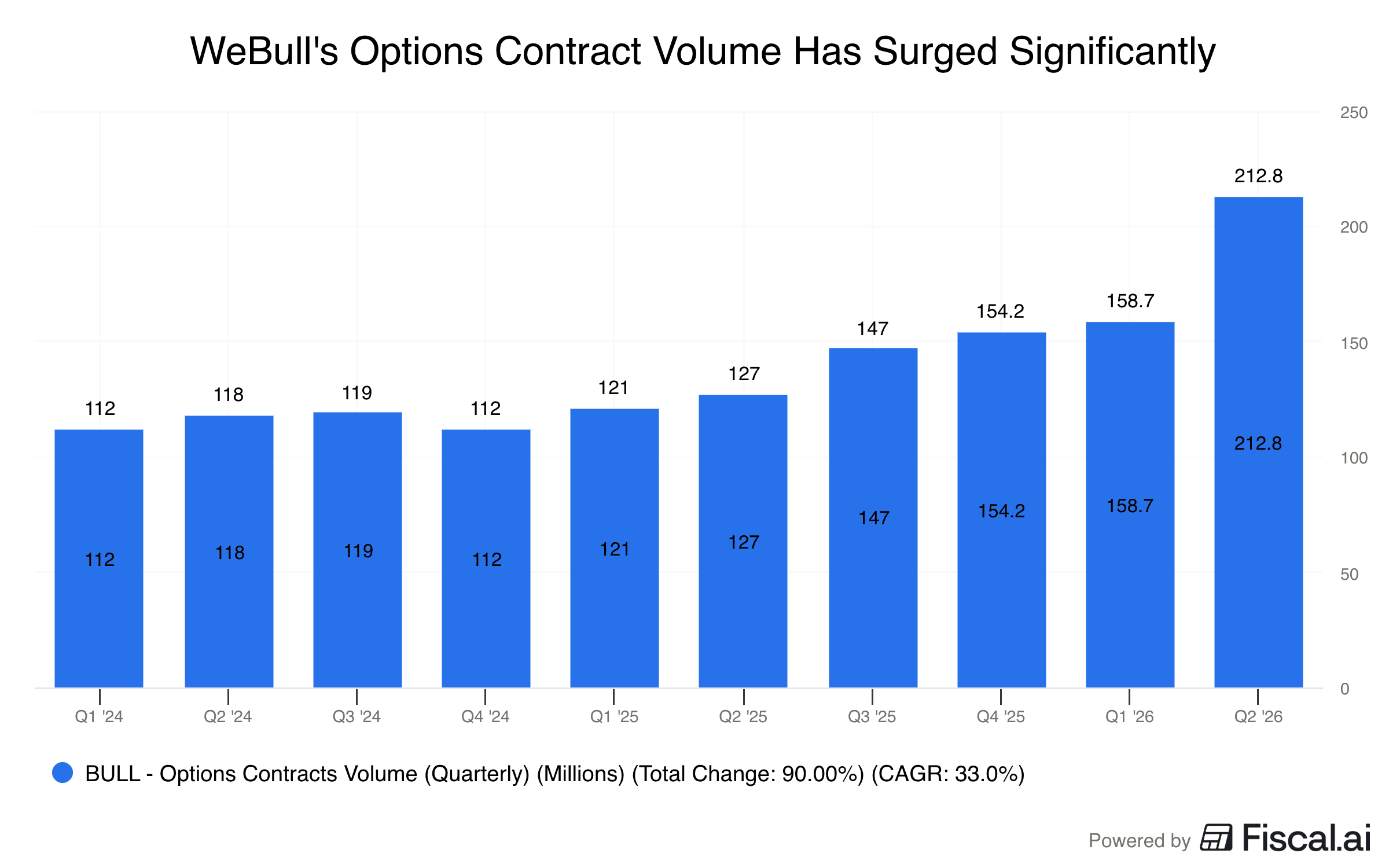
Denier said that the company’s successful navigation of the PDT rule change “drove meaningful share gains, helping us reach a top five position among all retail brokers in options for the first time in our history, and driving record volume in both equities and options during the quarter.”
Change In Webull’s Trader Activity
The Pattern Day Trader (PDT) rule was officially eliminated on June 4, after the U.S. Securities and Exchange Commission approved FINRA's proposal to eliminate it in April.
The removal of the rule resulted in changing trading activity, with many traders switching up their strategy after the $25,000 minimum account requirement, four-day-trade limit and PDT designation were eliminated and replaced by a real-time, risk-based intraday margin framework. The company is now witnessing a significant amount of smaller day trades, the CEO said.
“Not only has the volume risen, but the amount of actual trades within that volume has risen significantly as well, which also raises our take rates or the amount of payment for order flow that we receive on those orders. It is kind of a double positive there,” Denier added.
“I truly believe that removal of PDT is the standard going forward. It will not revert, or volumes will not revert to pre-PDT levels,” he said.
Meanwhile, the CEO also said that August activity is tracking above July, while higher trade frequency could further support monetization.
BULL Stock: Retail Stance
On Stocktwits, retail sentiment around BULL stock improved from ‘bullish’ to ‘extremely bullish’ over 24 hours even as message volumes surged 878%. The stock was also among the top trending tickers on the platform at the time of writing.
One user said, “$BULL This is literally the type of move and numbers that causes massive institutional buy in.”
Another user said, “$BULL Literally 0 negatives, perfect earnings. Beat on everything, and lowered expenses. And they hinted in the call they're in an uptrend and August data for Q3 is looking good.”
BULL stock is up 5.49% year-to-date.
For updates and corrections, email newsroom[at]stocktwits[dot]com.<
