
Gary Black said Uber “should win easily” by offering autonomous vehicles from multiple operators on its platform.
- ARK’s Brett Winton said Cybercabs could expand the ride-hailing market by 30 to 60 times.
- Winton expects greater ride availability and prices at least 50% lower to unlock substantial demand.
- Black expects eight to 10 rivals to match Tesla’s costs as unsupervised autonomy becomes “table stakes.”
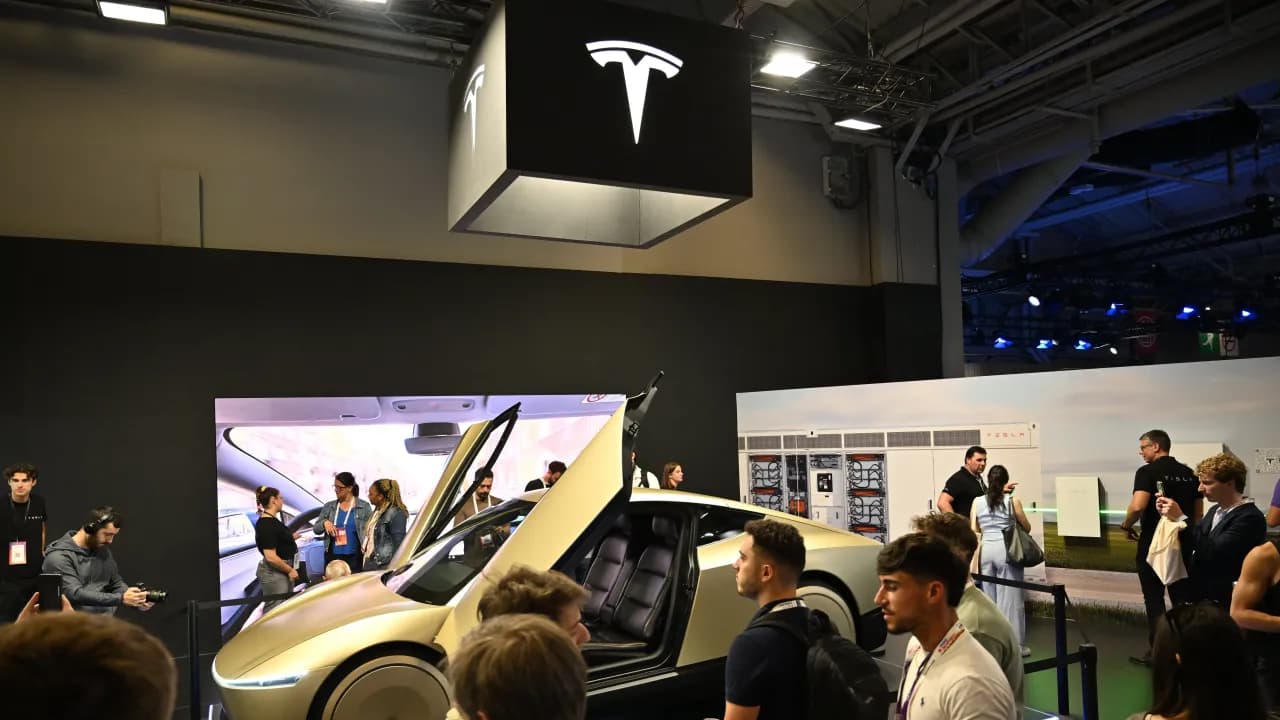
Cathie Wood’s ARK Investment Management sees Tesla, Inc.'s (TSLA) Cybercab expanding the ride-hailing market by as much as 60x, but analyst Gary Black argues that Uber’s reach and platform advantage will allow it to win the robotaxi race.
TSLA stock fell 3% on Tuesday, ending the session lower at $356.09.
ARK Forecasts A Robotaxi Demand Boom
ARK’s Chief Futurist Brett Winton said on X that the U.S. taxi market was worth $8 billion when Uber launched in 2009 and has since grown nearly tenfold to about $75 billion. He attributed that growth to Uber simplifying the ride-hailing experience and increasing ride availability at a broadly similar price point.
Winton said Cybercabs would test demand at “much, much greater ride liquidity,” at half the price or less, and with a more consistent and safer experience. “In some ways it would seem a surprise if that only increased market size by the 30x to 60x that we forecast,” he added.
Gary Black Says Uber ‘Should Win Easily’
Black, managing director of The Future Fund, agrees that eliminating drivers will reduce ride costs, but doubts that Tesla can maintain a lasting advantage as competing automakers develop similar tech. He asked investors to assume that eight to 10 rivals eventually build unsupervised autonomous vehicles at roughly the same cost as Tesla, mirroring the competition that emerged in the broader EV market. Uber could then place those fleets on its app under a “Self-driving” option alongside ‘Black,’ ‘Comfort,’ ‘Black SUV’ and ‘Uber X.’
“Since ‘Self-driving’ will have no driver, the cost will be comparable to TSLA’s self-driving ride hailing cost but with UBER’s broader platform and marketing skills, UBER should win easily,” Black said.
He reiterated that unsupervised autonomy is becoming “table stakes” as Alphabet’s (GOOG) Waymo, Baidu (BIDU), Amazon (AMZN), WeRide (WRD), Pony AI (PONY) and other companies invest heavily in the tech. Nvidia (NVDA) is also helping automakers develop autonomous-driving systems.
Black compared today’s robotaxi optimism with Tesla’s former goal of delivering 20 million vehicles annually by 2030. Wall Street now expects just 2.6 million deliveries that year, he said. “Absent brand equity, how does TSLA distinguish itself in an increasingly commoditized environment to take 25% or more of the unsupervised autonomous market?” Black asked, calling such an assumption “absurd,” as did the abandoned 20-million-vehicle target.
He also noted that Uber stock continues to outperform Tesla in 2026 and over the past three- and five-year periods, despite repeated predictions from Tesla bulls that Robotaxi would make Uber obsolete.
Black’s view is not new. In January, he argued that autonomy was becoming “table stakes” and predicted Uber would add lower-cost self-driving options from multiple providers. He also questioned Tesla’s Cybercab economics against autonomous vehicles operating across Uber and Lyft, before pointing to Uber’s deal for up to 50,000 Rivian robotaxis as evidence of the platform-plus-OEM model. Uber expanded the strategy in April by raising its Lucid robotaxi commitment to 35,000 vehicles.
Tesla Ramps Up Ahead Of Cybercab Event
The debate comes as Tesla accelerates its autonomous rollout before the Cybercab launch in Austin on Thursday. Crowdsourced Robotaxi Tracker data indicates that Tesla may have nearly 200 vehicles operating without safety monitors across Austin, Dallas and Houston, which is about seven times the reported fleet size from about three weeks earlier.
Separately, Tesla investor Sawyer Merritt said the company registered 38 additional Cybercabs in Texas, bringing the purpose-built fleet to 45. Tesla also expanded its Austin Robotaxi service area by about 9% to 264 square miles, its first increase in 10 months.
Tesla has said its Robotaxi program logged more than 380,000 unsupervised miles without a notable incident. Its purpose-built, two-seat Cybercab has no steering wheel or pedals and uses the same underlying Full Self-Driving (FSD) tech as the Model Y fleet.
How Do Retail Traders Feel About TSLA?
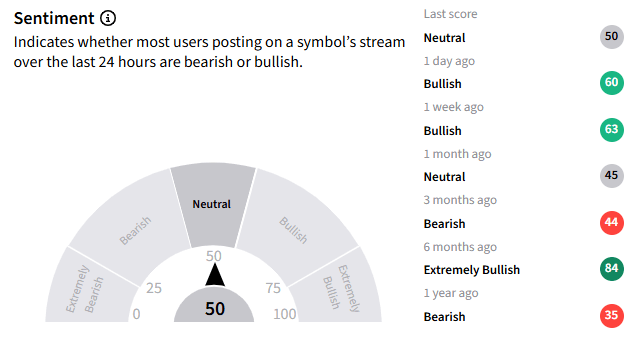
On Stocktwits, retail sentiment for TSLA slipped to ‘neutral’ from ‘bullish’ levels a day ago amid ‘high’ message volume.
One user said, “Bigger service areas, more vehicles, more opportunities to generate revenue. Still early, but this is why I’m bullish. Imagine where the network could be a year from now. Load while you still can!”
View this Stocktwits post
Another user said, “$TSLA I don’t see how cybercab will Move the needle. Too many players and it’s like the market forgot all their capex plans. The algos are ignorant until they are not or until the main players collude together to rip it”
View this Stocktwits post
So far this year, Tesla's stock has lagged its "Magnificent Seven" peers, making it the group's worst performer, down about 21%.
For updates and corrections, email newsroom[at]stocktwits[dot]com.<
