
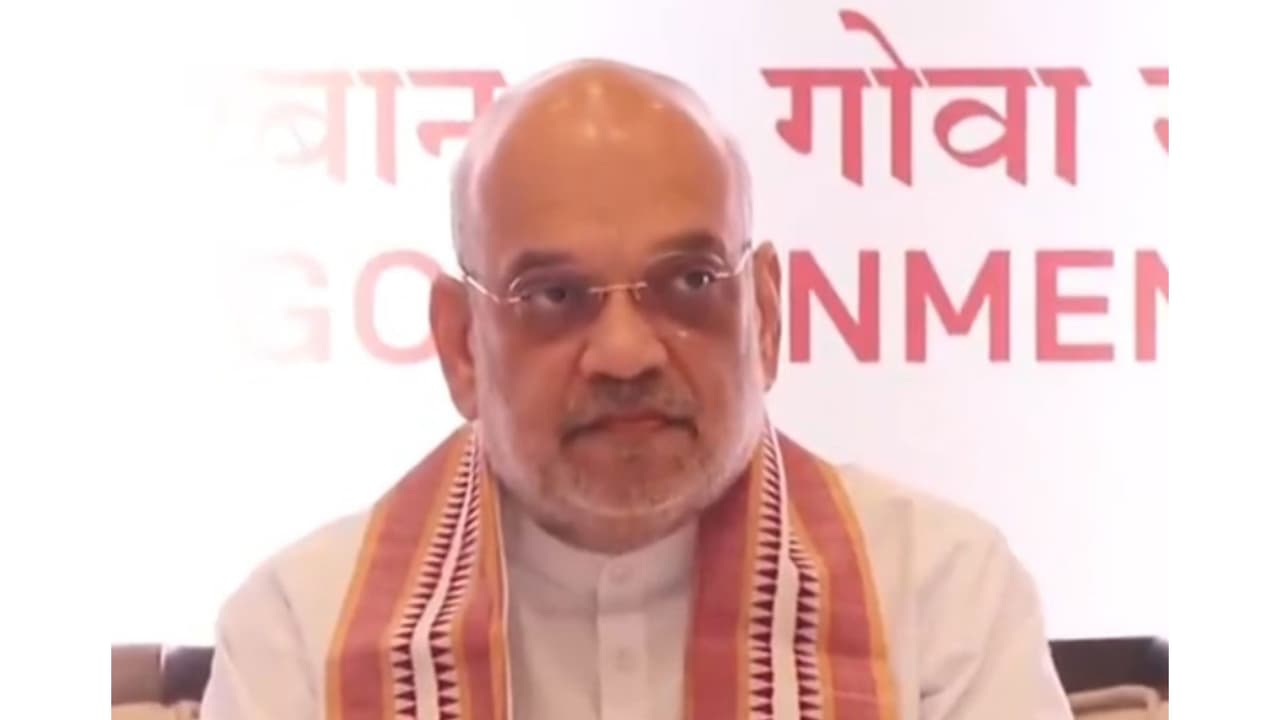
At the 28th Western Zonal Council meeting in Goa, Home Minister Amit Shah called on the Western region to lead the implementation of the new Nyaya Sanhitas (criminal laws) and to make India's fight against drugs a success.
Shah Calls for Leadership on New Laws, Anti-Drug Fight
Chairing the 28th meeting of the Western Zonal Council in Goa's Panaji on Monday, Union Home Minister Amit Shah asked the Western region to play a leading role in the implementation of the new Nyaya Sanhitas and in making India's fight against drugs a success. India's three new criminal laws, commonly referred to as the three Nyaya Sanhitas, replaced the country's principal colonial-era criminal laws. They came into force nationwide on July 1, 2024.
Bharatiya Nyaya Sanhita, 2023 (BNS) replaced the Indian Penal Code (IPC), 1860; Bharatiya Nagarik Suraksha Sanhita, 2023 (BNSS) replaced the Code of Criminal Procedure (CrPC), 1973; and Bharatiya Sakshya Adhiniyam (BSA), 2023 replaced the Indian Evidence Act, 1872. "Western Region should also play a leading role in the implementation of the New Nyaya Sanhitas and in making India's fight against drugs a success," Shah said while addressing the council.
Focus on Cooperatives and Cyber Security
Noting that good work has also been done in the computerisation of Primary Agricultural Credit Societies (PACS), with Maharashtra achieving a rate of 98 per cent and Gujarat 92 per cent, the Home Minister said that states should also adopt the Gobardhan model established by Banas Dairy-- a Gujarat-based cooperative society which on an average produces 5.7 million litres of milk.
He said that Prime Minister Modi is continuously monitoring the strategy against cybercrimes through PRAGATI. All Urban Cooperative Banks in the States should be connected with FCFRS, and there is a need to encourage cooperative banks to integrate with MuleHunter AI. "We also need to move forward to ensure that all cooperative banks are connected with I4C," said the minister.
Dispute Resolution and Council Achievements
He further announced that "there are no longer any disputes among the states of the Western region", and that all the issues included in the meeting were related to monitoring. "There are no longer any disputes among the states of the Western Region; this is a major achievement," Shah said while addressing the meeting.
Wide-Ranging Agenda Discussed
At the 28th meeting of the Western Zonal Council, several extremely important issues were discussed for the member states as well as for the country. These included the implementation of Fast Track Special Courts for speedy investigation and early disposal of cases of rape against women and children, issues related to the Emergency Response Support System (ERSS-112), issues related to food safety standards, Ayushman Bharat–Pradhan Mantri Jan Arogya Yojana, provision of brick-and-mortar banking facilities within the prescribed radius of every village, issues related to railway development projects, issues concerning environmental clearances, and others.
In addition, issues of national importance were also discussed, including urban master planning, issues related to electricity supply, strengthening Primary Agricultural Credit Societies (PACSs), eliminating malnutrition among children through the Poshan Abhiyaan, reducing the school dropout rate among school children, participation of public hospitals in the Ayushman Bharat–Pradhan Mantri Jan Arogya Yojana, and issues related to cybercrime and digital infrastructure, among others.
The meeting was attended by Goa Chief Minister Pramod Sawant, Gujarat Chief Minister Bhupendra Patel, Maharashtra Chief Minister Devendra Fadnavis, and Administrator of Dadra and Nagar Haveli and Daman and Diu Praful K Patel. Senior officials of the Central government and the state governments as well as the Union Territory, also participated in the meeting of the council.
Western Region as Economic Engine
Addressing the gathering, the Home Minister said that Goa contributes much more to economic growth than its geographical size would suggest due to advanced tourism, high per capita income and mines. He said that recently, the country recorded a growth rate of 7.8 per cent in the first quarter of the financial year 2026–2027.
Shah further mentioned that the Indian economy recording such a growth rate amid global turbulence is a matter of pride for all of us. Noting that the Western region is extremely important from several perspectives, Shah said this region is the country’s largest economic, industrial and financial centre. Since 2014, he pointed out, Prime Minister Narendra Modi has continuously worked, along with numerous administrative reforms, to transform the country’s economy into a rapidly moving economy. He said that Daman and Diu, Dadra and Nagar Haveli and the three states of the Western Zonal Council have also made a significant contribution towards achieving the growth rate of 7.8 per cent.
The 'WEST Engine' of Growth
Shah said that the Western Region is known as the WEST Engine of the country’s economic growth. W stands for wealth and finance, which are generated in this region; E stands for exports and ports; S stands for start-ups and semiconductors; and T stands for tourism and the blue economy, in which the Western Region has the largest share in the country. "More than 1 crore tourists visit Goa, of whom 5 lakh are foreign tourists. Tourism contributes 16 per cent of Goa’s GSDP. Maharashtra ranks first in the country with 33,872 start-ups. Dholera has now become a hub in the semiconductor sector. Gujarat’s Mundra Port handles the highest volume of cargo, and Deendayal Port is the largest port in terms of cargo volume. Mumbai, the country's financial capital, is also emerging as a major hub for global capital," the Home Minister added.
Zonal Councils' Evolving Role
He also stated that during 2004 to 2014, the total number of meetings of the Zonal Councils and their Standing Committees was only 25, whereas since 2014, a total of 71 meetings of the Zonal Councils and their Standing Committees have been held, which is an increase of nearly three times. He said that the nearly three-fold increase in the number of meetings is an excellent example of Prime Minister Modi’s concept of Team India.
A total of 1,893 issues were discussed in these meetings, out of which 1,445 issues have been resolved. Shah said that the Zonal Councils have now become an instrument for monitoring the implementation of public welfare schemes instead of dispute resolution. Several disputes between States over rivers have also been resolved in the Zonal Councils, the minister mentioned, adding, "Work is also being undertaken through the Zonal Councils on child malnutrition, underweight and stunting." The penetration of Aadhaar is also being monitored, and monitoring is also being undertaken here to ensure the successful implementation of Ayushman Bharat cards. (ANI)
(Except for the headline, this story has not been edited by Asianetnews Editorial staff and is published from a syndicated feed.)