
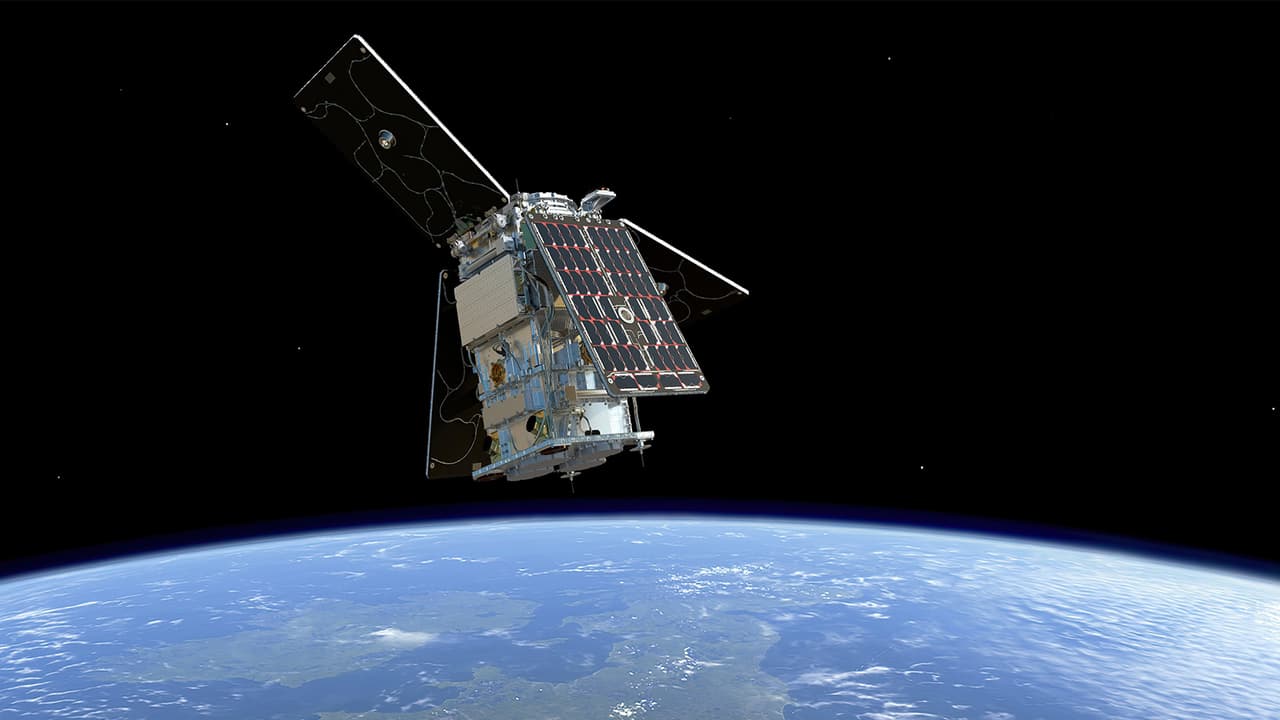
An IEEE report states AI will drive a huge expansion in space tech, with an expected investment boom of $100-200 billion. The report notes this growth is spurred by commercial investment, reusable rockets, and the rise of an orbital economy.
Artificial intelligence is expected to drive a sharp expansion in space technology, with the sector poised for an investment boom similar to the rapid growth seen in AI and attracting an estimated $100-200 billion in investments worldwide, according to an IEEE report.
AI and Megatrends Driving Space Expansion
The report identifies AI, energy, health, space and physical AI as five major technology megatrends and says the rapid adoption of AI is increasingly influencing developments beyond the technology sector. The report was delivered by the IEEE Future Directions Committee's Industry Advisory Board in collaboration with the IEEE Santa Clara Valley Section, IEEE Computer Society and IEEE Industry Engagement.
According to the report, aggressive AI adoption has not only accelerated AI-related technologies but also "drove space tech", which it sees as poised for an expansion comparable to the AI boom. It puts global space-tech investments at $100-200 billion.
Envisioning a 'High Volume Orbital Economy'
The report points to commercial investment, cheaper access to space, reusable rockets, autonomous space vehicles and space-resource utilisation as signals supporting the growth of the sector. It also identifies space-based solar or energy beams and the reopening of international space regulation as developments that could shape the sector.
IEEE's megatrend framework sees the emergence of a "high volume orbital economy", covering areas such as orbital manufacturing and mining, the lunar economy, colonisation, commercialisation and space resource utilisation.
The report also lists technologies including new materials, cleaner and more efficient energy, new forms of mass transportation, space-tech agriculture, new semiconductor manufacturing, improved propulsion systems and resource-minimal production as requirements for this expansion.
New Frontiers: Asteroid Mining and Off-Earth Manufacturing
The report's risk-reward assessment also highlights technologies that could expand the economic scope of space beyond traditional satellite applications. These include asteroid mining and off-Earth manufacturing, space-based solar power, data centres in space and software-defined space systems.
It says asteroid mining and off-Earth manufacturing could provide access to rare materials and potentially reshape global supply chains, while space-based solar power could provide continuous clean energy.
Challenges and Constraints
However, the report also flags regulatory, safety and sustainability challenges. Fragmented policy frameworks, crowded orbits, space debris, spectrum management issues, funding constraints and shortages of engineering and operational skills could constrain the sector's growth.
Future Outlook and Economic Impact
The report's space outlook spans the next 5-10 years and says the development of space technologies could create new markets, high-skilled jobs and business opportunities across areas including agriculture, renewable energy, logistics and digital services.
(Except for the headline, this story has not been edited by Asianetnews Editorial staff and is published from a syndicated feed.)