
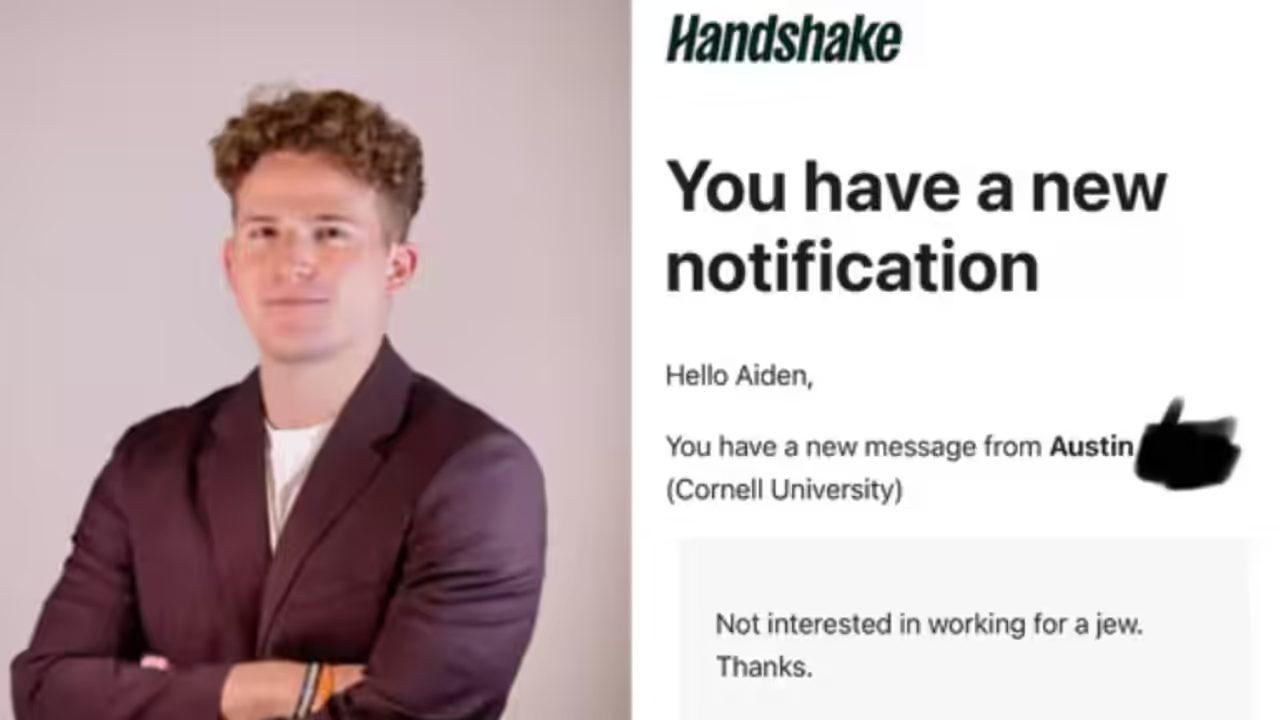
A Cornell student allegedly rejected a job offer with an anti-Semitic remark, prompting the startup founder to share the email online. The incident went viral, sparking a widespread debate about discrimination, professional accountability, and the consequences of online exposure.
A Cornell University student has found himself at the center of a social media storm after allegedly rejecting a job offer with an anti-Semitic remark, prompting the startup founder to publicly share the email exchange online. The incident has since gone viral, sparking widespread debate about discrimination, accountability and the consequences of online exposure.
The controversy began when the student reportedly turned down a job opportunity at a startup founded by a Jewish entrepreneur. In his response to the offer, the student wrote, “I am not interested in working for a Jew.” The blunt statement quickly drew criticism after the founder posted screenshots of the exchange on social media.
The startup founder, shocked by the response, shared the emails publicly and criticized the student's remarks as discriminatory and unacceptable. The post rapidly gained traction online, attracting thousands of reactions and comments from users who condemned the student's behavior.
Check the viral post here:
Screenshots of the exchange spread across social media platforms, with many users expressing support for the founder and arguing that prejudice of any kind should have professional consequences. Others debated whether publicly identifying the student was appropriate, with some raising concerns about online shaming and digital vigilantism.
Also Read: Stanford Students Walk Out During Sundar Pichai’s Speech, Protest Google’s Israel Project (WATCH)
The incident soon evolved into a broader conversation about workplace discrimination and the impact of personal beliefs on professional opportunities. Many social media users pointed out that employers increasingly scrutinize public behavior and communications, particularly when comments are viewed as hateful or discriminatory.
The founder's post generated intense discussion, with users divided over the ethics of publicly exposing individuals for offensive statements. Supporters argued that the student's own words warranted accountability, while critics questioned whether viral exposure could have disproportionate consequences.
The episode has also reignited discussions about anti-Semitism and intolerance in academic and professional settings. Commentators noted that discriminatory remarks based on religion, race or ethnicity continue to attract strong public backlash, particularly when documented in written communication.
As the debate continues online, the incident serves as a reminder of how quickly private exchanges can become public in the digital age. What began as a job application process has now become a viral case study on discrimination, social media accountability and the lasting impact of words shared in professional correspondence.
The founder's post remains widely discussed across platforms, with many viewing it as a cautionary tale about professionalism, respect and the far-reaching consequences of discriminatory conduct.
Also Read: Influencer’s Viral Video On Corporate Life Divides Internet: ‘Stop Complaining About Your Job’
