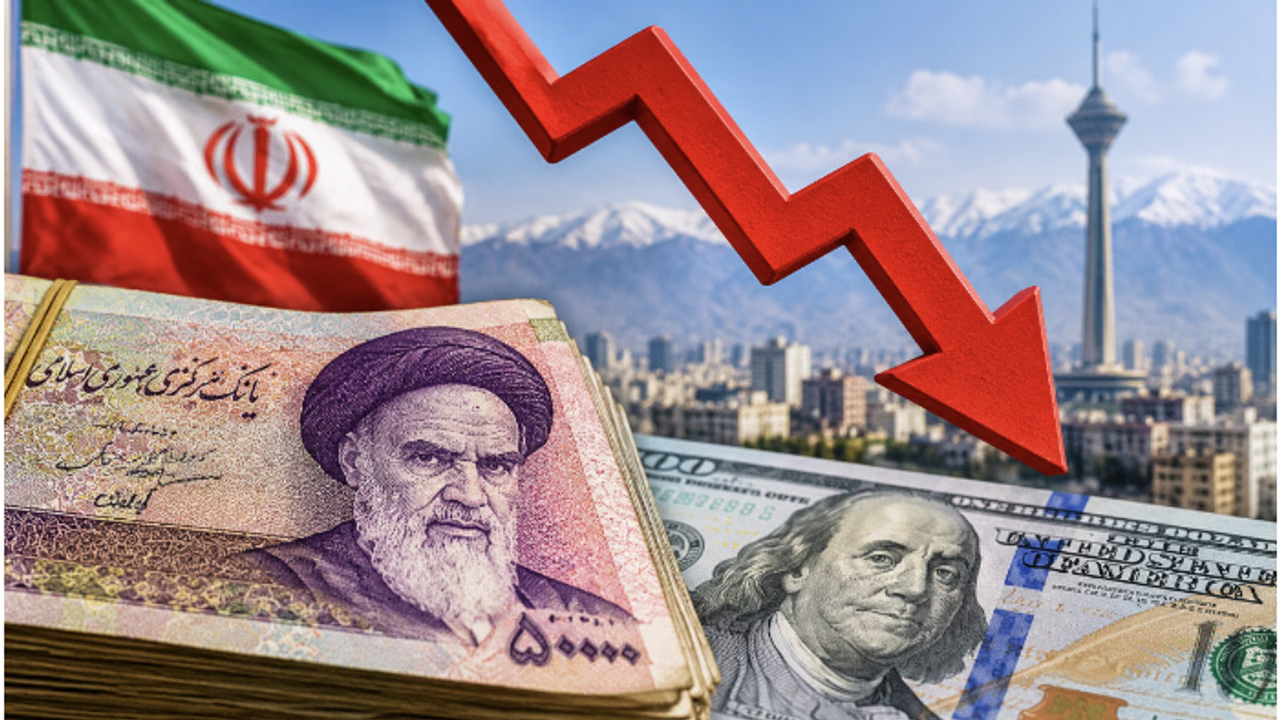
Iran's currency has plunged to a historic low, with the US dollar crossing the 3-million-rial mark in the open market. Rising inflation, US sanctions and prolonged war are deepening the country's economic crisis
Iran's national currency, the rial, has crossed a major psychological threshold after its value dropped beyond 3 million rials against the US dollar in the country's open market.
The latest depreciation marks a sharp deterioration in the currency's value. Around a year ago, one US dollar was worth approximately 1.15 million rials. The exchange rate climbed to nearly 2.6 million rials last week before crossing the 3-million mark.
The contrast becomes even more striking when compared with figures from nine years ago. Before US President Donald Trump withdrew from the 2015 nuclear agreement in 2018, the dollar was valued at less than 40,000 rials.
Related Articles

The latest decline has added to concerns about the country's economic stability, with households and businesses facing growing uncertainty over prices, savings and everyday expenses.
US Sanctions, War and Economic Mismanagement Fuel Currency Crisis
The rial's latest collapse comes amid mounting economic pressure following the war involving Iran, the United States and Israel, which began on February 28, 2026.
The conflict has severely affected infrastructure and economic activity. Washington has also intensified its pressure on Tehran through sanctions targeting the country's financial and oil sectors.
The United States launched an operation called Economic Outcast to restrict Iran's sources of revenue. A naval blockade targeting the country's southern ports has further complicated its ability to export oil and maintain international trade connections.
However, external pressure is not the only reason behind the currency's weakness. Economists have also pointed towards longstanding structural problems within Iran's economy.
Tehran-based economic analyst Ashkan Bahrami told Al Jazeera that excessive money printing to cover government budget deficits has contributed to inflation. Domestic mismanagement, corruption and restricted access to foreign currency earnings have added to the financial strain.
Iran's inflation figures highlight the severity of the situation. According to the country's Statistical Center, annual inflation reached 88.7% in October 2026, while average inflation over 12 months stood at 76.8%. Food inflation also exceeded 113% year-on-year.
Rising Prices Put Millions of Iranians Under Financial Pressure
The weakening rial is making life increasingly expensive for ordinary Iranians, with essential commodities and everyday purchases becoming harder to afford.
The impact is particularly visible in the cost of food, housing, vehicles and electronic goods. Food prices have remained under considerable pressure, while the declining purchasing power of households has made it difficult for many people to maintain their previous standard of living.
Iran's central bank chief, Abdolnasser Hemmati, acknowledged the challenges facing the currency market. He said authorities were attempting to maintain stability despite the economic and political difficulties.
The central bank has also reportedly secured $32 billion to finance imports of essential goods, which officials believe could help the country withstand external economic pressure for several months.
However, economists warn that this may not be enough to address the underlying problems. Bahrami suggested that a fresh agreement with the United States could provide temporary relief, but lasting improvement would require fundamental financial reforms.
He also cautioned that although an immediate shortage of essential commodities was unlikely, continued inflation and sluggish economic growth could further weaken living conditions.
With the rial continuing to lose value, concerns are growing over how much more financial pressure Iranian households can withstand.