The Strait of Hormuz is the world's most critical energy chokepoint, transporting one-fifth of global oil supplies. Despite its strategic vulnerability, no comprehensive alternative has emerged. This is due to geographical constraints, the immense cost of building new infrastructure like pipelines, and persistent regional political rivalries.
The Strait of Hormuz has long been regarded as the world’s most vital maritime energy chokepoint, handling a substantial share of global oil and gas shipments. Yet despite repeated geopolitical crises, wars and market disruptions, no comprehensive alternative route has been developed to replace its strategic role. Experts argue that a complex mix of geography, infrastructure costs, regional rivalries and economic dependence has prevented the emergence of a viable backup to this narrow waterway.
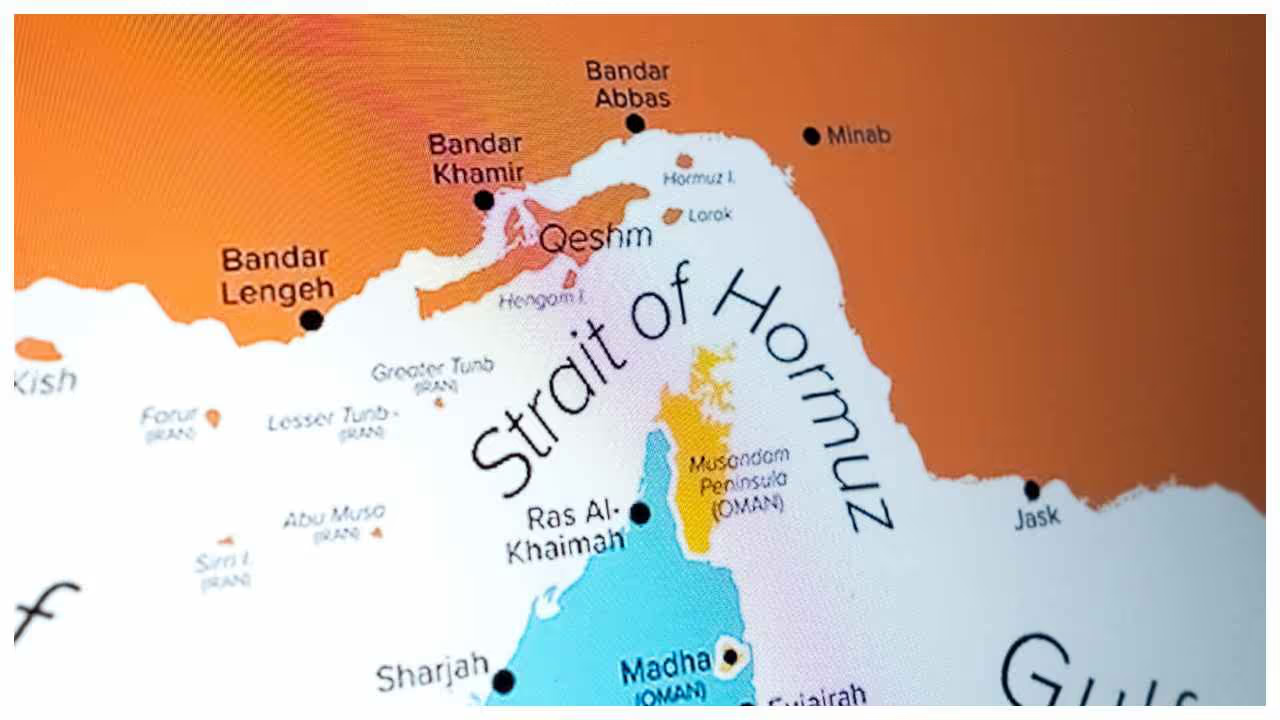
Located between Iran and Oman, the Strait serves as the main exit point for energy exports from major Gulf producers such as Saudi Arabia, the United Arab Emirates, Iraq, Kuwait and Qatar. Roughly one-fifth of the world’s oil supply transits the route daily, making it indispensable to global energy security. The passage’s limited width and proximity to regional tensions have repeatedly exposed shipping to potential disruptions, but alternatives remain either insufficient or impractical.
One of the primary reasons for the lack of a backup route is geographical constraint. The Gulf’s natural configuration funnels maritime traffic through a relatively narrow channel before vessels can access open seas. Creating a new maritime corridor is not physically possible without massive environmental or engineering interventions. As a result, policymakers have instead focused on building land-based pipelines and port facilities to diversify export options. However, these solutions have only partially reduced dependence on the Strait.
Related Articles

Also Read: Hormuz crisis: US Plans Global Naval Coalition To Secure Oil Tankers Through The Strait
Saudi Arabia’s East–West pipeline, for instance, was constructed during the Iran-Iraq war to transport crude oil from Gulf fields to the Red Sea coast, bypassing the Strait. While its capacity has been expanded in recent years, it still cannot handle the full volume of exports that normally pass through Hormuz. Similar infrastructure projects in the UAE and other Gulf states provide limited relief but are constrained by capacity, cost and logistical challenges.
Economic considerations have also played a decisive role. Developing alternative pipelines, storage facilities and export terminals requires enormous capital investment, often running into billions of dollars. For many countries, maintaining the existing shipping route through Hormuz has historically been more cost-effective than building redundant infrastructure for a risk that might not materialise frequently. This cost-benefit calculation has slowed efforts to diversify energy transport routes despite recurring security concerns.
Political dynamics in the region further complicate long-term planning. Rivalries among Gulf states, fluctuating alliances and sanctions on Iran have made coordinated infrastructure development difficult. Cross-border projects often require complex negotiations over financing, territorial rights and security guarantees. These challenges have contributed to fragmented efforts rather than a unified strategy to reduce reliance on the Strait.
Also Read: IEA's huge oil release a limited fix if Hormuz Strait stays closed
Security risks are another key factor. The Strait’s narrow geography allows Iran to deploy asymmetric naval strategies such as mines, drones, fast attack boats and shore-based missile systems to deter hostile forces or disrupt shipping. This has reinforced perceptions that the waterway is both strategically vulnerable and difficult to replace, as alternative routes would also require significant protection against similar threats.
In recent years, global supply chains have grown increasingly dependent on the uninterrupted flow of energy and goods through Hormuz. Beyond crude oil, the route facilitates shipments of liquefied natural gas and serves as a vital transshipment hub connecting Asia, Europe and Africa. Disruptions in the Strait therefore have cascading effects across industries, influencing shipping costs, insurance premiums and commodity prices worldwide.
Although some analysts have suggested that tankers could bypass Hormuz by using ports located outside the Gulf, such as those along Oman’s Arabian Sea coast, these alternatives remain limited. Drone attacks and heightened insurance risks have shown that even bypass routes may fall within broader conflict zones. Shipping companies often prefer longer detours around Africa rather than risk entering high-risk waters, further illustrating the difficulty of establishing a dependable substitute.
Strategically, many governments have also relied on naval patrols and international cooperation to safeguard the Strait rather than investing in new transport corridors. Escort missions, mine-clearing operations and diplomatic efforts have been viewed as more flexible responses to crises compared with the permanent costs of building parallel infrastructure. However, such measures offer only temporary reassurance and do not eliminate structural dependence on the waterway.
Also Read: Strait of Hormuz Open, But Not for US, Israeli Ships: Iran Minister
The absence of a robust alternative has significant implications for global energy markets. Any disruption in Hormuz can trigger sharp price fluctuations, supply shortages and broader economic uncertainty. Countries heavily reliant on Gulf imports, particularly in Asia, face heightened vulnerability, prompting calls for greater diversification of energy sources and logistics networks.
Despite technological advances and rising geopolitical tensions, experts believe the world will continue to rely on the Strait of Hormuz for the foreseeable future. Building a comprehensive backup would require unprecedented levels of regional cooperation, financial commitment and strategic foresight. Until such conditions emerge, the narrow channel will remain a critical artery of global trade and a focal point of international security concerns.
Ultimately, the enduring dependence on Hormuz highlights a broader challenge in global infrastructure planning: balancing economic efficiency with resilience. As energy demand evolves and geopolitical risks intensify, the debate over whether to invest in alternative routes is likely to grow more urgent. For now, however, the world’s energy lifeline continues to pass through a single, strategically fragile passage — one whose importance has only increased with time.