
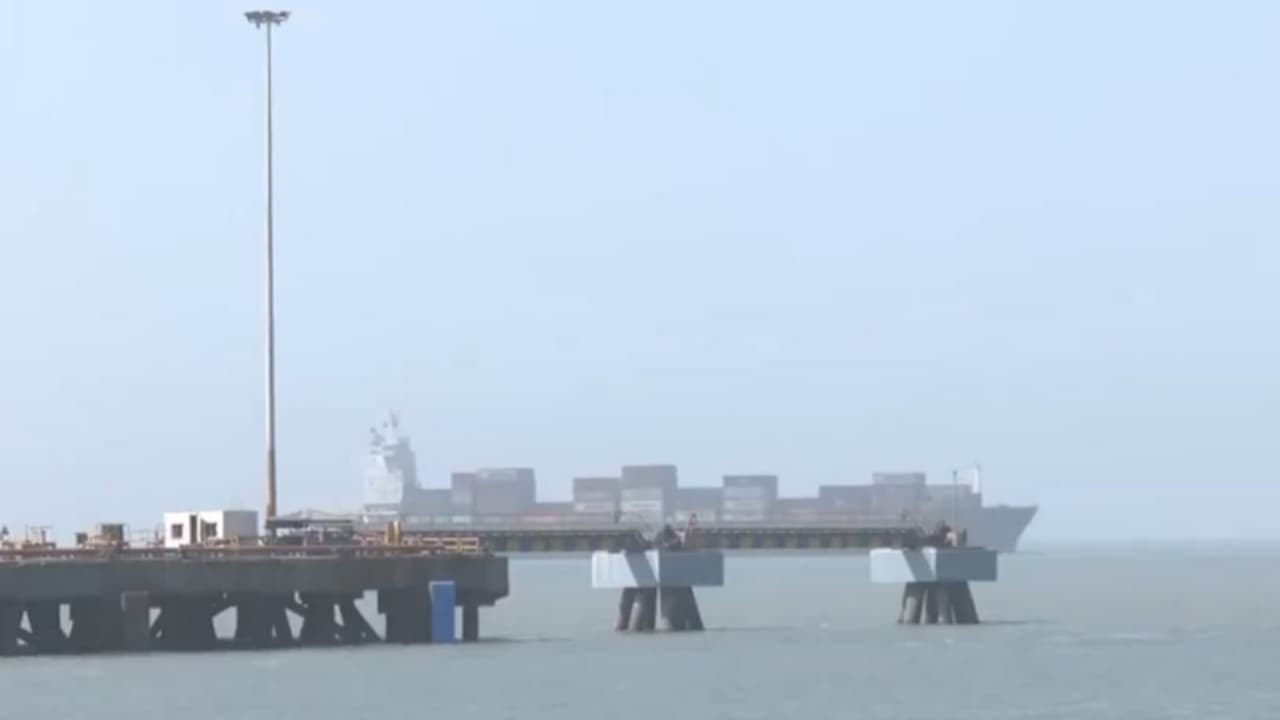
Two Indian-flagged LPG tankers, Shivalik and Nanda Devi, have safely crossed the Strait of Hormuz after being granted transit by Iranian authorities. Carrying 92,700 metric tons of LPG, they are en route to Mundra and Kandla ports in Gujarat.
The Liquefied Petroleum Gas (LPG) tanker Shivalik, which crossed the Hormuz Strait, is all set to arrive at the Mundra port in Gujarat on Monday. Two Indian flagged vessels carrying LPG were granted transit through the Strait of Hormuz by Iranian authorities. One of them is the Shivalik, while the other one is the Nanda Devi.
Two Indian LPG Tankers Transit Hormuz Strait
Earlier, Rajesh Kumar Sinha, Special Secretary in the Shipping Ministry, on Saturday informed that the vessels Shivalik and Nanda Devi are now expected on March 16 and 17. "All Indian seafarers in the Persian Gulf region are safe, and no untoward incidents involving them have been reported over the last 24 hours. There were 24 Indian-flagged vessels in the Persian Gulf, situated to the west of the Strait of Hormuz. Among these, two vessels--the Shivalik and the Nanda Devi, Indian-flagged vessels, both LPG carriers. They safely transited the Strait of Hormuz late last night/early this morning and are now proceeding towards India. These vessels are carrying approximately 92,700 metric tons of LPG; their ports of arrival will be Mundra and Kandla, with expected arrival dates of March 16 and March 17, respectively. Consequently, there are now 22 Indian-flagged vessels remaining in the Persian Gulf, carrying a total of 611 seafarers," the secretary said.
India's Diplomatic Engagement with Iran
Earlier, external Affairs Minister S Jaishankar championed direct dialogue with Tehran as the most efficient method for resuming maritime traffic through the Strait of Hormuz, as India seeks to protect its energy security amidst intensifying Middle East tensions. In an interview with the Financial Times UK, the Union Minister stated that New Delhi is currently engaging with Iran to facilitate the reopening of the vital waterway, which handles nearly 20 per cent of global oil trade. He noted that these discussions are "already yielding some results," suggesting that India finds it more effective to "reason and coordinate" with Tehran rather than disengage. "Certainly, from India's perspective, it is better that we reason and we coordinate and we get a solution than we don't. While this is a welcome development, there is continuing conversation because there is continued work on that," Jaishankar remarked. The Minister highlighted the recent passage Shivalik and Nanda Devi, as a practical success of this diplomatic strategy.The tankers, carrying approximately 92,712 metric tonnes of liquefied petroleum gas (LPG), are currently en route to the Indian ports of Mundra and Kandla.
However, Jaishankar clarified that a formal "blanket arrangement" for all Indian-flagged ships has not yet been established. He explained that the transit of vessels is currently being managed on a "case-by-case basis."
Iranian Representative Confirms Passage for Indian Ships
Meanwhile, the representative of Iran's Supreme Leader in India, Abdul Majid Hakeem Ilahi, on Saturday reiterated that Indian vessels would be allowed to pass through the strategically significant Strait of Hormuz amid the conflict in West Asia. Speaking in an interview with ANI, Ilahi responded affirmatively, "Of course, of course. Yes," when asked whether Indian ships would be allowed to pass through the Strait.
When asked to elaborate on the matter, Ilahi said, "I heard that our embassy tried to provide an opportunity for some Indian ships to cross the Strait of Hormuz." (ANI)
(Except for the headline, this story has not been edited by Asianet Newsable English staff and is published from a syndicated feed.)