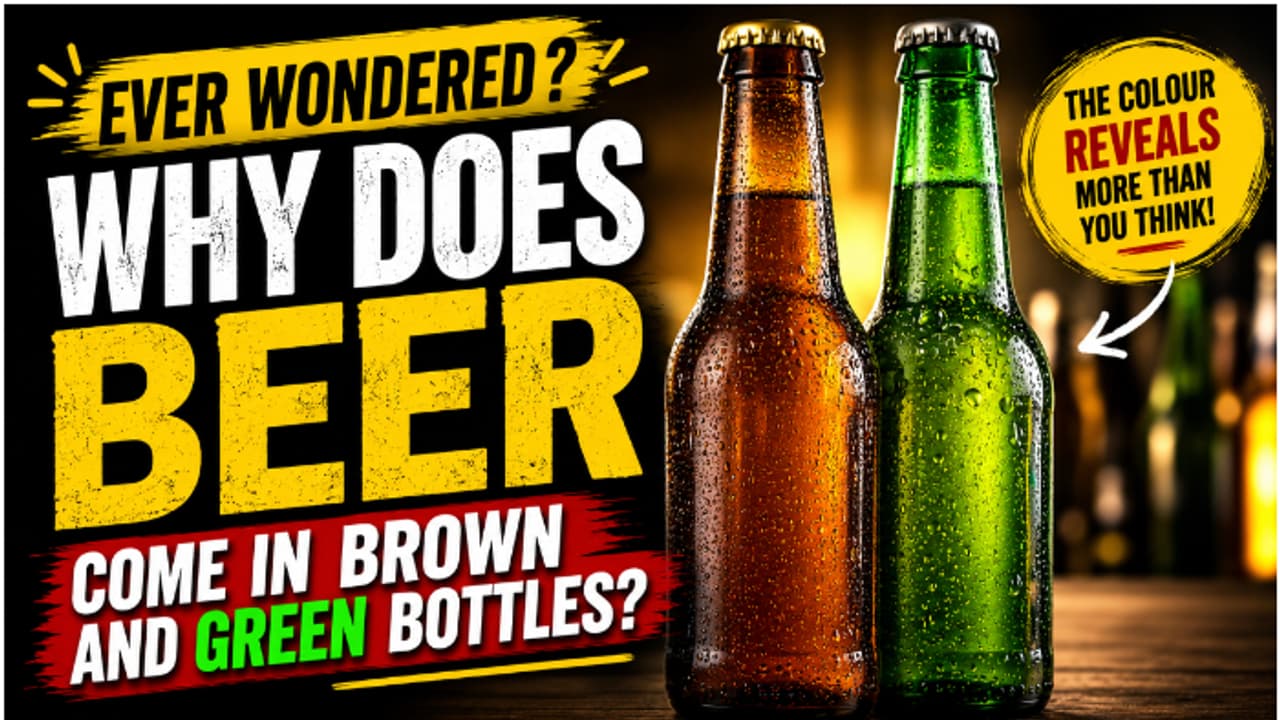
Ever wondered why beer bottles are mostly brown or green? The colour is not just about branding. It helps protect beer from light, preserve its flavour and aroma, and keep it fresher for longer
If you have ever looked closely at beer bottles, you may have noticed that many are brown or green rather than clear. While bottle colour has become an important part of beer branding, there is a scientific reason behind it too.
Beer contains hops, which give the drink its characteristic bitterness and aroma. However, certain compounds found in hops can react when exposed to ultraviolet (UV) light. This can affect the beer's smell and flavour, making the colour of the bottle an important part of its packaging.
Brown Bottles Help Protect Beer From UV Light
Light is one of the biggest enemies of beer. When UV rays reach compounds derived from hops, they can trigger a chemical reaction that creates unpleasant-smelling compounds.
Related Articles

Beer that has undergone this reaction is often described as "lightstruck", while the resulting smell is commonly called "skunky".
This is why brown glass has traditionally been a popular choice for beer bottles. Its darker colour blocks a large amount of UV radiation and reduces the amount of light reaching the beer.
By limiting light exposure, brown bottles can help preserve the beer's original flavour and aroma. This is particularly useful for beers that are expected to retain their intended taste during storage and transportation.
So Why Are Some Beer Bottles Green?
Green bottles may look stylish and have become strongly associated with certain beer brands, but they generally provide less protection from UV light than brown glass.
The popularity of green bottles is partly linked to the history and branding of major European beer companies. Brands such as Heineken and Carlsberg helped make green bottles a recognisable part of beer culture.
However, the colour is not necessarily an indicator of better protection. Brown glass is generally more effective at blocking UV light, while green glass allows more light to pass through.
Clear glass offers even less protection, which is why beers sold in clear bottles can be more vulnerable to light exposure unless other protective measures are used.
So, while a green bottle may immediately remind you of a particular beer brand, its colour is not necessarily the best choice when it comes to protecting beer from sunlight.
Why Beer Cans Are Becoming More Popular
There is another packaging option that provides excellent protection from light: the aluminium can.
Unlike glass bottles, cans block light almost completely. This prevents UV rays from reaching the beer and triggering the chemical reactions associated with lightstruck flavours.
Cans also provide a strong barrier against oxygen, another factor that can affect beer quality over time. Their lightweight design makes them convenient to transport, while their recyclability has also contributed to their popularity.
This is one reason why cans have become increasingly common among both large breweries and craft beer makers.