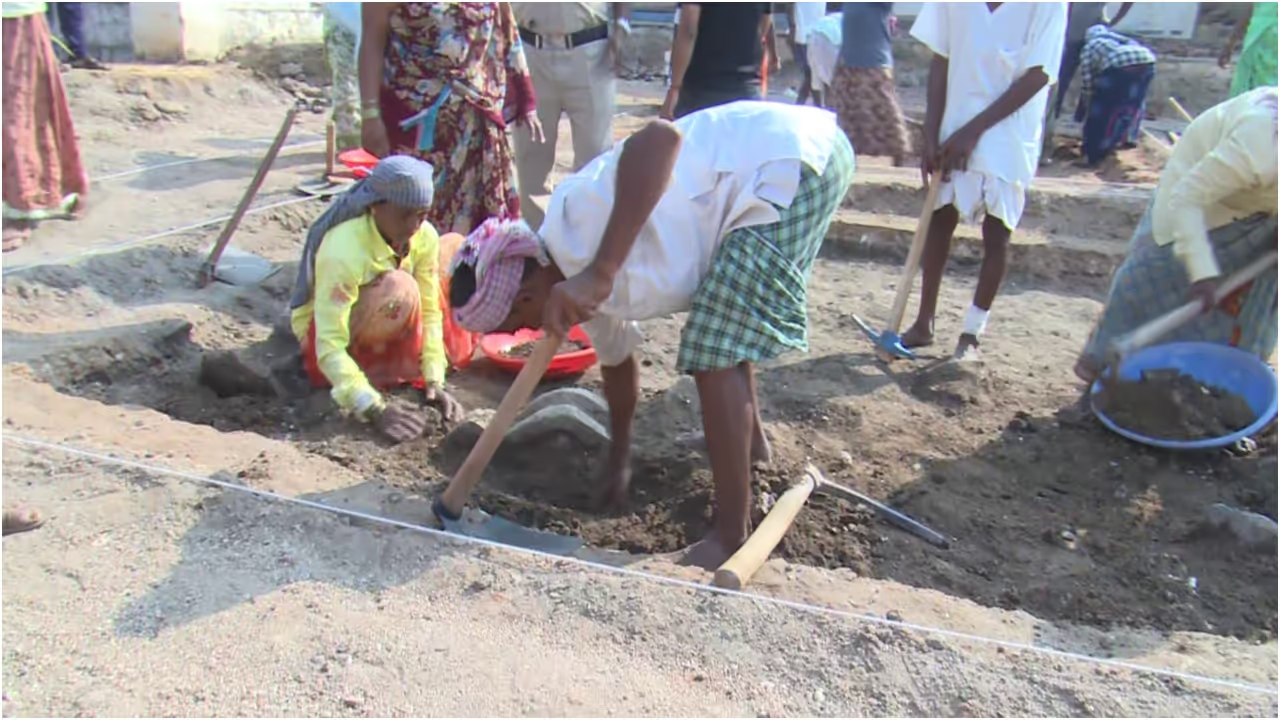
The Lakkundi excavation in Gadag entered its seventh day as workers struggled with biometric attendance issues while archaeologists unearthed rare artefacts, drawing attention to labour challenges and heritage conservation.
The excavation work underway at the historic town of Lakkundi in Gadag district has entered its seventh day, continuing to reveal archaeologically significant remains while simultaneously exposing serious technical and infrastructural challenges faced by workers at the site. While discoveries of historical value have generated excitement among archaeologists and heritage enthusiasts, practical issues on the ground are causing growing concern, particularly among the labourers involved in the excavation.
Biometric Attendance Turns Into a Major Challenge
Biometric attendance has emerged as a major hurdle for workers engaged in the excavation. Several labourers reported that the biometric machine failed to recognise their fingerprints, leading to difficulties in recording attendance. As wages are linked to attendance records, workers face the risk of not being paid if their presence is not registered, even though they continue working at the site.
Due to prolonged handling of stones and soil, many workers have developed calloused hands, making fingerprint recognition difficult. Despite repeated attempts, the machine failed to respond, forcing workers to struggle for a considerable period. Eventually, officials permitted manual registration in the attendance register, after which the workers resumed their duties.
Related Articles

Lamp-Shaped Metal Artefact Unearthed
The seventh day of excavation formally commenced on Wednesday under the supervision of the Archaeological Department, the District Administration, the Tourism Department, and the Lakkundi Development Authority. Over the past six days, several rare antiquities have been unearthed, and officials expect more significant discoveries as the excavation progresses deeper.
Around 35 workers are currently engaged at the site. On the morning of the seventh day, a lamp-shaped metal object was discovered. Preliminary observations suggest that it may have been used in ancient times for burning camphor. The artefact has been carefully cleaned and securely preserved by the staff. Experts will examine it further to determine its exact period and purpose.
Public Anger Over Neglect of Historic Siddhara Bavi
Meanwhile, the neglected condition of the historic Siddhara Bavi, located a short distance from the excavation site, has sparked outrage among local residents. Situated in Lakkundi village of Gadag taluk, Siddhara Bavi is one of the town’s important traditional water sources in an area renowned for its heritage of “101 wells and 101 temples”.
Located near the Kote Veerabhadreshwara and Chandramouleshwara temples, the well is currently in a state of neglect. Moss covers large portions of the structure, the water has become polluted, and thick vegetation surrounds the site.
Demand for Immediate Restoration and Funding
Locals have expressed strong dissatisfaction over the lack of attention to Siddhara Bavi, especially as it lies adjacent to an active excavation site. They have demanded immediate removal of moss and garbage, along with the restoration of the dilapidated structure.
There is also a growing demand for both the state and central governments to allocate dedicated funds for the development and conservation of archaeologically important regions such as Lakkundi. Residents have urged Member of Parliament P.C. Gaddigoudar to visit the site, review the situation, and initiate corrective measures.
Additionally, calls have been made for increased funding for Lakkundi, which falls under the Bagalkot Lok Sabha constituency, to ensure systematic preservation and development of its rich historical heritage.
Heritage Unearthed, Challenges Remain
While the ongoing excavation in Lakkundi continues to uncover valuable chapters of history, the difficulties faced by workers and the neglect of heritage structures such as Siddhara Bavi highlight the urgent need for administrative attention. Addressing these concerns is essential to ensure that heritage conservation progresses alongside worker welfare and infrastructure development.