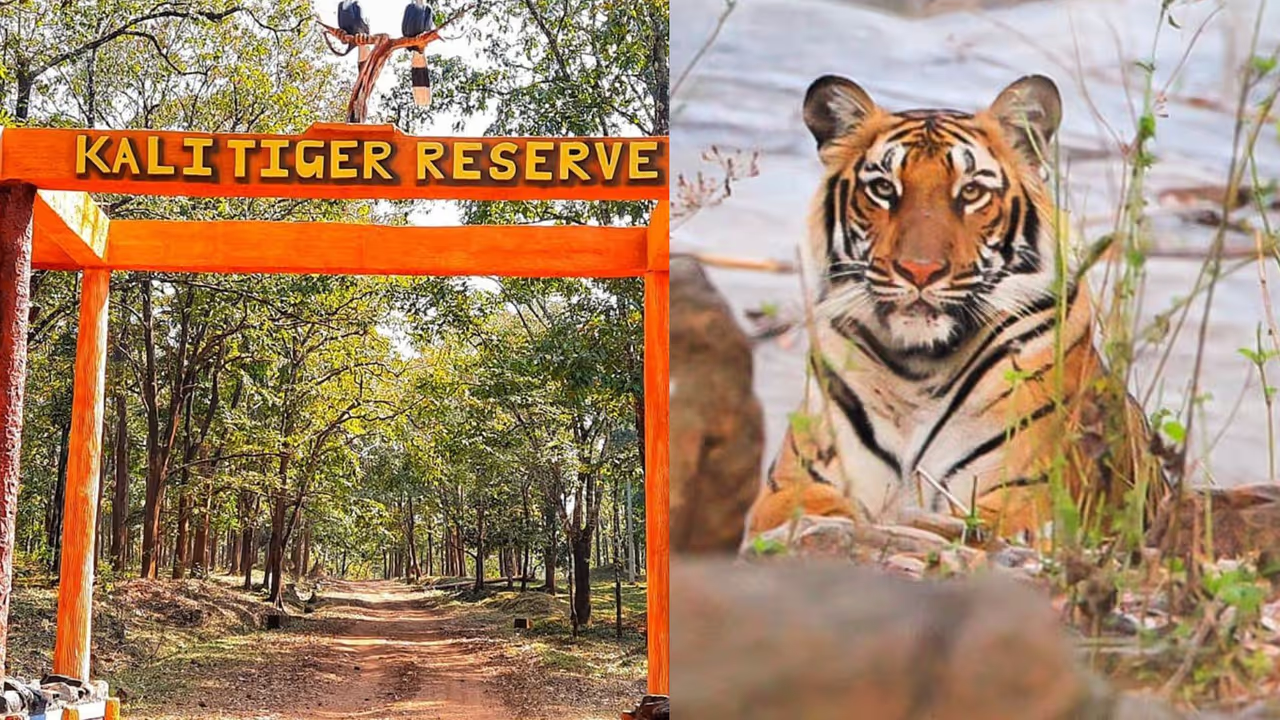
The Centre has issued a draft notification declaring an Eco-Sensitive Zone around Karnataka’s Kali Tiger Reserve. The proposed ESZ spans 663 sq km, with a 60-day window for public objections before final approval.
In a significant step towards strengthening environmental protection, the Union Ministry of Environment, Forest and Climate Change has declared the Kali Tiger Reserve in Karnataka’s Uttara Kannada district an Eco-Sensitive Zone (ESZ). The move aims to regulate development activities around the reserve and safeguard its fragile ecosystem. A draft notification in this regard has been officially released, marking an important development in conservation efforts in the region.
The proposed ESZ is expected to enhance protection for one of the most biodiverse regions in the Western Ghats, while also ensuring that local communities are consulted during the planning process.
Extent of Eco-Sensitive Zone
The Eco-Sensitive Zone will cover a total area of 663 square kilometres, extending up to 10 kilometres from the forest boundary. Of this, around 75 square kilometres comprise revenue land, including several revenue villages, while the remaining 503 square kilometres consist of forest area.
Related Articles

Public Consultation and Next Steps
The government has provided a 60-day window for the public to submit objections and suggestions regarding the draft notification. Once finalised, the state government will have two years to prepare a comprehensive master plan for the region.
The Centre has emphasised that this plan must be developed in consultation with local residents, ensuring that their concerns and livelihoods are taken into account while implementing conservation measures.
About Kali Tiger Reserve
The Kali Tiger Reserve, formerly known as the Dandeli-Anshi Tiger Reserve, is located in the dense forests of the Western Ghats. It serves as a vital habitat for tigers, elephants, and a rich diversity of flora and fauna.
Spread across the taluks of Haliyal, Karwar, and Joida, the reserve lies along the banks of the Kali River. Apart from its ecological importance, the region is also a popular destination for adventure tourism and wildlife safaris, attracting visitors from across the country.