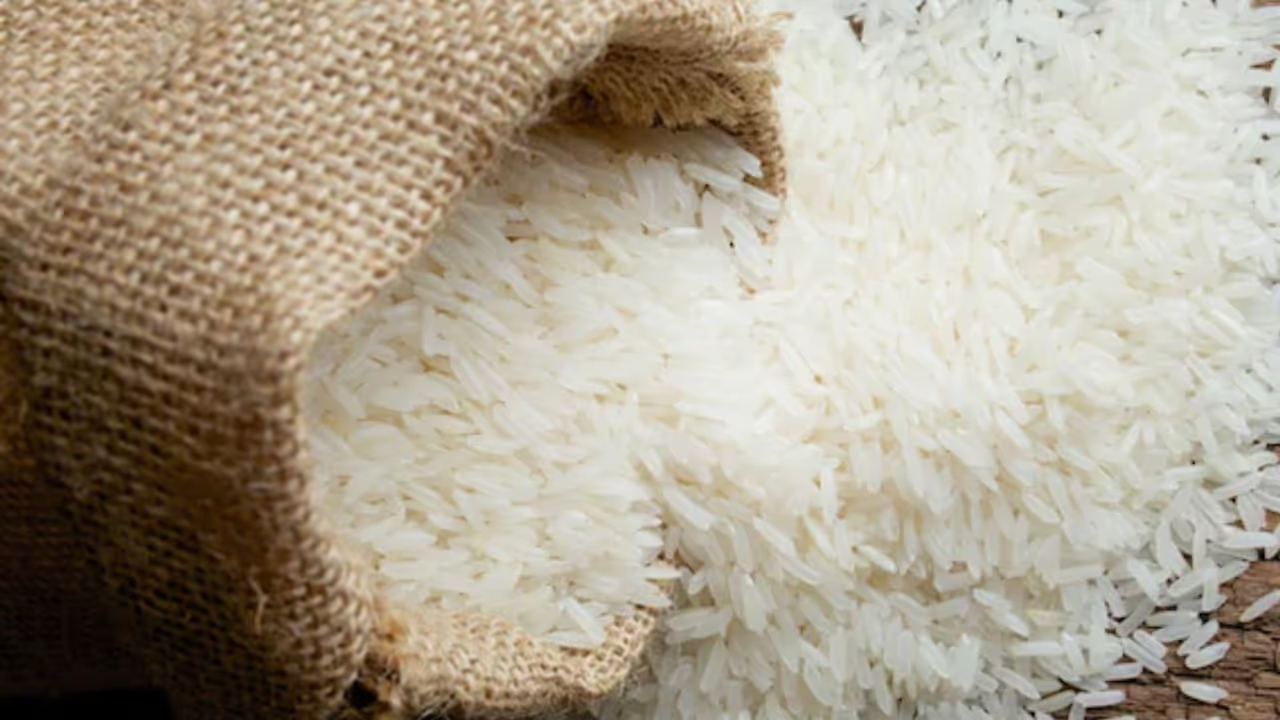
Bengaluru: Rice prices have increased by ₹6 to ₹10 per kg across varieties, affecting household budgets already strained by fuel and vegetable inflation. Traders cite strong demand, limited supply, exports and global tensions as key reasons.
Bengaluru residents are once again facing inflationary pressure as rice prices have increased sharply by ₹6 to ₹10 per kilogram across varieties. The hike comes at a time when households are already dealing with rising fuel and vegetable costs, further stretching monthly budgets. A standard 25 to 26 kg rice bag has become costlier by nearly ₹150, adding to consumer concerns in the city.
What Is Driving the Price Rise?
Market sources indicate that the primary reason behind the price surge is a mismatch between strong demand and limited supply. Traders say that increased exports to several countries, permitted by the Central Government, have reduced the availability of rice in the domestic market, pushing prices upward.
The situation is also being influenced by global uncertainties, including geopolitical tensions and the ongoing crisis in the Middle East, which are affecting commodity markets broadly.
Related Articles

Price Hike Began Around 10 Days Ago
According to traders, the increase in rice prices is not sudden but has been in effect for the past 10 days. The hike has impacted all major varieties, including Sona Masoori, Steam rice, Kolam, and raw rice. On average, a 26 kg bag now costs at least ₹150 more than before.
For example, Sona steam rice, which earlier cost ₹43 per kilogram, is now priced at around ₹49. Similarly, Sona raw rice has increased from ₹52 to ₹59 per kilogram.
Traders Attribute Rise To Exports And Low Stocks
Speaking to Media, N Sridhar, owner of Sri Gururaghavendra Traders in Girinagar, said the business has not been significantly affected despite the price hike. He noted that while customers do express concern, rice remains an essential commodity with inelastic demand.
Traders further explained that rising exports to countries like Sri Lanka, along with lower domestic stock levels, have tightened supply in Bengaluru’s market. They expect prices to remain elevated until the arrival of the new crop around October or November, which could help stabilise the situation.