A rare 18th-century stone inscription from the Mysore kingdom has been discovered in Dibbur village near Hesaraghatta, Bengaluru. The inscription reveals that the village was donated to support the Sri Ranganatha Swamy Temple during the reign of Immadi Krishnaraja Wadiyar.
A rare 18th-century stone inscription from the Mysore kingdom has been discovered in Dibbur village near Hesaraghatta in Bengaluru North taluk, offering fresh insights into the administrative and religious practices of the Wadiyar era. The previously undocumented inscription, which dates back to the reign of Immadi Krishnaraja Wadiyar, provides new evidence of the long-standing tradition of donating entire villages to temples to support their maintenance and religious activities. The significant archaeological discovery was made by history researcher M Narendra during fieldwork, under the guidance of historian Vivekananda Sajjan and epigraphist K Dhanapal.
Inscription Links Dibbur Village to Sri Ranganatha Swamy Temple
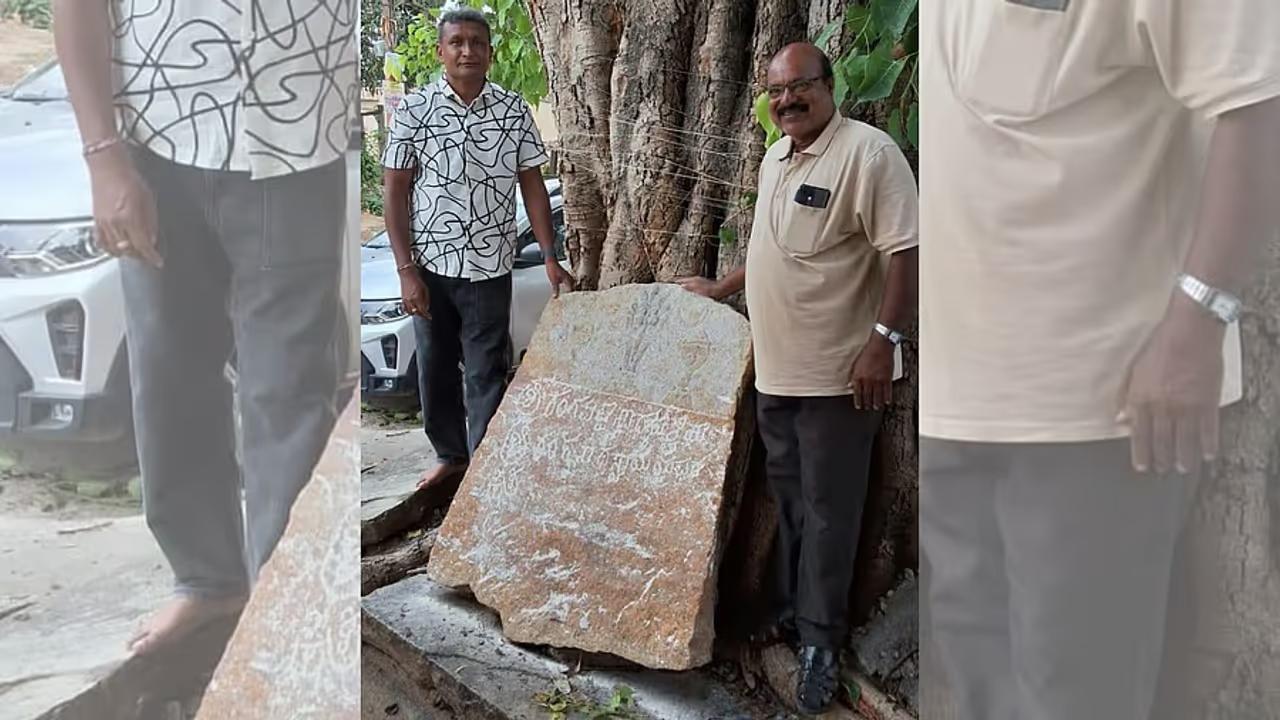
The stone inscription was discovered near the Anjaneya Swamy Temple in Dibbur village. According to epigraphist K Dhanapal, the inscription dates to 1750 AD, during the reign of Mysore ruler Immadi Krishnaraja Wadiyar, who ruled from 1734 to 1766.
The inscription records that Dibbur village was donated to support the Sri Ranganatha Swamy Temple in Srirangapatna. The revenue generated from the village was earmarked for the temple's daily worship, maintenance and religious festivals.
Related Articles

"The inscription mentions that all the land revenue and other taxes collected from Dibbur village were to be set aside for the Srirangapatna temple's maintenance, festivals and daily worship rituals," Dhanapal said.
Similarities With the Nagamangala Inscription
Although the inscription on the Dibbur slab is relatively brief, its script, symbols and overall design closely resemble those of an earlier inscription found near the Anjaneya Swamy Temple in Nagamangala village near Yelahanka.
Based on these similarities, historians believe both villages may have been donated to the Sri Ranganatha Swamy Temple as part of the same royal endowment in 1750.
Royal Emblems Reflect Wadiyar Heritage
The upper section of the stone slab features carvings of the Sun and the Moon, symbols commonly associated with royal inscriptions.
At the centre is the Kirthimukha, a mythical lion-like face that served as a royal emblem of the Mysore Wadiyars. The slab also bears Vaishnava symbols, including the Sudarshana Chakra, the Shankha (conch shell) and the Thirunamam (Vaishnava tilak), highlighting its religious significance.
Inscription Remained Hidden for Generations
According to researcher M Narendra, the inscription remained unnoticed for generations because villagers believed the carved stone represented a deity.
The inscribed portion of the slab remained buried underground, while only the upper carved section was visible. A small shrine was built around the exposed portion, and villagers worshipped it for years.
It was only during recent renovation work at the temple that the slab was moved and placed beneath a nearby banyan tree, revealing the previously buried inscription.
Discovery Sheds New Light on Wadiyar Temple Endowments
Dhanapal said the discovery provides fresh evidence that Immadi Krishnaraja Wadiyar made significant land grants and temple endowments in and around Yelahanka in 1750.
He added that although many inscriptions from the period have already been documented in Epigraphia Carnatica, discoveries such as the Dibbur inscription demonstrate that several historically significant records are still waiting to be identified.