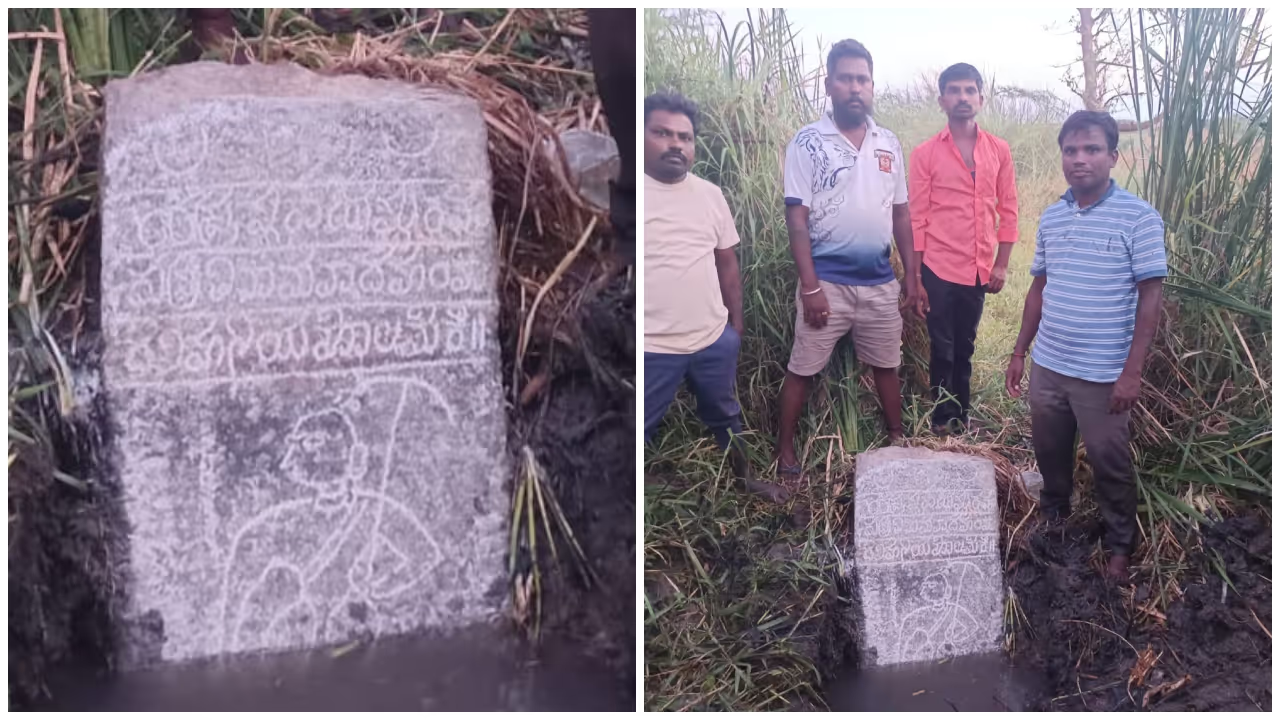
A rare 16th-century Vijayanagara-era inscription has been discovered in Karnataka’s Kampli taluk. The Kannada stone inscription, linked to Emperor Krishnadevaraya’s reign, offers fresh insights into the empire’s administration, culture, and religious traditions.
A significant archaeological discovery linked to the Vijayanagara Empire has come to light in Hampadevanahalli village in Kampli taluk, attracting the attention of historians, researchers, and heritage enthusiasts across Karnataka. A rare and previously unpublished 16th-century stone inscription was recently discovered near the Narihalla stream on the western side of the village, offering valuable insights into the administration, culture, and religious traditions of the Vijayanagara period.
The inscription was identified by K Anjinaiah, a history lecturer at the Government First Grade College in Hitnal, Koppal taluk, who conducted a preliminary study of the stone slab. Carved in Kannada script, the inscription is believed to date back to the reign of Emperor Krishnadevaraya, one of the most celebrated rulers of the Vijayanagara Empire.
From Hampadevanahalli To Krishnarayapura
Historians consider the inscription highly significant because of the historical details it contains. According to the preliminary findings, the inscription records that Hampadevanahalli was renamed “Krishnarayapura” and donated as a grant during the Vijayanagara period.
Related Articles

Experts believe the discovery could provide important clues about the empire’s administrative structure, village renaming practices, and systems of social and religious endowments prevalent during that era.
The upper section of the stone features carvings of the sun and moon, symbols traditionally used in Vijayanagara inscriptions to signify the permanent nature of royal grants. At the bottom of the slab is a finely detailed sculpture depicting Lord Vishnu’s Vamana avatar, reflecting the artistic excellence and religious influences of the period.
New Insights Into Vijayanagara History
The granite inscription, which stands nearly five feet tall, has remained in remarkably good condition despite its age. Historians and archaeology enthusiasts believe the discovery could aid further research into the language, governance, religious customs, and artistic traditions of the Vijayanagara Empire.
Local residents also played an important role in the discovery. Youths from the village, including Karibasava, Umesh, and Praveen, assisted researchers in identifying the site and collecting related information. Their contribution has been widely appreciated by the local community and historians alike.
The discovery in Hampadevanahalli is being seen as an important addition to Karnataka’s archaeological and historical heritage, shedding fresh light on the legacy of the Vijayanagara Empire.