Bengaluru's draft parking policy proposes annual residential parking fees of up to ₹25,000 for SUVs, along with hourly charges for on-street and off-street parking. The GBA plan aims to regulate parking and reduce traffic congestion.
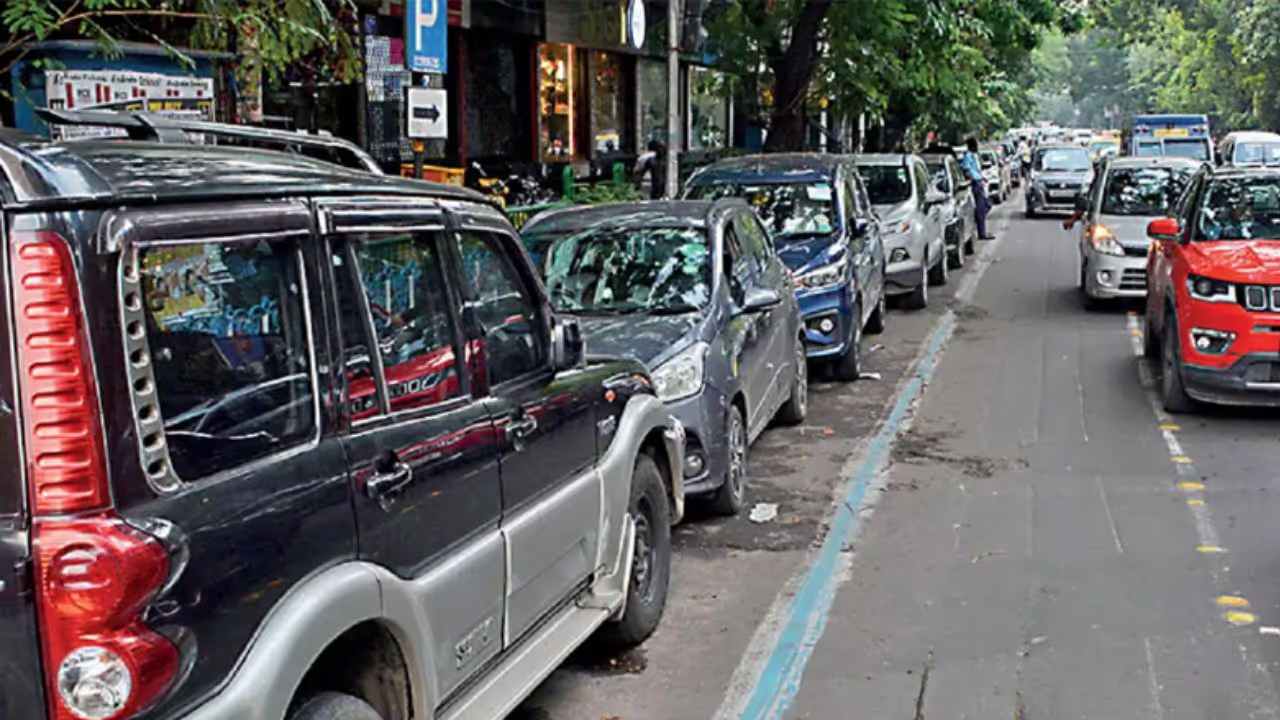
Bengaluru motorists may soon have to pay to park their vehicles on public roads, including outside their homes, as the Greater Bengaluru Authority (GBA) has proposed a new parking policy aimed at regulating the city's growing parking demand and reducing congestion. The Karnataka government issued a draft notification on August 13, 2026, proposing parking charges based on road categories, vehicle types and parking locations. Under the proposed rules, motorists could have to pay hourly charges for on-street parking, while residential parking permits could cost up to ₹25,000 annually, depending on the type of vehicle.
The proposed Bengaluru Parking Policy 2026 seeks to move away from the existing practice of unrestricted or free roadside parking. It proposes three parking systems: on-street parking, off-street parking and monthly parking passes. Roads across the city will also be classified into A, B and C categories, with parking charges varying according to the road category.
New On-Street Parking Charges In Bengaluru
Under the draft policy, motorists parking along designated roads will have to pay an hourly fee based on the road category.
Related Articles

- A Category Roads: ₹40 for two-wheelers and ₹80 for light vehicles such as cars
- B Category Roads: ₹30 for two-wheelers and ₹60 for light vehicles
- C Category Roads: ₹20 for two-wheelers and ₹40 to ₹60 for light vehicles
The proposed charges are intended to regulate roadside parking and encourage motorists to use designated parking facilities.
Off-Street Parking Rates
The GBA draft also proposes separate charges for designated off-street parking facilities.
- A Category: ₹20 for two-wheelers and ₹40 for light vehicles per hour
- B Category: ₹15 for two-wheelers and ₹30 for light vehicles per hour
- C Category: ₹10 for two-wheelers and ₹20 for light vehicles per hour
Monthly off-street parking passes have also been proposed:
- A Category: ₹2,000 for two-wheelers and ₹4,000 for light vehicles
- B Category: ₹1,500 for two-wheelers and ₹3,000 for light vehicles
- C Category: ₹1,000 for two-wheelers and ₹2,000 for light vehicles
Residential Parking Could Cost Up To ₹25,000
One of the key proposals is an annual residential parking fee for Bengaluru residents who want to park their vehicles on public roads outside their homes.
The proposed annual residential parking permit charges are:
- Hatchbacks: ₹15,000
- Sedans: ₹20,000
- SUVs: ₹25,000
This means residents who do not have adequate parking space within their properties could potentially face an additional annual cost for parking on public roads, subject to the final rules.
Parking Banned In Key Areas
The draft policy proposes a complete parking ban in several areas to prevent traffic bottlenecks and improve road safety.
Parking would not be permitted:
- Around Metro stations and major bus stations
- On arterial or major connecting roads
- Within 50 metres of traffic signals
- Within 25 metres of secondary road junctions
The restrictions are aimed at keeping important traffic corridors clear and improving the movement of vehicles.
Night Parking To Be Allowed In Selected Areas
To provide some relief to residents, the proposed rules allow parking in selected locations between 8 pm and 8 am.
The provision is intended to accommodate night-time parking demand while ensuring that roads remain available for traffic during the day.
Cycles And Autos Get Exemptions
The proposed policy provides exemptions for certain vehicles. Parking charges would not apply to cycles, while vehicles parked at designated auto stands would also be exempt from parking fees.
Homeowners To Be Responsible For Parking
The draft policy also places responsibility on property owners to provide parking facilities for their tenants. If a tenant's vehicle is parked on the roadside or outside the house, the homeowner could be held responsible for the applicable parking fee or penalty.
This provision could have a significant impact in densely populated neighbourhoods where houses and apartment buildings have limited parking facilities.
Vacant Sites Could Be Used For Public Parking
The GBA has also proposed using vacant government and private sites to address Bengaluru's parking shortage. Owners who make their vacant properties available for public parking could be offered a property tax exemption as an incentive.
The proposal is aimed at increasing the availability of designated parking spaces while reducing dependence on public roads.
Draft Policy Yet To Be Finalised
The proposed Bengaluru Parking Policy 2026 is currently in the draft stage. The parking charges, residential permits, exemptions and other provisions could be modified before the final rules are notified.
For Bengaluru motorists, the proposed policy could mark a major shift from free and informal roadside parking towards a structured, paid parking system. If implemented in its current form, residents may need to factor parking costs into their annual household expenses, particularly those who rely on public roads for residential parking.