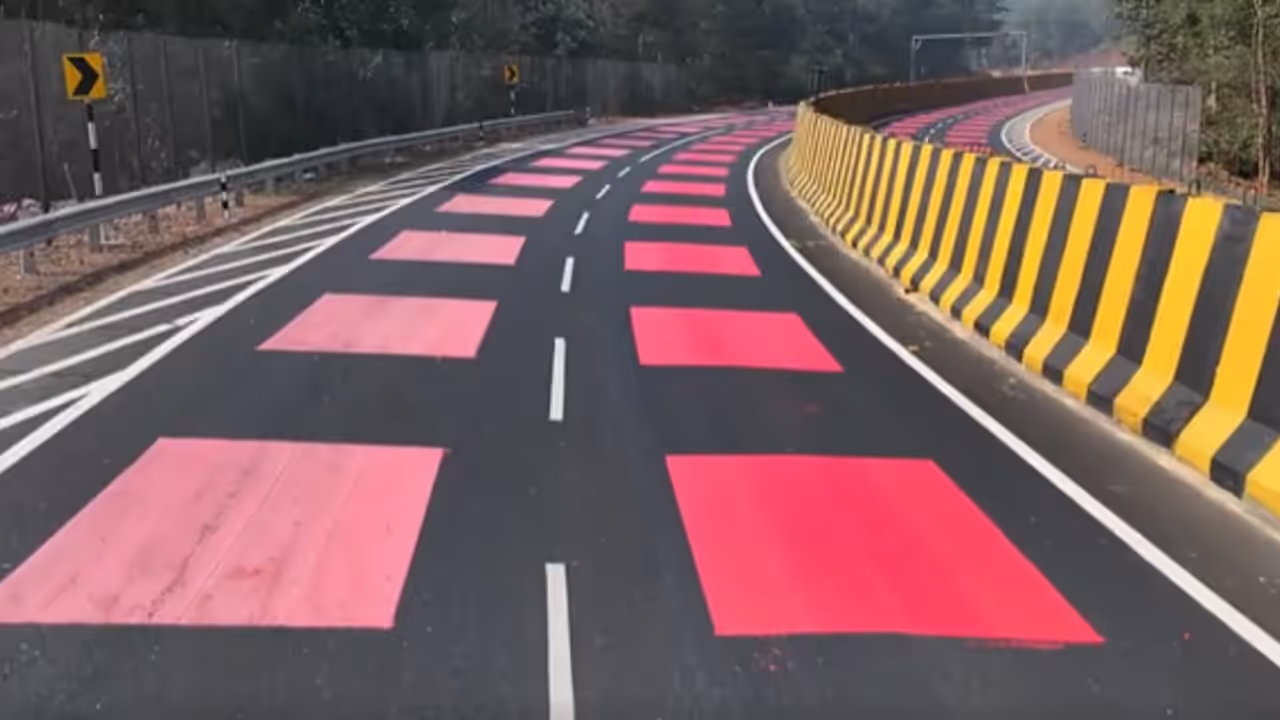
In MP, a section of National Highway-45 through the Veerangana Durgavati Tiger Reserve has been redesigned for wildlife safety. This pioneering Indian initiative features unique "table-top red markings" to alert drivers and naturally slow traffic.
Madhya Pradesh has taken a pioneering step in wildlife conservation by redesigning part of the Bhopal-Jabalpur National Highway (NH-45) to make it safer for animals crossing through the Veerangana Durgavati Tiger Reserve, one of India’s key forest habitats.
The National Highways Authority of India (NHAI), under the Ministry of Road Transport and Highways, has introduced a unique “table-top red marking” along a two-kilometre stretch of the highway - the first of its kind in the country.
These slightly raised red thermoplastic markings act as visual and tactile signals to alert drivers they are entering a wildlife-sensitive zone. Unlike traditional speed breakers, the textured red surface naturally prompts vehicles to slow down without abrupt braking, thereby reducing the risk of collisions with animals such as tigers, deer, jackals and sambar.
In addition to the red markings, about 25 wildlife underpasses have been strategically built based on known animal movement patterns, allowing creatures to safely cross beneath the road instead of navigating through traffic. Chain-link fencing on both sides of the highway guides animals toward these passages and prevents random crossings that often result in fatalities.
The project spans an 11.9-kilometre section of NH-45 between Hiran and Sindoor, around 60 kilometres from Jabalpur, an area known for its rich biodiversity and frequent animal crossings. Wildlife conservation experts see this initiative as a practical balance between infrastructure development and ecological protection, demonstrating how thoughtful design can safeguard habitats without hindering essential transport connectivity.
Related Articles

Early signs suggest that animals - from deer to larger predators - are using the underpasses effectively, while drivers become more alert on the red-marked stretch. This model may serve as a roadmap for future wildlife-friendly road designs across India, helping reduce animal-vehicle collisions and preserve fragile ecosystems where major roadways intersect natural corridors.