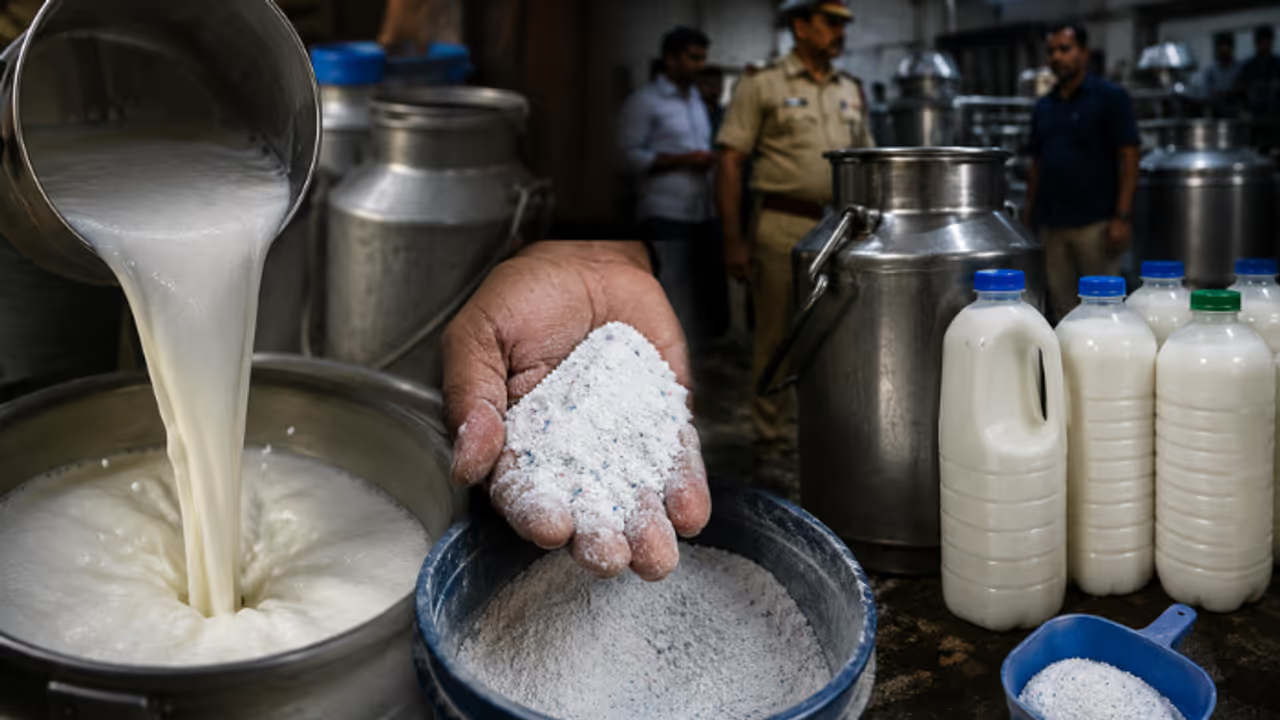
A shocking milk adulteration racket has been exposed in Maharashtra, with authorities alleging over 2.3 crore litres of synthetic milk, made using detergent powder and chemicals, entered the market over the past six months, raising severe public health concerns.
Food adulteration in this country has reached unfortunate new heights, raising questions over consuming day-to-day staples with major fear and suspicion. Now, a shocking milk adulteration racket has been exposed in Maharashtra. Authorities allege that over 2.3 crore litres of synthetic milk, made using detergent powder and other chemicals, entered the market over the past six months. This massive operation was unearthed by the state Food and Drug Administration (FDA) and police, raising serious public health and safety concerns.
Led by FDA Commissioner Tukaram Mundhe, the 'Safe Food, Safe Maharashtra' campaign crackdown revealed an organised network spanning districts such as Pune, Ahilyanagar (Ahmednagar), Solapur, Jalna, Thane, and Dharashiv. Investigators found that low-grade milk powder, detergent, palm oil, and various chemical additives were used to create the synthetic milk. The primary manufacturing hub and birthplace of this specific synthetic milk investigation was Dharashiv district (specifically inside the Bhoom taluka region).
How the Racket Operated
Low-quality milk powder was allegedly procured by the accused, often under the guise of cattle-feed sales. This powder was then mixed with detergent powder, palm oil, and other chemical substances to mimic the appearance and fat content of genuine milk. Officials estimate approximately 23.04 lakh litres of synthetic milk, valued at around Rs 9.21 crore, were manufactured in a specific operation alone.
Related Articles

A consistent 10% adulteration rate was further revealed by investigators. Racketeers allegedly mixed 10 litres of synthetic milk with every 100 litres of pure milk before supplying it to consumers through various dairy networks. Based on this ratio, over 2.3 crore litres of adulterated milk are suspected to have been distributed across Maharashtra.
Action Taken and Health Risks
Simultaneous raids by the FDA and police resulted in the arrest of 13 individuals and cases registered against 26 accused. Authorities seized chemicals and adulteration materials worth Rs 1.48 crore and 61 bags of adulterated milk powder during these operations. Five food licences were suspended. Several accused, including alleged kingpin Sushant Hinge in one case and Balasaheb Godge in another, remain absconding. Special Investigation Teams (SITs) have been formed to track down the remaining suspects.
Medical experts warn that regular intake can severely damage vital organs like the liver, kidneys, and digestive system. Children, pregnant women, and the elderly are particularly vulnerable. Under the Food Safety and Standards Act, those found guilty of producing or selling life-threatening adulterated food can face life imprisonment and a fine of up to Rs 10 lakh.
What Did The Police Say
Shriganesh Kanagude, Police Inspector in Bhum, told NDTV, “During the raid, officials seized 61 bags of adulterated milk powder. Preliminary investigations reveal that Balasaheb Godge was supplying the adulterated milk powder to several dairy units in the Bhum region for the preparation of adulterated milk. The probe has also indicated the involvement of multiple milk collection centres in the racket. However, those who allegedly purchased thousands of litres of adulterated milk made using the powder are yet to be identified or arrested. The racket was being run under the guise of selling cattle feed. Bhum taluka exports lakhs of litres of milk every day and produces nearly 70 to 80 tonnes of khoya, making the case particularly significant.”
There's More To This Scam
In a parallel operation, the Mumbai Police Crime Branch also uncovered a separate racket involving the tampering of sealed milk pouches of popular brands like Amul and Gokul. In this method, pure milk was siphoned off, and packets were refilled with contaminated water or chemical mixtures before being re-sealed and sold.
Investigations are ongoing, with authorities tracing the supply chain to identify all beneficiaries and ensure comprehensive action against the entire network involved in this widespread fraud.