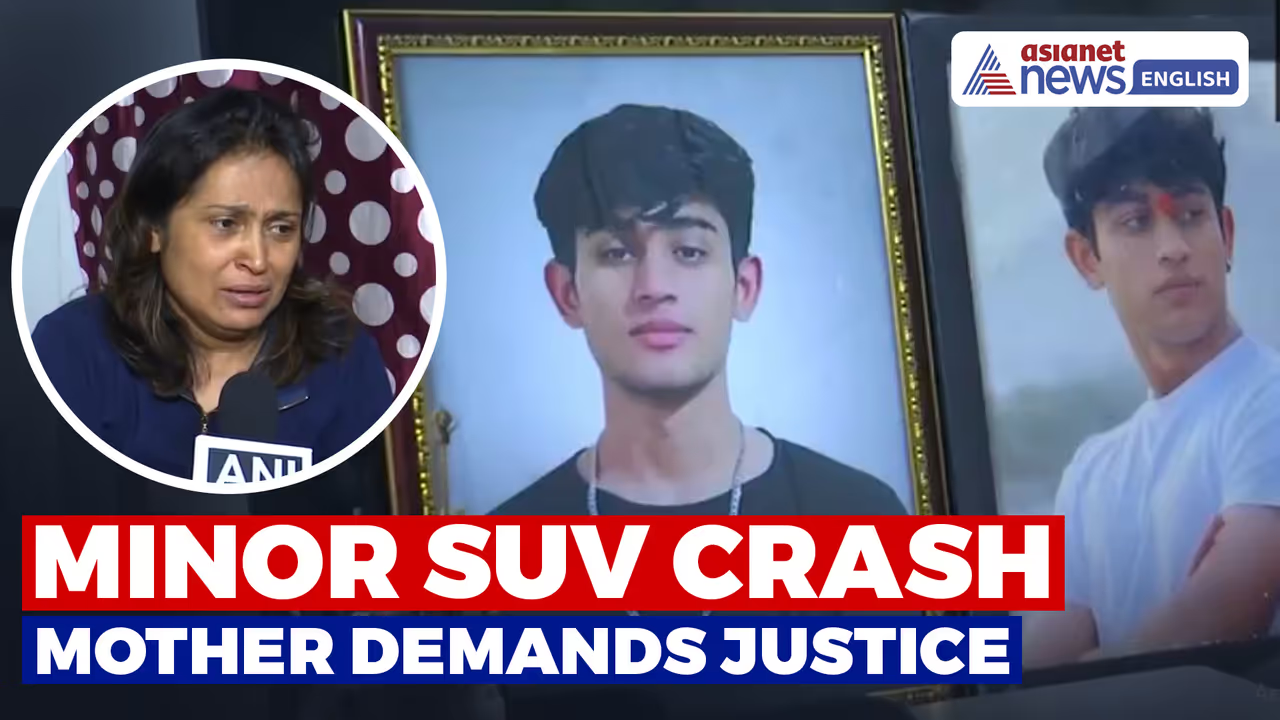
In New Delhi, 23-year-old Sahil Dhaneshra was killed when his motorcycle was hit by an SUV driven by an unlicensed 17-year-old. A video from the SUV shows the teen allegedly speeding while filming for social media.
A disturbing new video and autopsy report have emerged in the tragic case of 23-year-old Sahil Dhaneshra, who was killed in a head-on road collision in Dwarka, New Delhi, on February 3, 2026. The footage and medical findings have intensified public scrutiny over reckless driving, juvenile accountability and road safety in the nation’s capital.
The grisly incident occurred at around 11:57 am near Lal Bahadur Shastri College when a Scorpio SUV, allegedly driven by a 17-year-old minor without a valid licence, collided with Dhaneshra’s motorcycle. Preliminary police reports found a pile-up involving the SUV, Dhaneshra’s bike and a parked Swift Dzire taxi. The taxi driver was injured and taken to IGI Hospital for treatment, while Dhaneshra was declared dead at the scene.
Reel Video That Captures Accident
Most strikingly, a video filmed from inside the Scorpio appears to capture the fatal moments leading up to the collision. The clip, reportedly recorded by the teenager’s sister sitting beside him, shows the SUV speeding down a road without a central divider. It narrowly avoids a bus before veering toward oncoming traffic and smashing into the motorcycle from the opposite direction, according to visual evidence and police assessment. Dhaneshra was attempting to overtake the bus on his bike seconds before impact.
Related Articles

The horrifying crash has sparked deep grief and anger among Sahil’s family. His mother, Inna Maakan, has alleged that the video circulating online is incomplete, omitting the exact moment of collision. She claimed that the teenager was trying to film social media reels at high speed when the crash occurred — a claim corroborated by eyewitness accounts and local reporting — and has urged authorities to ensure justice for her son.
Autopsy Report
Medical findings from the autopsy report offer a stark picture of the violence of the crash. Examiners concluded that Dhaneshra died from haemorrhagic shock caused by severe cranio-cerebral injuries, including a fractured skull and extensive internal trauma. The report documented a massive subdural hematoma (blood accumulation in the brain), severe brain swelling and contusions, as well as fractured ribs and damage to vital organs, consistent with catastrophic impact. Around 100 ml of blood was found in both pleural cavities, indicating major chest injuries, while a blood clot and skull fracture suggested immediate and severe head trauma at the moment of collision.
The investigation into the accident has revealed troubling details about the driver of the SUV, who was found to have been driving without a licence. Police registered the case and seized all vehicles involved for mechanical inspection and forensic analysis. CCTV footage from nearby cameras was also collected, and investigators examined other digital evidence and witness statements.
Despite the gravity of the incident, the Juvenile Justice Board (JJB) granted interim bail to the teen driver on February 10, allowing him to appear for his Class 10 board examinations. This decision has prompted widespread debate and public outcry, with many questioning whether justice can be served while the accused remains free on bail amid ongoing proceedings.
Sahil’s mother has been particularly vocal about seeking accountability, stating that the SUV involved in the crash had “13 challans for overspeeding” and that negligence contributed directly to her son’s death. She has emphasised the need for stricter enforcement of traffic laws and harsher consequences for reckless driving — especially when amplified by social media motives like filming reels at high speed.
The collision has reignited broader conversations about road safety, the dangers of driving without proper licensing, and the impact of distracted driving linked to social media behaviour. With compelling video evidence and disturbing medical findings now public, the case continues to shape public discourse on how best to prevent similar tragedies on India’s roads.