- Home
- Sports
- ENG vs IND, 3rd T20I: What Led to Team India's Humiliating 125-Run Defeat at Trent Bridge? Explained
ENG vs IND, 3rd T20I: What Led to Team India's Humiliating 125-Run Defeat at Trent Bridge? Explained
Team India suffered their biggest-ever T20I defeat, losing by 125 runs to England after being bowled out for 76 chasing 202. Here's a look at the key reasons behind the collapse, from poor bowling and batting to tactical errors and pitch misjudgment.
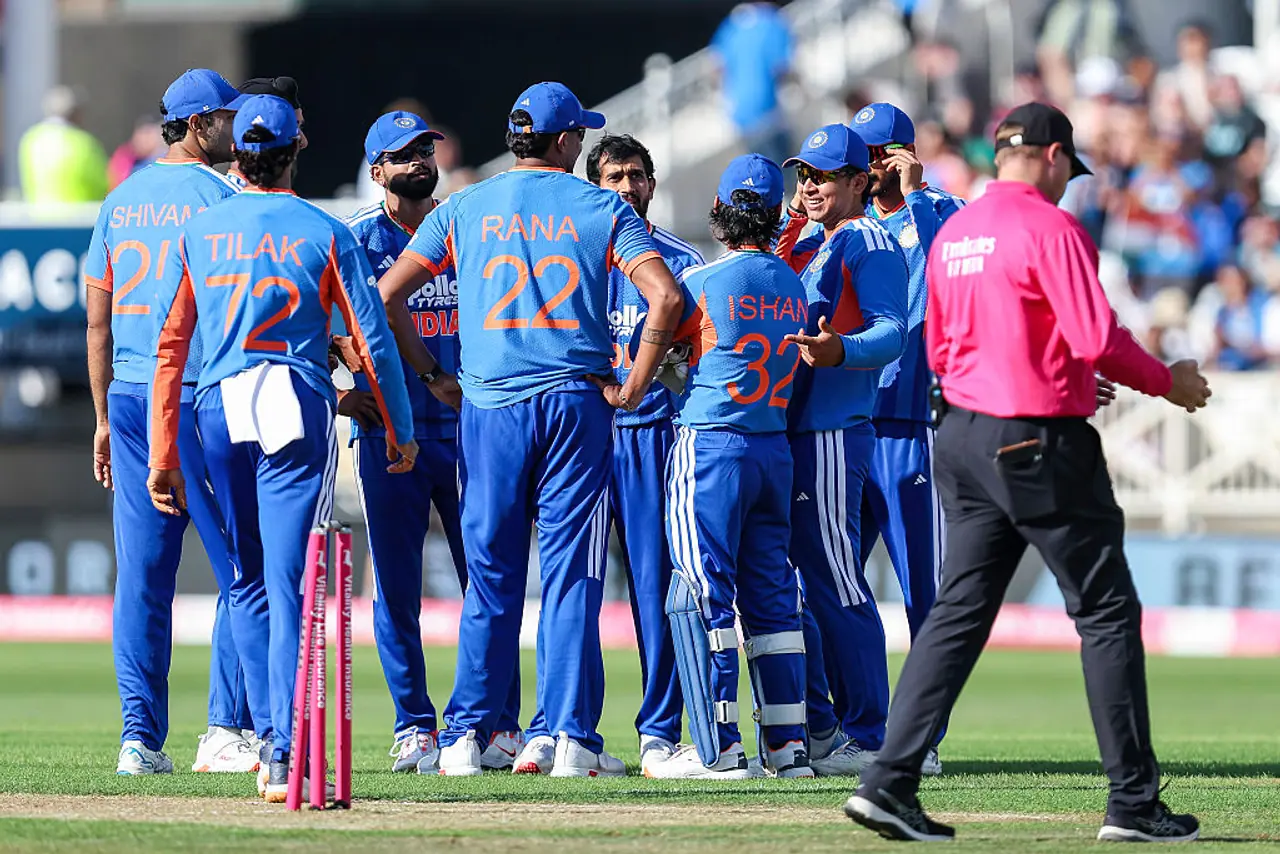
The Heaviest Defeat for Team India in T20Is
Team India had a forgettable outing in the third T20I of the five-match series against England, as they were completely outplayed by the hosts, resulting in a humiliating 125-run defeat at Trent Bridge in Southampton on Tuesday, July 7.
Chasing a mammoth 202-run target, the Men in Blue collapsed spectacularly for just 76 runs in 11.4 overs, succumbing to the heaviest defeat in their history of T20I cricket. For the first time in the shortest format at the international level, Team India lost by a margin of 100 or more runs, as England produced a dominant all-round performance to take a 2-0 series lead.
On that note, let’s take a look at the key reasons behind Team India’s defeat to England at Trent Bridge.


Poor Bowling Execution
One of the key reasons behind Team India’s embarrassing defeat at the hands of England was the bowlers’ inability to adapt to flat, batting-friendly conditions at Trent Bridge. Indian bowling attack lacked discipline to contain England’s aggressive batting, with Phil Salt (70), Jos Buttler (36), and Sam Curran (41*) taking advantage of inconsistent lengths and a lack of tactical variation to plunder runs at will.
In the middle overs, India conceded 103 runs while taking three wickets before leaking another 49 runs for three more wickets in the death overs. In total, the visitors gave away a staggering 152 runs in 14 overs while managing to claim only six wickets. This ability to stem the flow of runs or pick wickets at intervals allowed England to maintain an unrelenting scoring rate, effectively taking the game away from the Men in Blue.
Spinner Varun Chakravarthy was particularly criticised for his inability to contain England’s scoring during the crucial middle phase of the innings. Conceding 35 runs at an economy rate of 11.67 in 3 overs, his spell failed to provide any breakthrough or the pressure that the team desperately needed.
Also Read: No birthday gift for Dhoni as India crushed by England in T20I
Pre-Powerplay Collapse against High Pace
The openers, Abhishek Sharma and Vaibhav Sooryavanshi, are often known for their aggressive and fearless approach at the top of the order, but they were neutralised by the searing new pace pair of Jofra Archer and Josh Tongue, who were bowling at a speed of more than 145 kmph.
After hitting three sixes in the first nine balls, two by Vaibhav and one by Abhishek, India’s chase appeared promising, as the pair combined to score 23 runs in 1.5 overs. However, following the dismissal of Abhishek Sharma, the Men in Blue collapsed to 54/5 in the powerplay, losing five wickets inside the first six overs for the first time in their T20I history, effectively ending any hopes of a competitive chase.
From 54/5 to 76 all-out, Team India lost their remaining five wickets in just 21 runs, highlighting a brittle batting lineup that completely disintegrated under the sustained pressure of England’s pace attack.
Flawed Tactical Decisions
Team India head coach Gautam Gambhir and his management have come under scrutiny and criticism for their lack of strategic clarity and baffling decision-making during crucial stages of the match. The most glaring example was to promote Harshit Rana at No.7 when the visitors were reeling at 52/5 in five overs, ahead of a proven power-hitter like Shivam Dube.
Since the Men in Blue’s 202-run chase was already slipping away from their hands, with the required run rate climbing exponentially against a rampant pace attack, sending in a lower-order bowler like Harshit Rana was widely perceived as an act of surrender. Promoting Harshit in the powerplay didn’t pay off as he was dismissed for just 9 off 13 balls.
Former India cricketer Dinesh Karthik, who was part of the Sky Sports commentary panel, openly questioned the team management’s judgment, expressing disbelief that a bowler with little experience batting in the powerplay was sent in while a specialist power-hitter sat on the sidelines.
Failure to Read the Conditions
Team India skipper Shreyas Iyer’s decision to opt for bowling after winning the toss completely backfired, as the Trent Bridge surface remained significantly flatter and more conducive to stroke-play throughout the first innings than anticipated.
By opting to chase on a pitch that offered almost no assistance to the seamers early on, the captain misread the evolving nature of the track, which became increasingly difficult for batting only as the game progressed. Therefore, the Men in Blue ultimately played into England’s hands by allowing them to set a daunting total without the pressure of scoreboard management.
Head coach Gautam Gambhir admitted at the post-match press conference that Team India failed to read the game well from the Ireland T20I series, where the Men in Blue were whitewashed 0-2, further compounding the frustration of a winless streak that has now extended to five matches across their ongoing UK tour.
Also Read: Archer, Tongue power England to 125-run win over India, lead 2-0
Stay on top of all the latest Sports News, including Cricket News, Football News, WWE News, and updates from Other Sports around the world. Get live scores, match highlights, player stats, and expert analysis of every major tournament. Download the Asianet News Official App from the Android Play Store and iPhone App Store to never miss a sporting moment and stay connected to the action anytime, anywhere.