
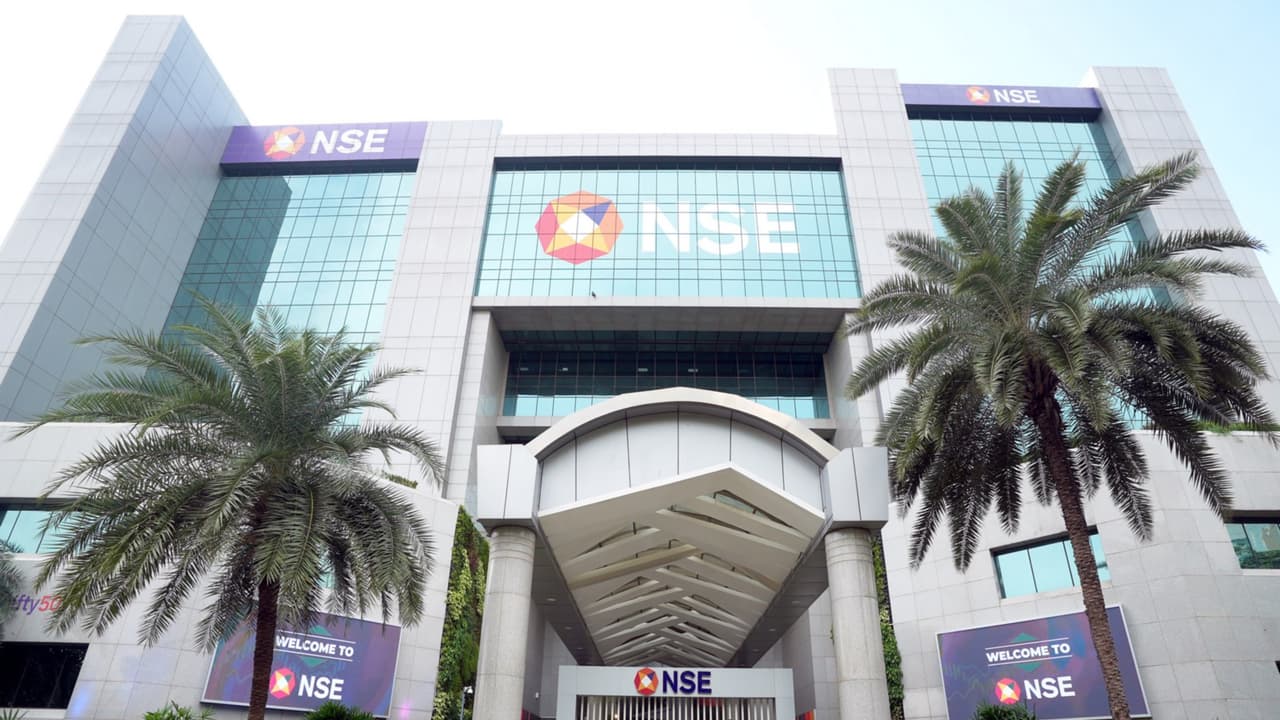
Indian equity indices Sensex and Nifty opened lower on Tuesday, impacted by new geopolitical tensions in the Middle East. The conflict sparked fears of energy inflation, pushing crude oil prices higher and causing broad-based sectoral losses.
Indian equity benchmark indices opened flat but in the negative territory on Tuesday morning, as fresh geopolitical escalations in the Middle East revived energy inflation concerns. The BSE Sensex dropped by 144.09 points, or 0.19 per cent, to stand at 76,344.87 points, while the NSE Nifty 50 slipped 27.60 points, or 0.11 per cent, to trade at 24,004.10 points.
Broad-based sectoral losses emerged across major indices, with the Nifty Oil & Gas index declining by 0.31 per cent, Nifty Consumer Durables dropping by 0.22 per cent, and Nifty Auto shedding 0.14 per cent. Contrary to the downward trend, the Nifty PSU Bank and Nifty Pharma indices edged higher by 0.23 per cent and 0.18 per cent, respectively.
Technical Outlook
Analyzing the technical landscape, Shrikant Chouhan, Head of Equity Research at Kotak Securities, pointed out that after a long time, Nifty not only crossed the 20-day SMA (Simple Moving Average) but also managed to close above it, supporting the uptrend beyond the current levels.
"For trend-following traders, the 20-day SMA or 23,875/76000 would act as a key support zone. Above this, the market could continue its positive momentum towards 24,200-24,400/77000-77600. On the other hand, if the 23,875/76000 level is breached, the uptrend will weaken. Below this, traders may choose to exit their long positions as the index could retest the 23700-23600/75500-75200 levels," Chouhan said.
Geopolitical Tensions and Commodity Impact
At the time of filing this report, Brent crude prices climbed USD 0.59 per cent to USD 97.82 per barrel, and Crude oil stood at USD 91.56, up by 0.63 per cent. At the same time, gold prices fell 0.60 per cent to trade at USD 4,541.79.
The sudden cautious stance among market participants stemmed largely from international developments as Iranian Foreign Ministry Spokesperson Esmail Baghaei on Tuesday accused the US of committing a "despicable war crime" following a missile strike on a sports hall in Lamerd, Fars Province, that Tehran says killed 24 civilians, including teenage volleyball players and a two-year-old child, while injuring more than 130 people.
"Gold prices fell in Asian trade, reversing part of the previous session's gains after fresh U.S. strikes on Iranian targets revived fears of a prolonged conflict in the Middle East," said Manav Modi Commodities Analyst Motilal Oswal Financial services Ltd. He noted that the renewed escalation pushed crude oil prices higher after a week of declines, reigniting concerns over energy-driven inflation and keeping markets cautious.
A rebound in oil prices also supported the US dollar, which remained relatively firm as investors continued to view the greenback as a safer asset amid geopolitical uncertainty. "While reports indicate the U.S. and Iran have made progress on several negotiation points, major disagreements remain over the Strait of Hormuz, sanctions relief, and Iran's nuclear program. Focus now shifts toward upcoming U.S. GDP and inflation-related data later this week," Modi added.
Analyst Views on Market Path
Rajesh Palviya, Head of Research at Axis Direct, also echoed the same geopolitical sentiments. He stated that any positive developments on the geopolitical front along with supportive domestic triggers could accelerate the ongoing rally. "As long as Nifty sustains above 24,000, the index has the potential to advance towards 24,150-24,350 in the near term. Immediate support is placed at 23,850, while stronger support is seen around 23,650," Palviya said. (ANI)
(Except for the headline, this story has not been edited by Asianet Newsable English staff and is published from a syndicated feed.)