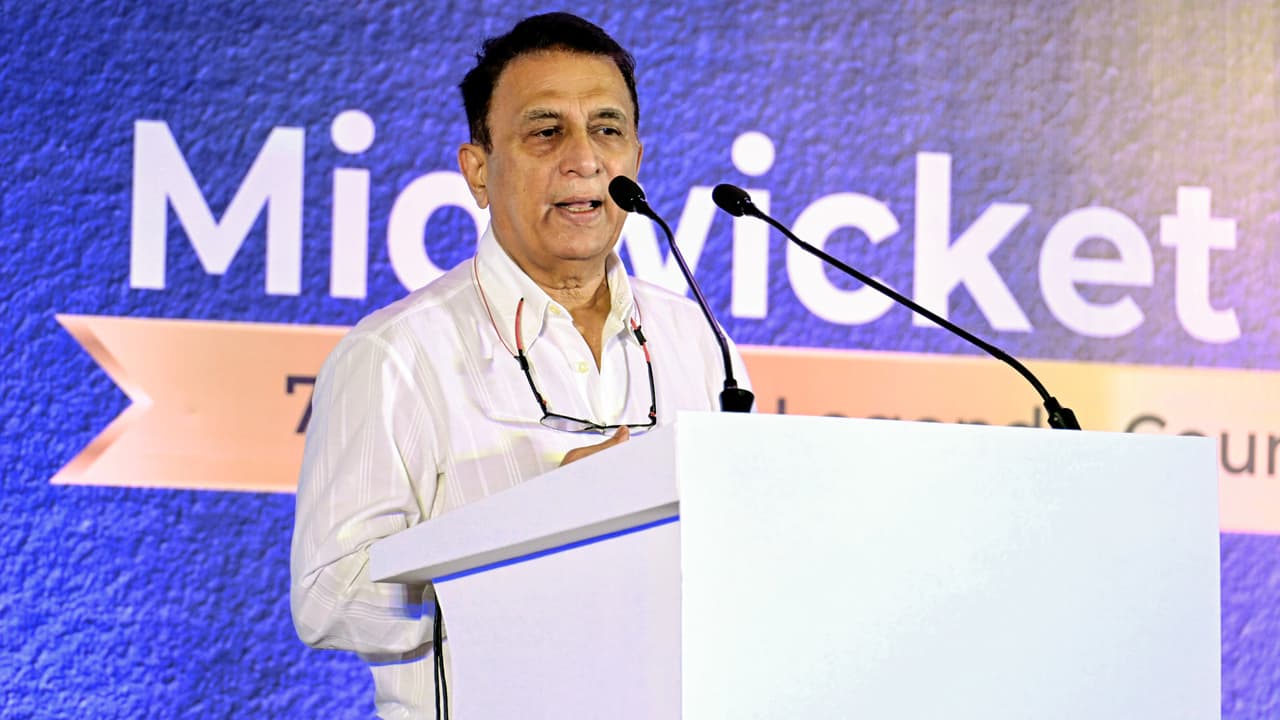
Sunil Gavaskar has criticized “double standards” of IPL critics, saying foreign boards benefit financially while complaining about the league. He noted BCCI shares 10% of overseas players’ fees with their home boards, unlike The Hundred or BBL. He praised IPL’s global influence and Indian cricket’s strong position.
Former India captain and batting legend Sunil Gavaskar called out the ‘double standards’ of the IPL critics, who regularly attack the BCCI and the tournament while simultaneously relying on its financial strength to bolster their own cricket boards.
Recently, England cricketers Jofra Archer and Jacob Bethell were questioned for their participation in the Indian Premier League (IPL) at the expense of domestic availability. Archer faced significant scrutiny for remaining in India for the IPL 2026 playoffs, which resulted in getting ruled out of England’s first Test against New Zealand at Lord’s in London.
Bethell, on the other hand, was criticized for his lack of game time in the franchise league rather than preparing for the red-ball summer in the County Championship. Though Jacob Bethell featured in the series opener against New Zealand, he remained a talking point for pundits who questioned his lack of red-ball preparation before the England Test summer.
Related Articles

Also Read: Indian spinner Manav Suthar joins Warwickshire on short-term deal
‘Indian Cricket and BCCI Bashing Is Par For The Course’
Former India captain Sunil Gavaskar took a scathing stand against the persistent ‘whining and moaning’ directed at the IPL, framing the criticism as an act of hypocrisy. In his column for the Mid-Day, the legendary opener argued that external boards and pundits are quick to lament their loss of players to the IPL while ignoring the fact that they receive a substantial chunk of economic windfalls from the BCCI.
“Indian cricket and BCCI bashing is par for the course. But when it comes to revenues, they still have to come to the BCCI because it is Indian cricket and Indian fans that fill their coffers much more than even what their traditional rivalry does." Gavaskar said.
“Cribbing about IPL and their players not being available for their country is another favourite pastime. Not a word though about the 10% their Boards get of the fee of every player from their country," he added.
The Board of Control for Cricket in India (BCCI) remains the only governing body that shares a significant portion of its league's revenue with the home boards of overseas players. The participation of their players in the richest T20 league in the world contributes’ cool million plus pounds every year’ to these boards, according to Sunil Gavaskar.
The England and Wales Cricket Board and Cricket Australia have both benefited from this unique financial model by the BCCI, as it ensures a steady stream of income that supports their grassroots development and domestic structures.
‘Indian Cricket Is Here to Stay’
Further emphasizing the global influence of the Indian game, especially the IPL, Sunil Gavaskar dismissed the detractors’ attempt to undermine the legacy, adding that The Hundred and BBL do not offer any such percentage to the boards of their overseas players.
“It adds up to a cool million plus pounds every year. Does The Hundred give any percentage to the Boards of their overseas players playing in their tournament? No sir. Does the BBL or any other country's T20 leagues give any percentage to the Boards of their overseas players? No, sir, again. Only the IPL does,” Gavaskar added.
“Yet the whining and moaning about BCCI and Indian cricket just goes on and on. Wake up and smell the coffee, guys. Indian cricket is here to stay, no matter how you try to pull it down," he concluded.

The Indian Premier League (IPL) is the second-most valuable sports league in the world in terms of per-match value, ranking only behind the National Football League of the USA. With a market value of approximately $18.5 billion as of 2026, the league continues to solidify its position as the commercial juggernaut, driven by its massive viewership, lucrative media rights, and expanding ecosystem.