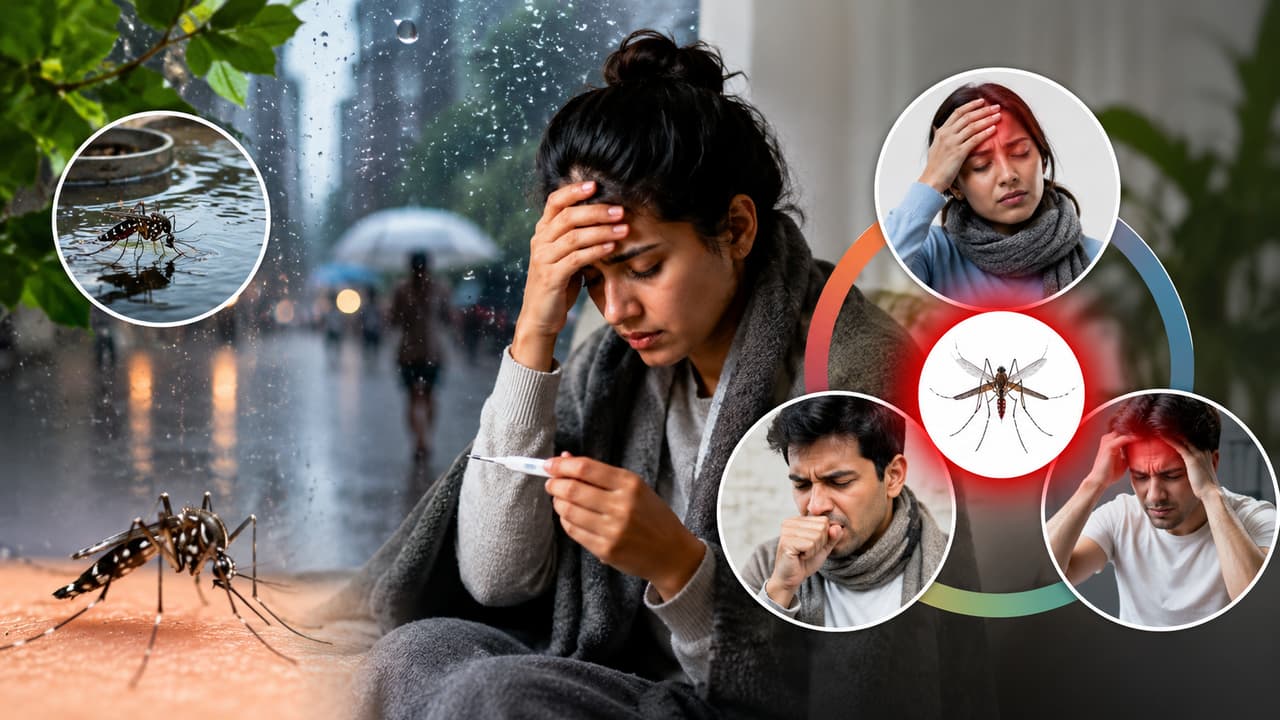
Monsoon brings relief from the heat, but it also raises the risk of illnesses like dengue, malaria and viral fever. As these infections share similar symptoms, knowing the warning signs can help you seek timely medical care.
The arrival of the monsoon brings much-needed relief from the summer heat, but it also marks the beginning of the season for several infectious diseases. Waterlogging, stagnant water and increased mosquito breeding create the perfect conditions for illnesses like dengue and malaria, while viral fever also becomes common due to changing weather conditions. Since these diseases often begin with similar symptoms, identifying the warning signs early is essential for timely treatment and preventing complications.
Dengue, Viral Fever and Malaria: How Are They Different?
Although all three illnesses can cause fever, each has its own set of symptoms. Dengue usually causes a sudden high fever, severe headache, pain behind the eyes, muscle and joint pain, nausea and skin rashes. In some cases, patients may also experience bleeding from the gums or nose, which requires immediate medical attention.
Viral fever is generally less severe and is caused by common viral infections. It usually leads to fever, sore throat, cough, runny nose, body aches and fatigue. Most people recover within a few days with proper rest, hydration and medication prescribed by a doctor.
Related Articles

Malaria, on the other hand, is caused by parasites transmitted through infected mosquito bites. It is commonly identified by recurring fever with chills, excessive sweating, headache, vomiting and extreme weakness. The fever often follows a pattern of chills followed by sweating.
When Should You See a Doctor?
Many people ignore fever during the rainy season, assuming it is a minor viral infection. However, persistent high fever lasting more than two days, severe body pain, breathing difficulty, confusion, dehydration, low platelet count or continuous vomiting should never be ignored. Self-medication can delay the correct diagnosis and increase the risk of complications.
Tips to Stay Safe During the Monsoon
Preventing mosquito bites is one of the best ways to reduce the risk of dengue and malaria. Avoid stagnant water around your home, use mosquito repellents, wear full-sleeved clothing and keep doors and windows protected with screens. Drink clean water, maintain good hygiene and eat freshly cooked food to lower the risk of viral infections. If you develop a fever during the monsoon, consult a healthcare professional instead of relying on home remedies, as early diagnosis can make a significant difference in recovery.