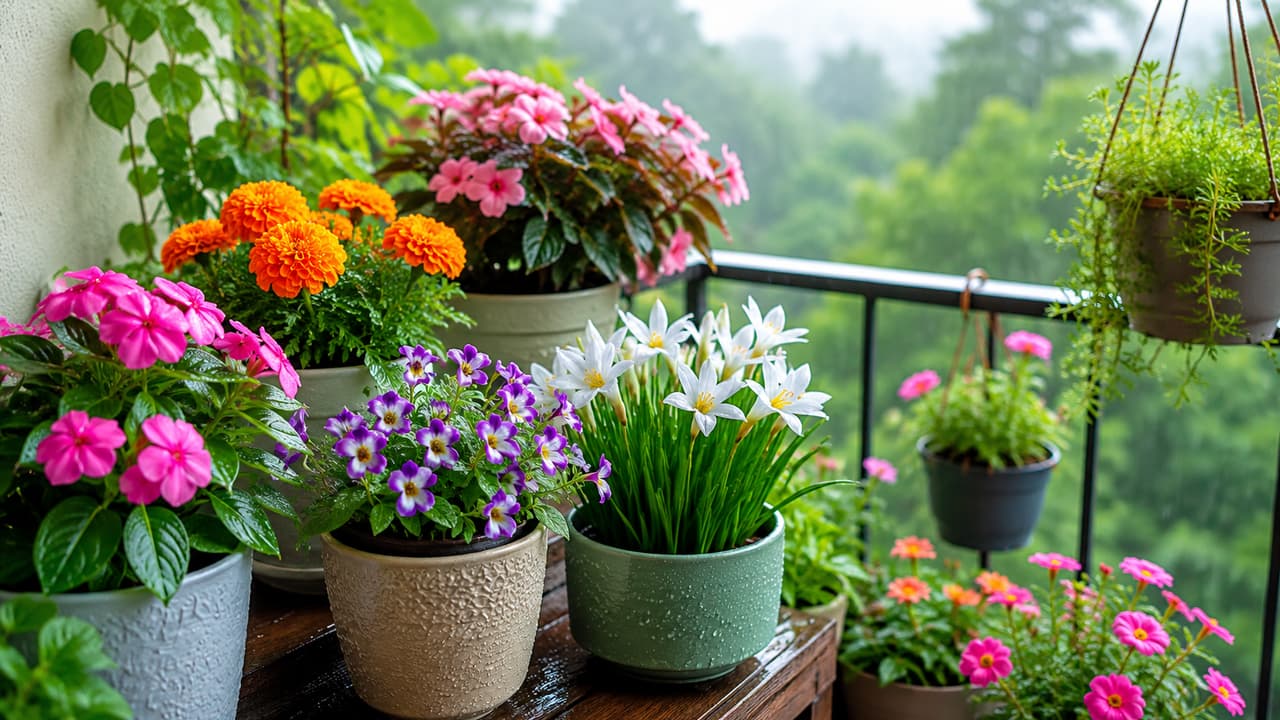
Monsoon is the perfect season to refresh your balcony garden with vibrant flowers. These easy-to-grow plants thrive in rainy weather, require minimal care, and keep your outdoor space colourful throughout the season.
The monsoon season brings cooler temperatures, fresh air, and plenty of moisture, creating ideal conditions for many flowering plants. If you have a small balcony, choosing the right flowers can transform it into a colourful retreat. Here are some of the best flowering plants that flourish during the rainy season.
1. Balsam
Balsam is one of the easiest monsoon flowers to grow. It produces bright pink, purple, white, and red blooms that thrive in moist soil. Place it where it receives partial sunlight, and avoid waterlogging.
Related Articles

2. Rain Lily
As the name suggests, rain lilies bloom beautifully after showers. Their elegant white, pink, or yellow flowers appear throughout the monsoon, making them a favourite for balcony gardens.
3. Periwinkle (Sadabahar)
Periwinkle is a low-maintenance flowering plant that blooms almost year-round. It tolerates rain well and comes in shades of pink, white, purple, and lavender. It grows happily in pots and requires very little attention.
4. Marigold
Marigolds add cheerful yellow and orange blooms to balconies during the monsoon. Ensure the pots have good drainage, as excess water can damage the roots.
5. Begonia
Begonias love humid conditions and produce colourful flowers in red, pink, white, and orange. They perform best in partial shade, making them perfect for covered balconies.
6. Torenia (Wishbone Flower)
Torenia is an excellent monsoon plant with trumpet-shaped flowers in purple, blue, pink, and white. It thrives in humid weather and brightens shaded balcony corners.
7. Moss Rose (Portulaca)
Although Portulaca prefers sunshine, it can continue flowering during the monsoon if it gets a few hours of direct sunlight each day. Its vibrant blooms create a stunning display in hanging baskets and pots.
Tips for Growing Balcony Plants During the Monsoon Use pots with proper drainage holes to prevent root rot. Remove dead flowers and leaves regularly. Avoid overwatering, as rain often provides enough moisture. Keep an eye out for fungal infections and pests. Feed plants with organic compost once every few weeks for healthy blooms.