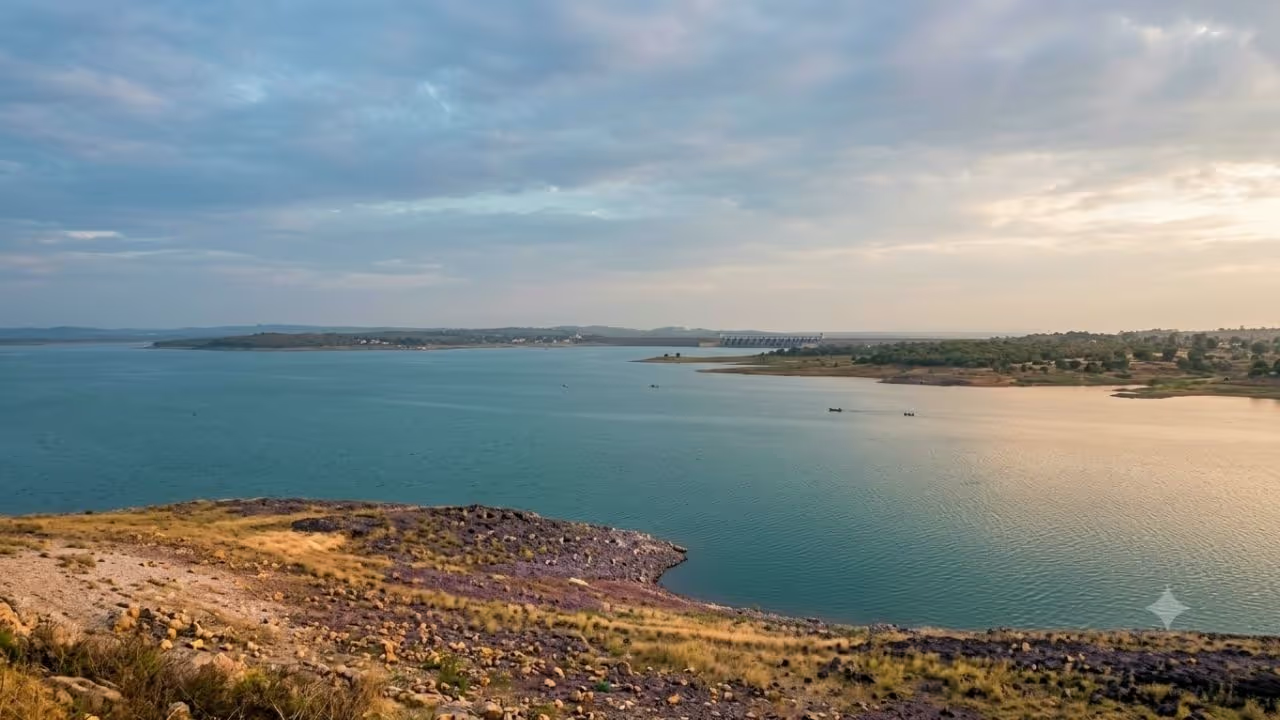
The Tungabhadra reservoir's water level has dropped to just 9.5 TMC after recording zero inflow for eight consecutive days. Poor rainfall in the catchment areas has raised concerns over irrigation water availability for the upcoming Kharif season.
The Tungabhadra reservoir, a crucial source of water for irrigation and drinking across parts of Karnataka and Andhra Pradesh, is witnessing an alarming decline in water storage this year. At a time when the reservoir typically receives substantial inflows with the onset of the southwest monsoon, water levels have remained critically low, raising concerns among farmers and water resource officials. The prolonged dry spell in the catchment areas has significantly reduced inflows, leaving uncertainty over water availability for the upcoming Kharif season.
Reservoir Storage Drops Significantly
The reservoir's current storage is substantially lower than it was during the same period last year. On this day last year, the dam held around 62 TMC of water and was receiving an inflow of nearly 60,000 cusecs. This year, however, storage has fallen to just 9.5 TMC.
The water level, which stood at 1,688 feet during the first week of June, has remained unchanged even in the final week of the month, showing no increase despite the expected onset of the monsoon.
Related Articles

Inflow Remains at Zero
For the past eight days, the Tungabhadra reservoir has recorded zero inflow, indicating that no water has entered the reservoir during this period. Farmers and officials alike view the situation as a matter of serious concern.
From 1 June to 20 June, the daily inflow ranged between just 100 and 500 cusecs, far below the levels normally expected during this time of year.
The poor inflow has been attributed to inadequate rainfall in the reservoir's catchment areas, particularly in Shivamogga and Chikkamagaluru districts.
Kharif Season Faces Uncertainty
The Kharif crop requires nearly 120 TMC of water, and farmers in the command areas of Raichur, Koppal, Vijayanagara, Ballari, Anantapur, Kurnool and Kadapa districts depend heavily on the Tungabhadra reservoir for irrigation.
With only 9.5 TMC of water currently available, uncertainty looms over the supply of irrigation water for the upcoming cropping season. Much now depends on the progress of the southwest monsoon in the coming weeks.
Drinking Water Prioritised
At present, water from the Tungabhadra reservoir is being reserved exclusively for drinking purposes. It is not being supplied for industrial use or irrigation.
The situation is equally concerning at the Bhadra reservoir in Shivamogga, where inflows have also remained below normal. Chief Engineer Srinivas Malligawad has expressed hope that rainfall may improve during the second week of July, which could help increase water levels in both reservoirs.