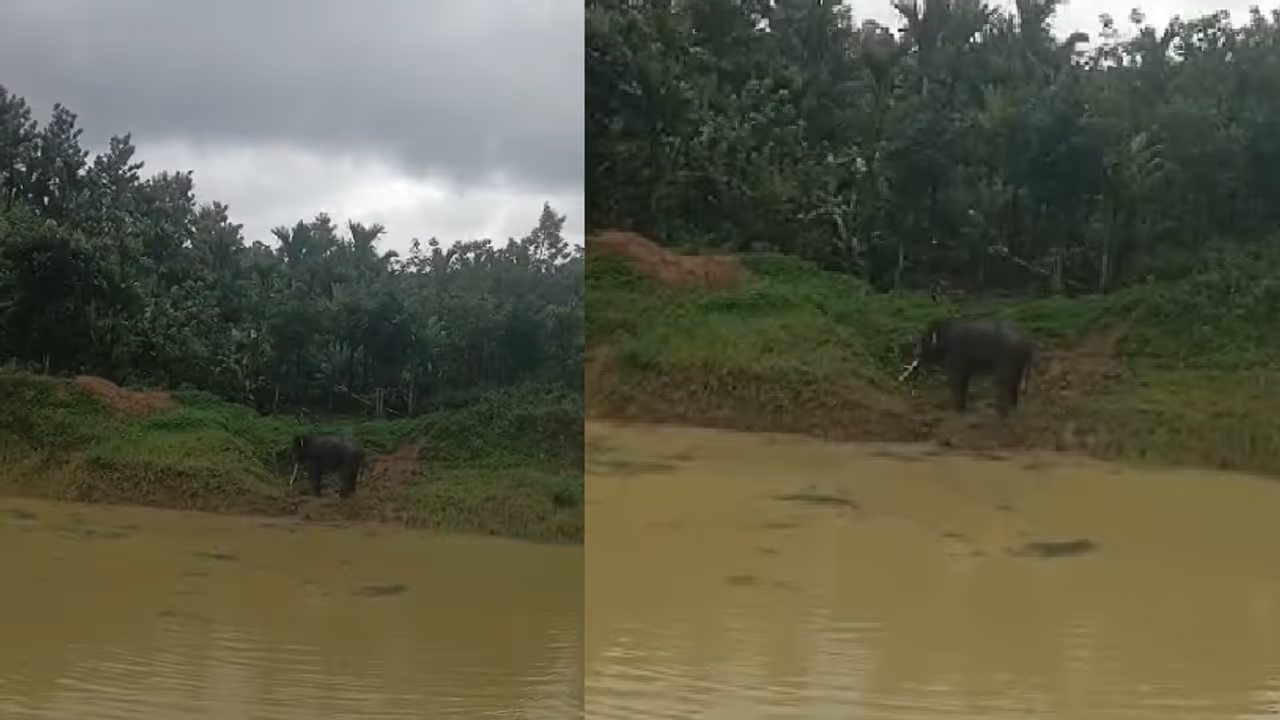
A wild elephant that entered a village pond in Kodagu remained in the water for nearly two days before climbing out on its own. While locals alleged a delay in the Forest Department's response, officials said the elephant may have entered the pond to rest because it was unwell.
A wild elephant that wandered into a village in Kodagu ended up in a pond, triggering concern among residents and raising questions about the Forest Department's response. The animal remained in the water for nearly two days, prompting locals to fear for its life. While many believed it was trapped and desperately trying to escape, forest officials later suggested it may have entered the pond to rest because it was unwell. The elephant eventually climbed out on its own, bringing the incident to a safe conclusion but leaving behind concerns over the delayed official response.
Elephant Found Struggling in Village Pond
The incident took place in Kannambadi village near Titimati in Ponnampet taluk. A wild elephant reportedly strayed into the village and entered a local pond, where it remained for nearly two days.
According to residents, the pond was filled with silt, making it difficult for the elephant to climb out. The animal appeared exhausted as it struggled to free itself, leading many to believe it was trapped in a life-threatening situation.
Related Articles

Locals Alerted Forest Department
Residents first noticed the elephant in the pond on the morning of the first day. Initially, they assumed it was cooling off in the water and would eventually come out on its own.
However, when the elephant was still in the pond by the afternoon, locals realised that something was wrong and immediately informed Forest Department officials.
Residents alleged that despite being alerted, no rescue operation was initiated until the following afternoon. They also claimed that no officials visited the site during that period, even as the elephant appeared to be growing weaker.
Residents Question Delay in Response
The incident sparked anger among villagers and environmentalists, who claimed that delays in responding to wildlife distress calls have become increasingly common.
According to locals, elephants often venture into human settlements in search of food and water, especially when resources in the forests become scarce.
One resident alleged, "Out of every ten wildlife-related complaints we report to the Forest Department, only four or five receive attention. The rest are ignored."
Farmers Express Frustration
Farmers with estates near the forest also criticised the authorities over their handling of the incident.
One farmer said, "If we plant coffee saplings on our own land, officials immediately intervene, uproot the plants and even register cases against us. But when an elephant remained in a pond for two days, no action was taken to rescue it."
Elephant Climbs Out on Its Own
Just as fears grew that the elephant might not survive, the animal managed to climb out of the pond on its own on the second afternoon.
When contacted, a Forest Department official offered a different explanation for the incident. According to the official, elephants that are weak or unwell sometimes enter water bodies because they are unable to bear their own body weight on land. Once they regain some strength, they usually come out without assistance.
Questions Remain
It remains unclear whether the elephant had accidentally become trapped in the pond or had intentionally entered the water to recover from illness or exhaustion.
Whatever the reason, the elephant eventually returned to safety, bringing relief to residents who had anxiously watched its ordeal unfold. However, the incident has also renewed questions about the speed of the Forest Department's response to wildlife emergencies and highlighted the need for timely intervention when animals are found in distress.