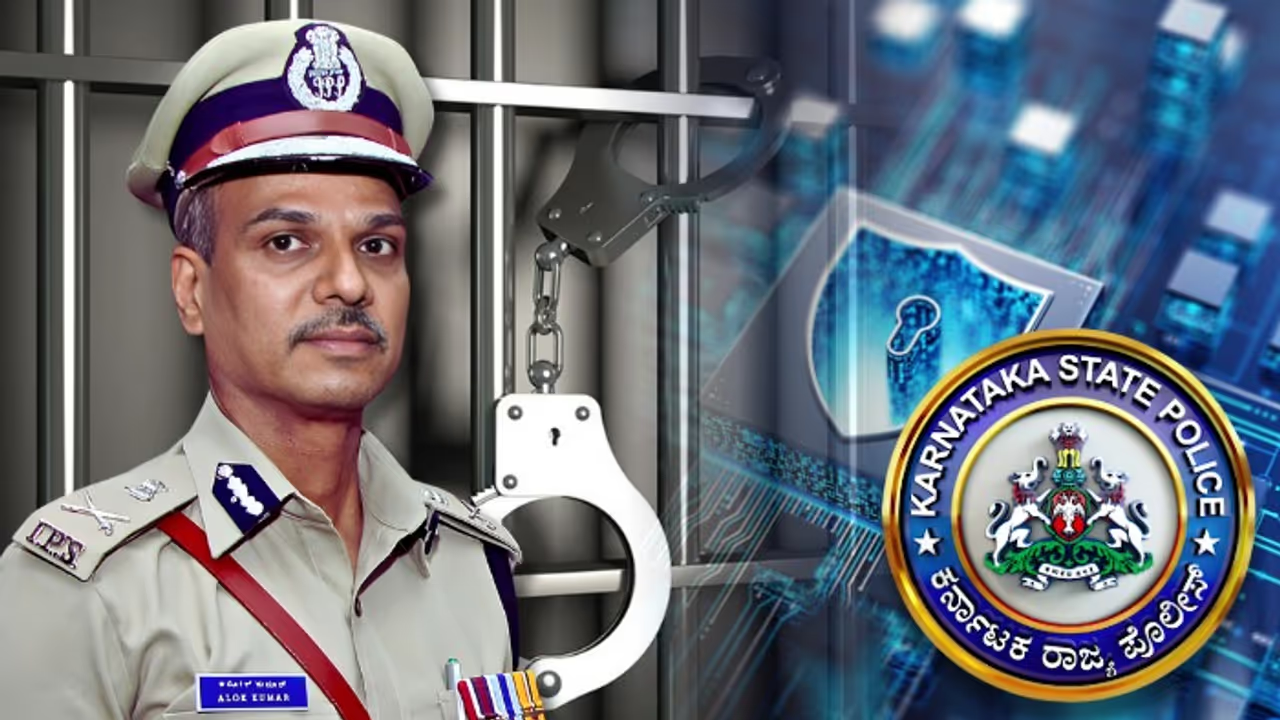
Karnataka prisons face overcrowding, corruption, and rampant drug and mobile phone smuggling. New DGP Alok Kumar plans tech, infrastructure, and rehabilitation reforms to restore order.
Our jails were supposed to be places where wrongdoers get a second chance, where they learn new skills and come out as better citizens. But today, Karnataka's prisons have become something very different. Instead of correction centres, they have turned into places where drugs flow freely, mobile phones are available to terrorists and underworld criminals, and rapists continue their illegal activities from behind bars.
The recent news from Parappana Agrahara Central Prison in Bengaluru tells us everything that is wrong with our jail system. Just last month, prison officials seized 15 mobile phones, 11 SIM cards, chargers and earbuds during a surprise inspection. This is not a one-time problem. In November 2025, videos went viral showing an ISIS recruiter, a serial rapist named Umesh Reddy, and Telugu actor Tarun freely using mobile phones and watching TV inside their cells. Earlier, photos of actor Darshan smoking cigarettes and sitting comfortably like he was in a hotel room shocked everyone.
The biggest problem is that our prisons have become markets for illegal goods. A drug dealer named Amir Khan, who was already in Bengaluru Central Prison, was caught running his entire drug network from inside the jail using a smuggled mobile phone. His accomplices were taking orders on social media and using courier companies to deliver drugs worth Rs 71 lakh. When police raided the prison to find his phone, they could not find anything. This shows how easy it is to hide banned items inside jails.
Related Articles

In Karwar District Prison, two inmates actually beat up the jailer and three staff members because the jailer was trying to stop mobile phones and drugs from entering the prison. Think about this - prisoners are attacking the very people who are trying to maintain discipline. What does this say about the control we have over these institutions?
The Infrastructure Crisis Goes Beyond Prison Walls
Karnataka has 54 prisons with a total capacity to hold about 12,000 inmates. But today, more than 18,000 prisoners are packed inside these jails. The Parappana Agrahara jail alone has over 5,000 inmates when it was built for only 4,244 people. Bengaluru Central Prison is so crowded that there is hardly any space to move around.
But overcrowding is just one part of the infrastructure problem. Most prisons do not have sufficient vehicles for prisoner transport, emergency medical evacuations, or court appearances. When a prisoner needs urgent medical care, delays happen because ambulances are not available. When prisoners need to be taken to court, limited vehicles mean only a few can go at a time, further delaying justice.
When jails are so overcrowded, staff cannot watch everyone properly. Right now, there are only 400 officers and staff managing over 5,000 inmates in Parappana Agrahara. This means each officer is responsible for more than 12 prisoners. How can they maintain security with such shortage? This is why mobile phones and drugs keep entering despite so many raids.
Most prisoners - about 70% in Karnataka - are undertrials who have not even been convicted yet. They are waiting for their cases to be heard in courts. Some poor people wait years in jail for small crimes because they cannot afford bail. Meanwhile, they get exposed to hardened criminals, learn new ways of committing crimes, and come out worse than when they went in.
The living conditions inside are terrible. There is not enough clean water, toilets are dirty, and medical facilities are very poor. When people live in such conditions for months and years, they become angry and desperate. This makes it easier for drug dealers and gang members to recruit them.
Understanding the Staff Problem - Not Just Blame
We cannot simply blame prison wardens and staff for all the corruption and security failures. The truth is more complicated. These officers work in terrible conditions themselves. They are overworked, underpaid, and lack basic facilities to do their jobs properly.
A prison warden works 12-14 hour shifts with no proper rest rooms, limited toilet facilities, and hardly any time off. They deal with dangerous criminals every day with insufficient backup and support. Many wardens have not received a salary increment in years. Their quarters are poorly maintained. Their children struggle to get good education because prison postings are often in remote areas.
When staff work in such poor conditions, some fall prey to corruption. A corrupt inmate offers Rs 50,000 to look the other way when a mobile phone comes in. For a warden earning Rs 30,000 per month and struggling to pay school fees, this becomes a temptation. This does not excuse corruption, but it explains why it happens.
The solution is not just punishment but prevention. We need massive recruitment drives to fill the 30% staff vacancies across Karnataka prisons. We need better salaries, proper quarters, healthcare for staff families, and educational support for their children. We need regular rotations so staff do not become too familiar with inmates. We need counselling services for staff dealing with stress and trauma.
When wardens have good working conditions, decent pay, and proper support systems, they will be less likely to accept bribes. When there are enough staff members, no single person handles too much money or contraband alone. When technology monitors everything, opportunities for corruption reduce automatically.
Hope with New DGP Alok Kumar
Now there is some hope with the appointment of Alok Kumar as the new Director General of Police for Prisons and Correctional Services. Alok Kumar is a 1994 batch IPS officer who became famous for reducing road deaths on the Bengaluru-Mysuru highway by half. He used technology like ANPR cameras to catch people breaking rules and saved many lives.
Within days of taking charge, Alok Kumar ordered surprise raids in Central Prisons in Bengaluru, Mysuru and Karwar District Prison. His teams seized 13 mobile phones and 6 packets of marijuana. He also transferred four violent inmates from Karwar Prison to other jails. This shows he is serious about bringing discipline back to our prisons.
But Alok Kumar knows that raids alone will not solve the problem. He has a much bigger task ahead. His challenge is to modernize the entire prison system while simultaneously improving working conditions for staff, implementing rehabilitation programs, and using technology to reduce human dependency.
The Technology-First Approach
Alok Kumar's success on the Bengaluru-Mysuru highway came from using technology smartly. He can apply the same approach to prisons. Instead of depending only on human vigilance, prisons need CCTV cameras in every corridor, every cell block, and every visiting area. These cameras should be monitored 24/7 from a central control room.
Mobile phone jammers should be installed across all prison premises to block unauthorized phone signals. Biometric systems should track every person entering and leaving - staff, visitors, lawyers, and suppliers. X-ray scanners and metal detectors should check every parcel and food item coming inside. Body scanners should screen visitors without physical searches that can be manipulated.
Digital registers should replace paper records for tracking prisoner movements, visitor logs, and court dates. GPS tracking should monitor prison vehicles in real-time. Automated systems should alert authorities if a prisoner misses a court date or a vehicle deviates from its route.
When technology does the monitoring, human corruption becomes harder. A warden cannot claim he did not see a phone being smuggled when camera footage shows everything. A supplier cannot sneak in drugs when every parcel goes through scanners. This is how we reduce dependence on people and increase system reliability.
Infrastructure Development on Multiple Fronts
The new DGP needs to push the government for massive infrastructure investment. This means building at least 10-15 new prisons across Karnataka to reduce overcrowding. Existing prisons need expansion with proper separation between undertrials and convicts, between different security categories, and between first-time offenders and repeat criminals.
Each prison needs a fleet of vehicles - ambulances for medical emergencies, buses for court appearances, vans for prisoner transfers, and cars for staff transport. Prison hospitals need modern equipment, full-time doctors, and pharmacy stocks. Kitchens need hygiene upgrades, storage facilities, and quality control systems.
Staff quarters need urgent renovation or new construction. Wardens should have comfortable homes with running water, electricity, and internet connectivity. Prison campuses should have schools for staff children, recreational facilities, and shopping areas so families do not feel isolated.
Training facilities need to be established where new recruits learn modern prison management, prisoner psychology, crisis handling, and technology use. Regular refresher courses should update existing staff on new procedures and equipment.
Comprehensive Rehabilitation and Correction Programs
The most important work of the new DGP is to transform prisons from punishment centers into correction and rehabilitation facilities. This requires multiple programs running simultaneously.
First, education programs should be mandatory for all prisoners who are illiterate or have not completed Class 10. Teachers should be hired full-time to conduct classes. Libraries should be set up with books, newspapers, and educational materials. Prisoners who complete their education inside jail should receive recognized certificates that help them find jobs later.
Second, vocational training workshops should teach practical skills. Carpentry, plumbing, electrical work, mobile repair, tailoring, computer basics, driving, cooking, bakery, printing, and handicrafts - these skills can give prisoners a livelihood after release. Each prison should have workshops with proper tools, trainers, and certification programs. Products made by prisoners should be sold outside, giving them some income and dignity.
Third, de-addiction centers must be established inside every major prison. With 1,700 prisoners jailed for drug offenses in Karnataka, rehabilitation is essential. Professional counselors, psychiatrists, and de-addiction specialists should work with addicted prisoners. Group therapy sessions, individual counseling, and medical treatment should help them break free from drugs.
Fourth, mental health support is critical. Many prisoners suffer from depression, anxiety, trauma, and other mental health issues. Psychologists should be available for regular counseling. Anger management classes should help violent offenders understand and control their emotions. Meditation and yoga programs should promote mental peace.
Fifth, legal aid cells should be strengthened in every prison. Many undertrial prisoners sit in jail simply because they do not understand bail procedures or cannot afford lawyers. Legal aid volunteers should meet prisoners regularly, explain their rights, help file bail applications, and speed up their cases.
Sixth, family connection programs should allow regular video calls and visits. When prisoners maintain contact with their families, they are less likely to join gangs or fall into depression. Children of prisoners should not suffer - special programs should support their education and welfare.
Seventh, pre-release counseling should prepare prisoners for life outside. How to find a job, open a bank account, avoid old criminal contacts, deal with social stigma - all this should be taught before release. Post-release follow-up should track former prisoners and help them settle into society.
The Long Road Ahead
The task before DGP Alok Kumar is massive and complicated. He needs to improve infrastructure, recruit and train thousands of new staff, install modern technology, root out corruption, and implement comprehensive rehabilitation programs - all at the same time. This cannot happen overnight or even in one year.
The government must support him with adequate budgets. The annual prison budget needs to increase significantly from current levels. Money spent on prisons is not wasted - it is an investment in public safety and social rehabilitation.
The judiciary must also cooperate by speeding up trials and reducing the undertrial population. Fast-track courts for petty crimes can clear the backlog. Bail reforms can ensure that poor people do not rot in jail for minor offenses.
Civil society organizations, NGOs, and volunteers should be welcomed into prisons to conduct skill training, counseling, and awareness programs. Businesses should be encouraged to hire former prisoners and give them a second chance.
Time for Action
Our prisons are supposed to protect society by keeping dangerous people away and giving them a chance to reform. Today, they are doing neither. Criminals continue their activities from inside, and people come out more hardened than before.
Just blaming wardens and staff is not enough. We must understand that corruption thrives in poor working conditions. When we improve infrastructure, increase recruitment, provide good salaries and facilities, and use technology to reduce human discretion, corruption will automatically decrease.
With strong leadership like Alok Kumar, who understands both technology and human management, serious investment in infrastructure and staff welfare, comprehensive rehabilitation programs, and sustained political will, we can turn this around. But time is running out. Every day we delay, more young people get addicted to drugs sold from jails, more crimes are planned from behind bars, and more lives are destroyed.
Karnataka must decide - do we want jails that punish and reform, or do we want them to remain schools for crime? The choice is ours. The new DGP has shown he is ready to act. Now the government, judiciary, and society must support him with resources, patience, and commitment to real change.
(Girish Linganna is an award-winning science communicator and a Defence, Aerospace & Geopolitical Analyst. He is the Managing Director of ADD Engineering Components India Pvt. Ltd., a subsidiary of ADD Engineering GmbH, Germany.)
Disclaimer: The opinions expressed are solely those of the author and do not reflect the views or stance of the organization. The organization assumes no responsibility for the content shared.