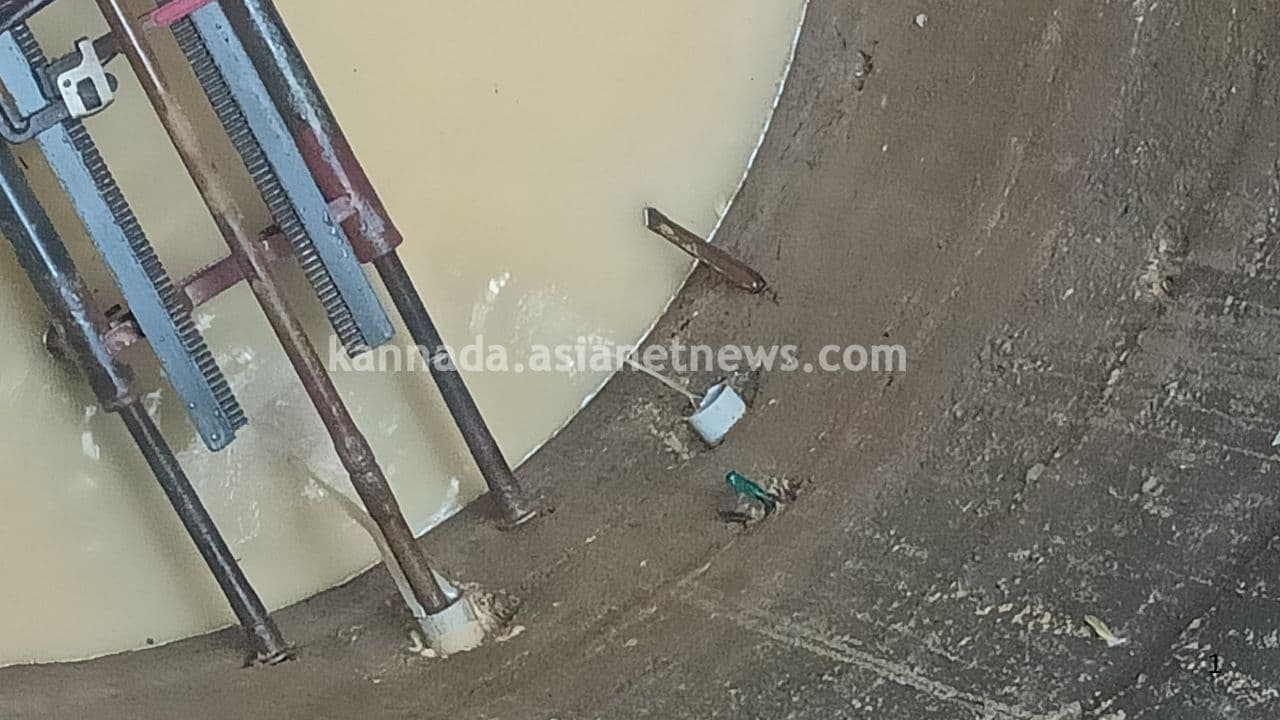
Cross bore drilling is helping revive dry wells and lakes in Mangaluru by tapping nearby groundwater through horizontal drilling, offering a reliable and sustainable solution to recurring summer water shortages.
Mangaluru: Every summer, it's the same story in Mangaluru and other coastal areas. The open wells and lakes that are full during the monsoon just dry up, leading to a major water crisis. But now, a water revolution is quietly happening, thanks to a technique called cross bore drilling that is bringing these dead water bodies back to life.
As summer peaks, the demand for water naturally goes up. In recent times, people have started using cross bore drilling to revive their dry wells and lakes, and the results have been surprisingly successful.
So, how does cross bore drilling work?
Unlike a regular borewell that drills deep into the ground vertically, this method involves drilling horizontally from inside an existing well.
Related Articles

First, a special drilling machine with a motor pump is set up inside the dry well. Then, using a 3.5-foot iron rod, workers start drilling sideways into the soil, towards a spot where they estimate a water source might be. As they drill deeper, they keep adding more iron pipes, sometimes going as far as 300 feet. The process is smooth if they hit soil or soft rock, but it gets difficult with hard rock.
Once they hit a water source, water starts seeping into the well. A PVC pipe is then installed to ensure a steady flow. You can have about 4-5 such bores in a single well. If a pipe gets blocked with mud, a high-pressure water jet can be used to clear it out. This method can provide a continuous flow of about 1 to 2 inches of water all year round, as it taps into the groundwater near the surface.
To carry out this work, you need a minimum space of 5 to 5.5 feet inside the well. A team of three workers typically handles the job, and it requires a three-phase electricity connection. Workers say the cost includes a fixed charge for setting up the motor and a per-foot rate for the drilling.
Also read: Karnataka: Over 3,000 Pregnant Women Missing in Yadagiri; Female Foeticide Concerns Rise
Growing Demand for Cross Bores
This technique isn't exactly new; it has been used in the coastal region for about 20 years. However, its popularity has shot up in the last few years. More and more people are getting cross bores done for their dry wells and lakes.
The work usually starts in January and goes on until May. The demand is so high that besides 2-3 local teams, eight teams from North India are also working in the district. This work is especially common in areas like Kadaba, Puttur, Vittal, Bantwal, and even across the border in Kasaragod.
Many people believe that drilling towards a hill or elevated ground is a sure-shot way to find water. This modern method works on the same principle as the traditional 'suranga' or tunnel wells, which were dug to tap into water sources. By reviving wells and lakes, this technique is offering a real solution to the region's water problems.
What Ramesh Kaniyoor, a cross bore worker, says:
“This year, the demand for cross bores is very high, especially for reviving dry wells and lakes. We start our work in January every year. The method has been very successful wherever we have drilled, and we are consistently finding water.”
A local's reaction
"For years, our well would go completely dry in the summer. This year, I got a cross bore done. Now, the well has started filling up, and we have enough water for our home and our farm."
- Umesh Shetty Noojibalthila, Kadaba Taluk.