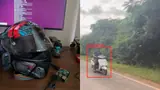
The creator of a viral AI-powered helmet says Bengaluru Police officials have shown interest in the innovation, which detects traffic violations in real time and reports offenders directly to authorities to improve road safety.
An Indian tech professional whose AI-powered helmet recently went viral for its ability to identify traffic violations has revealed that senior officials of the Bengaluru Police were highly impressed with the innovation. The creator said the Joint Commissioner of Police not only appreciated the concept but also showed keen interest in exploring how the technology could support the city’s existing traffic enforcement systems.
The helmet, designed to detect traffic rule violations in real time and report them directly to the authorities, has attracted widespread attention online. The innovation has earned praise from business leaders, politicians and citizens alike, with many hailing it as a potential game-changer for road safety in Bengaluru.
Bengaluru Police Show Interest in the Technology
The innovator, Pankaj Tanwar, shared details of his interaction with the Bengaluru Police on social media platform X, formerly known as Twitter. He said he spent nearly two hours discussing the technology with senior officers.
Related Articles

“Met the joint commissioner, Bengaluru, today. Spent approximately two hours in a detailed discussion with officers. Pretty open, thoughtful and they genuinely loved the idea,” Tanwar wrote.
According to him, police officials expressed interest in assessing how the AI helmet could be integrated with the city’s existing surveillance infrastructure.
AI Helmet May Complement City-Wide Surveillance Network
Tanwar said he was given a detailed overview of Bengaluru’s extensive camera-based monitoring system during the meeting. He described the scale of the current surveillance network as impressive and said his technology could potentially enhance its effectiveness.
“Got a walkthrough of the large-scale, city-wide camera + AI surveillance system. Crazy to see the scale and effort already being put in. Got interest in exploring how my tech could complement their existing camera setup,” he said.
Prototype Development and Support Requirements
Following the positive response, Tanwar said he plans to develop an early version of the AI helmet and refine its underlying models so that it can function reliably in real-world traffic conditions. However, he acknowledged that external support may be required to take the project forward.
“Most importantly, this isn't being looked at as a revenue-first product. No incentives, at least for now. It likely needs some grants or institutional support to move forward,” he noted.
How Did Social Media React?
The innovation sparked active discussion on social media, with users suggesting ways to support the project and highlighting traffic violations that require stricter enforcement.
One user commented: “Let's do a crowd funding initiative. We have several associations related to Automotive ownership & Riding clubs.”
Second user commented: “Awesome! Wrong side driving needs to be cracked down hard”
How the AI Helmet Works
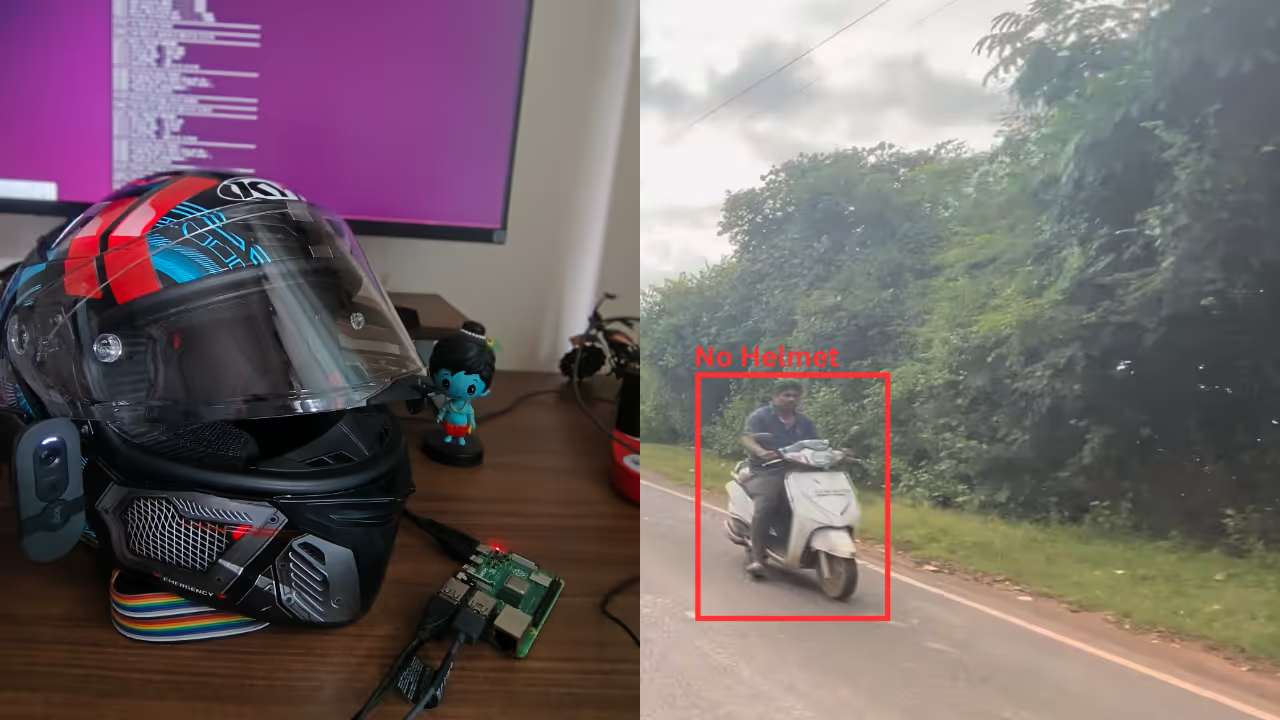
Explaining the functioning of the device, Tanwar said the helmet operates using an AI agent that runs almost in real time while he is riding. The system identifies traffic violations, captures evidence and automatically sends the details to the police.
“While I ride, AI agent runs in near real time, flags violations, and proof with location and number plate goes straight to police. Bengaluru people, so now ride safe or regret it.”
He also shared a real-world example in which the technology successfully detected and reported a scooter rider who was not wearing a helmet, demonstrating the system’s practical application.